
2026 | DIPLOMA | YEAR III
The completion of the three-year program requires the development of a comprehensive interior design project, covering all stages of the design process. Both the site and the function are chosen by the student, provided that the relevance and opportunity of the proposed intervention are clearly justified.
The main objective is to define a strong spatial identity, shaped both by the qualities of the selected context and by the specific characteristics of the proposed function. Throughout the phased development of the project, theoretical and technical approaches are pursued in order to formulate spatial and formal solutions that enhance the chosen space.
This process represents a valuable exercise in preparation for professional practice, addressing adaptive reuse, the creation of an aesthetic aligned with the proposed concept, the coordination of constructive elements (finishes, furnishings, installations), the resolution of execution details for custom-designed furniture, cost anticipation, and overall budget management.
Project Development Phases
Phase I involves understanding existing conditions and defining the requirements of the proposed theme. This includes studying comparable examples of similar scale and function, as well as analyzing the site’s specific characteristics, qualities, dysfunctions, and atmosphere.
Phase II focuses on developing a general intervention concept, generating two preliminary design proposals, and further detailing one selected option.
Phase III consists of producing the technical project documentation, detailing the solution developed in the previous phase at a technical design level.
Phase IV represents the execution detailing stage. The final phase includes preparing detailed drawings for at least three key design elements (such as custom furniture pieces or constructive details), finalizing finishes and materials, and documenting them within the written report, cost estimate, and material palette.
For the full texts please click on the pages of the brochure below.
Diploma Projects
Student: Bredean Diana-Maria
Coordinating Professor: Conf. Dr. Arch. Anamaria Andreea Anghel
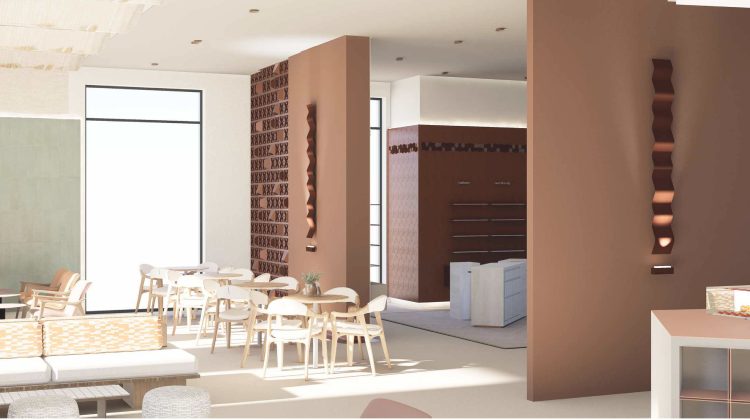
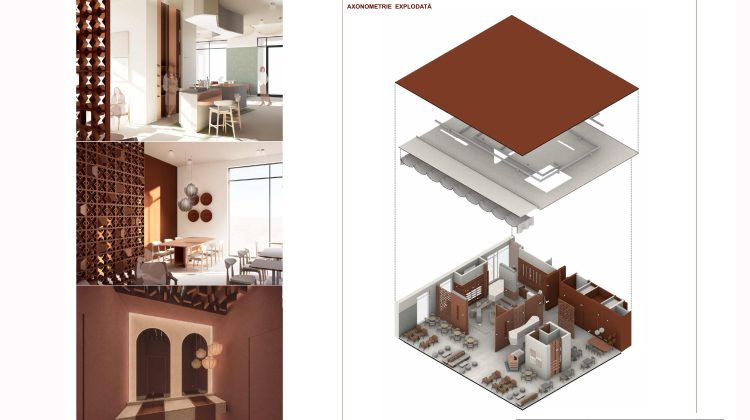
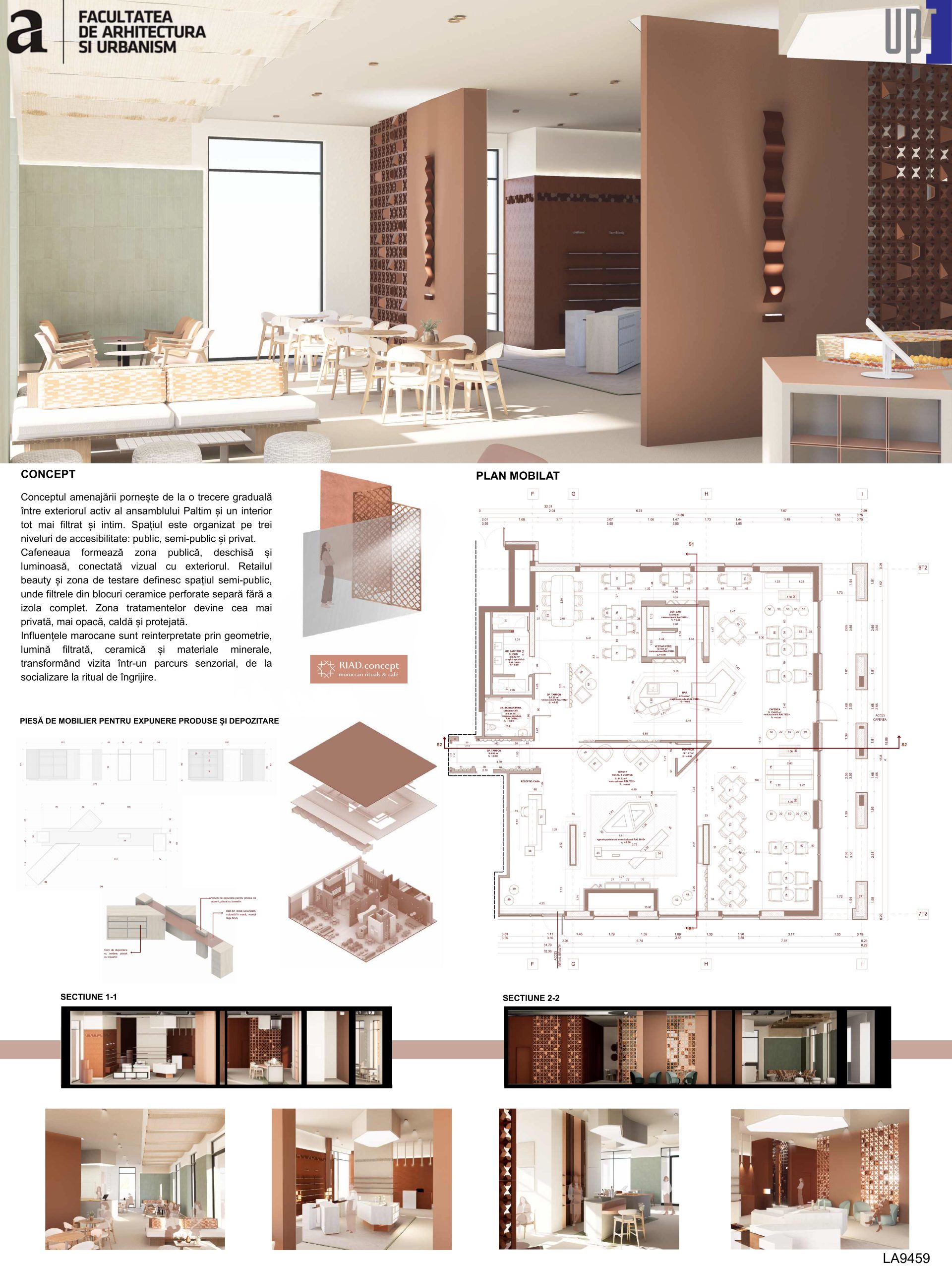
This thesis proposes the interior design of a commercial space within the Paltim complex in Timișoara, conceived as a concept store dedicated to beauty and wellness. The space integrates several functions, including a café, product retail with testing areas, and zones dedicated to facial and body treatments. The concept is rooted in a simple observation: contemporary commercial spaces are no longer defined solely by the act of purchasing, but increasingly by the experiences they offer and the time users spend within them.
The main objective is to create a coherent spatial sequence in which social interaction, product discovery, and personal care follow one another naturally, transitioning from public areas toward more private spaces. The study includes theoretical research, an analysis of relevant best-practice examples, an investigation of the urban and historical context of the site, and a functional and aesthetic interpretation of the existing space.
The resulting proposal transforms the commercial ground floor into a space for relaxation, social interaction, and contemporary care rituals. The interior is shaped through transparency, decorative perforated ceramic blocks featuring geometric patterns, and a palette of materials and colors inspired by Moroccan architecture and interiors, where personal care has traditionally been understood as a slow, sensory, and social experience.
Student: Burghelea Gabriela
Coordinating Professor: Asist. Dr. Arh.Irina Sălăgean-Mohora
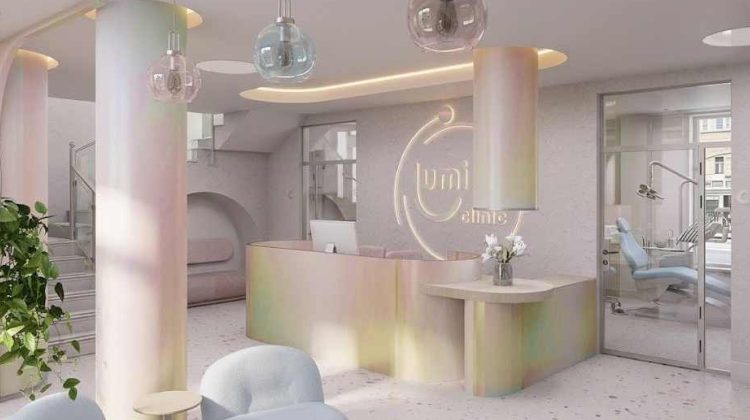
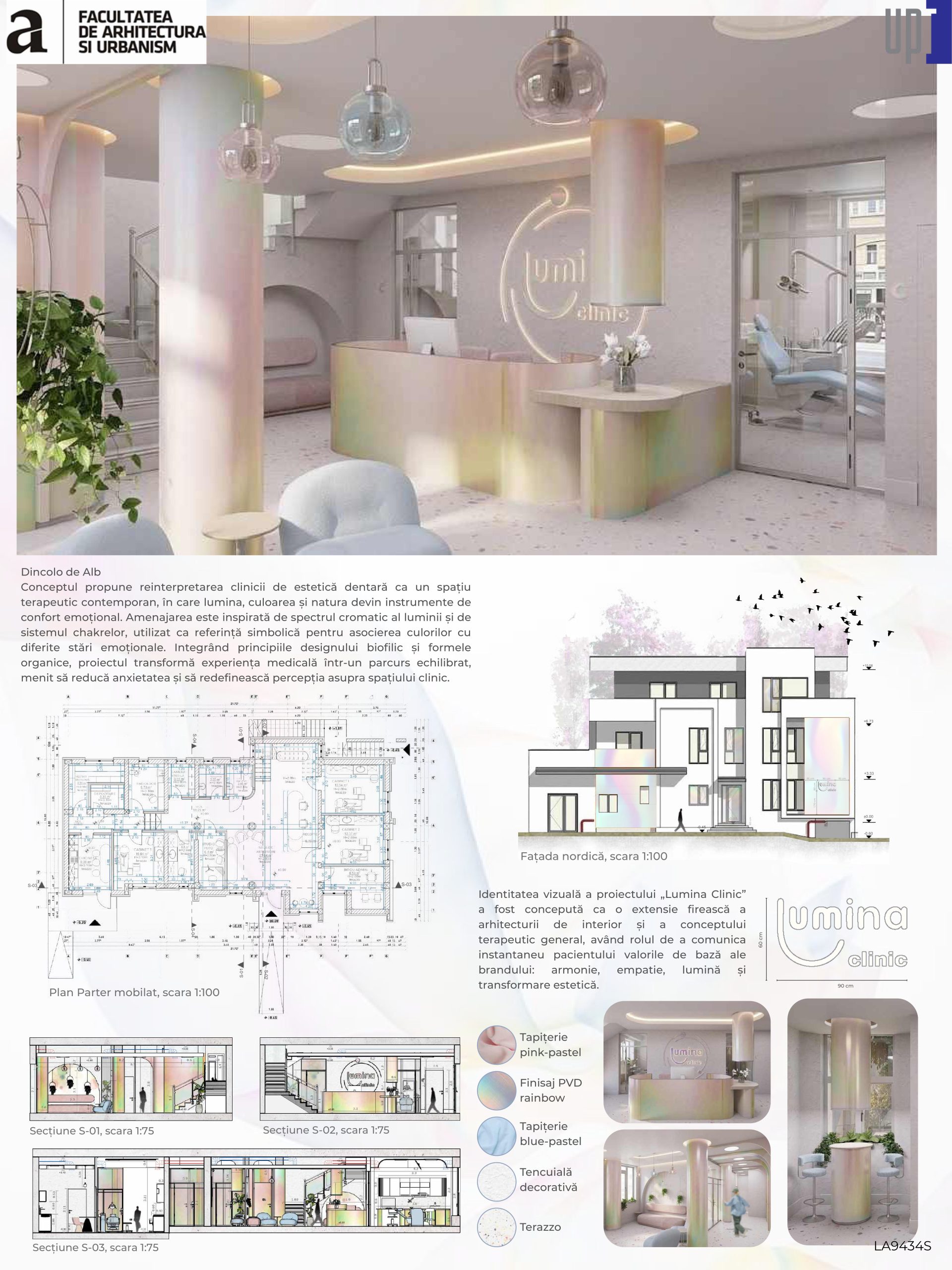
The words “dentistry,” “doctor,” and “clinic” are often directly associated with intense feelings of anxiety, fear, and stress, experienced by both children and adults. The fundamental intention of this project was to challenge this preconceived perception and collective association between dental aesthetics clinics and feelings of fear and hesitation, moving beyond the purely medical function of the space.
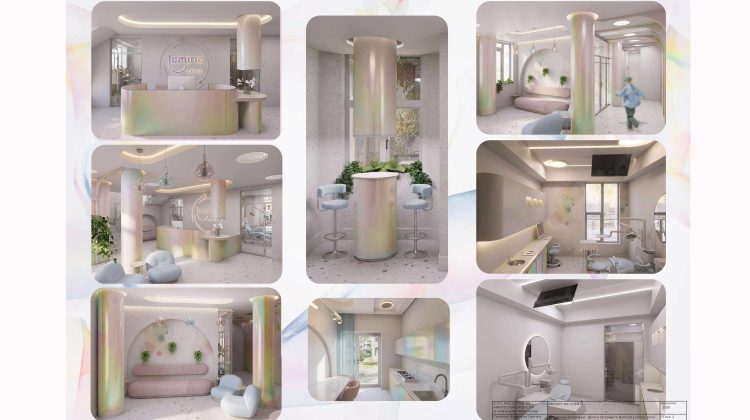
Therefore, the project focuses on the design of an innovative therapeutic environment capable of transforming and alleviating these negative emotions while promoting more positive experiences and supporting the patient’s psychological and emotional well-being. The core concept is based on the synergistic interaction between interior design and color psychology, drawing on two complementary directions of analysis: the chromatic spectrum of the rainbow and the system of the seven chakras, understood as symbolic references and conceptual tools for the chromatic organization of the interior.
By overlapping and integrating these two dimensions, the clinic is transformed through the use of a carefully selected chromatic palette, controlled lighting, dichroic finishes, and holographic reflective surfaces. These elements allow colors to shift dynamically according to the viewing angle and intensity of light, creating a fluid and immersive environment that guides patients through a sensory journey intended to promote calmness, safety, and relaxation.
Just as the spectrum of white light is divided through refraction into a multitude of distinct colors, the clinic becomes an architectural prism that fragments fear and transforms it into nuanced sensations of inner peace. Through this holistic approach, interior design moves beyond its role as a purely aesthetic component and becomes an active tool for the multisensory reconfiguration of the medical experience.
The resulting atmosphere demonstrates how the patient’s emotional state and psychological balance can be influenced by the chromatic palette of the environment, which has the potential to evoke a wide range of emotions and sensations. Therefore, the interior must be carefully designed and thoughtfully implemented in order to reduce anxiety and provide an immersive experience characterized by safety, relaxation, and a sense of harmony.
Students: Jangă Andreea
Coordinating Professor: S.l. Dr. Arh. Beatrice Lucaci
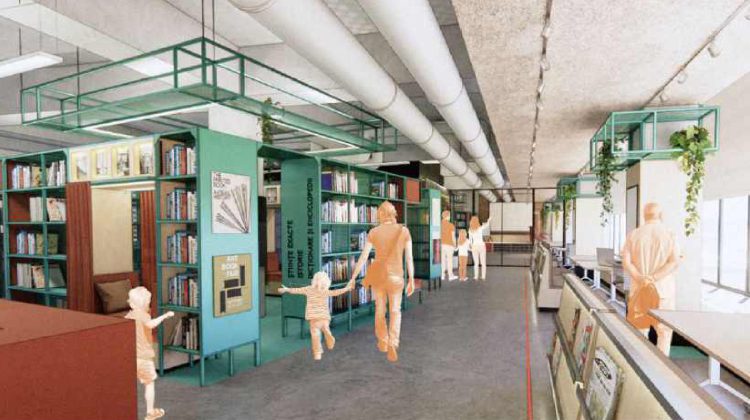
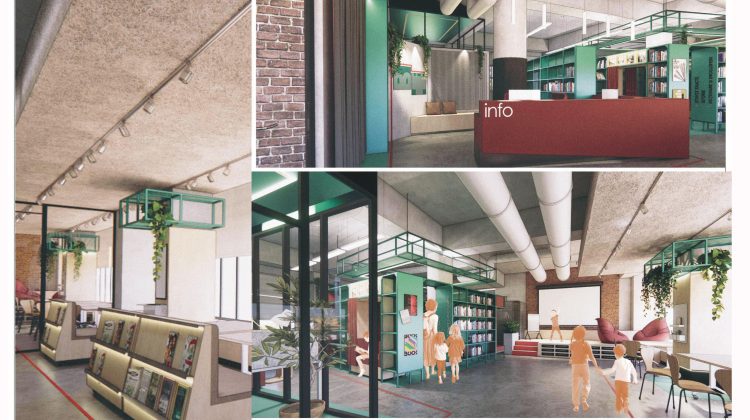
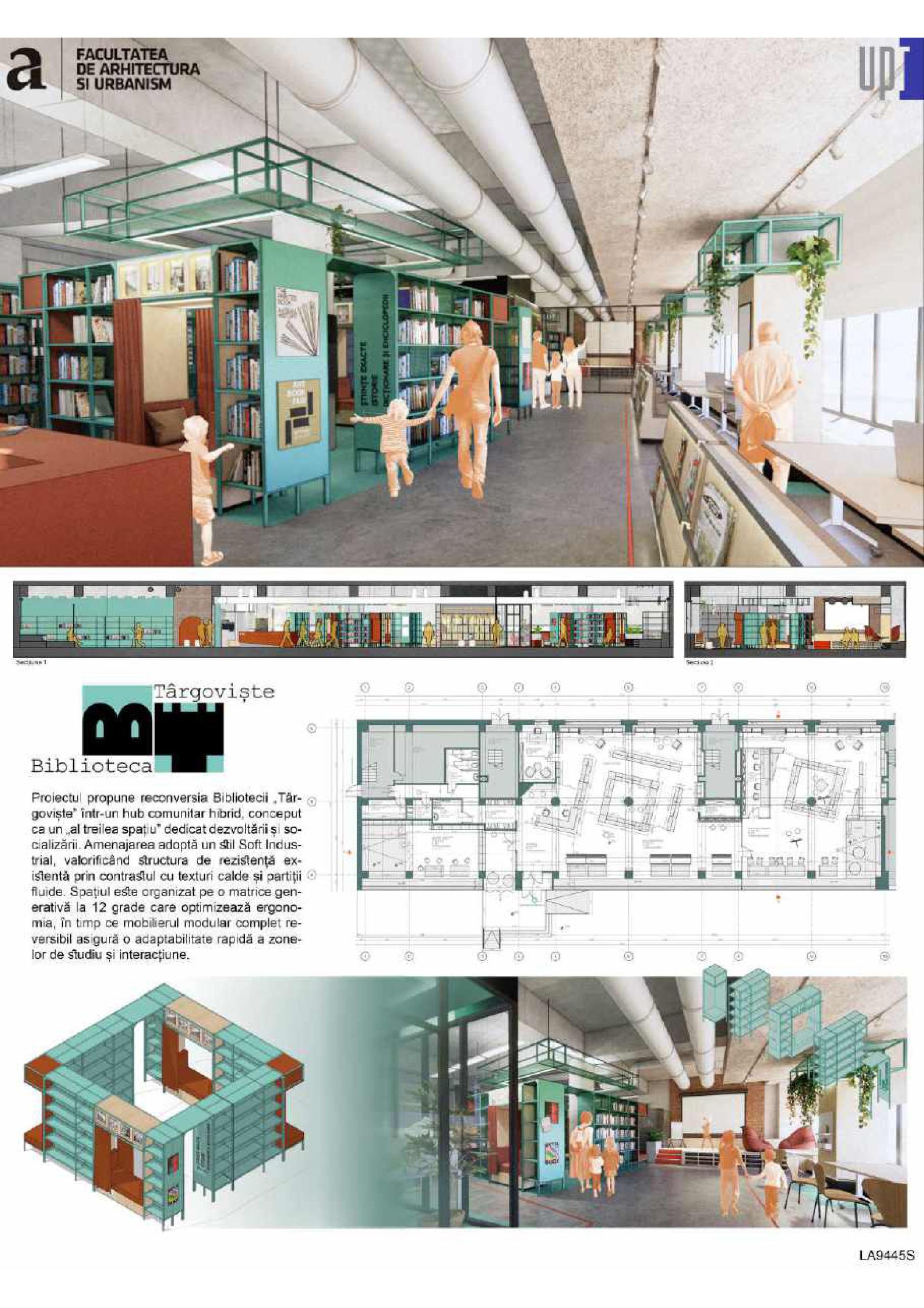
The “Târgoviște” Library has always had the mission of serving as a vibrant and unifying center for the community. This project proposes the conversion of the institution into an enhanced space capable of responding more effectively to contemporary needs. While preserving its fundamental identity as a library, the institution’s role is expanded beyond its traditional function. The proposed community hub becomes a multifunctional meeting point where public services, educational programs, and social and cultural activities can take place. Combining the valuable yet relatively static function of a traditional library with the connectivity and dynamic character of a community hub creates an institution relevant to a broad range of community members.
The transition toward a community hub represents a natural evolution. The concept emerged from the need to adapt the existing layout, which had become outdated in relation to the scale and diversity of events taking place within the space. The main challenge lies in the spatial configuration, which no longer adequately meets users’ requirements and instead limits the potential uses of the facility. The existing arrangement relies on conventional library furniture that does not allow the space to be easily reconfigured for different scenarios throughout the day. The zoning is relatively simple and lacks adequate acoustic differentiation between areas. Although the space benefits from a generous clear height of 4.00 m, this potential has been diminished by the installation of a modular suspended ceiling.
The new design proposes a reevaluation and maximum capitalization of the elements that define the space’s identity. The original structural frame and exposed concrete texture are integrated with metal and wood finishes to create a refined, soft-industrial aesthetic. The spaces are differentiated through acoustic partitions and booths, allowing for the coexistence and alternation of quiet and active activities. Three main areas are defined: a children’s area, a reading area, and a socialization area.
In conclusion, the project demonstrates that interior architecture can function as an instrument for community reactivation. The main impact of the intervention lies in returning the space to the people by creating an active community hub that preserves the building’s identity, supports the dedication of its staff, and provides young people with the “third space” needed for personal development, interaction, and socialization.
Student: Pap Alexia
Coordinating Professor: Conf. Dr. Arch. Andreea Anamaria Anghel
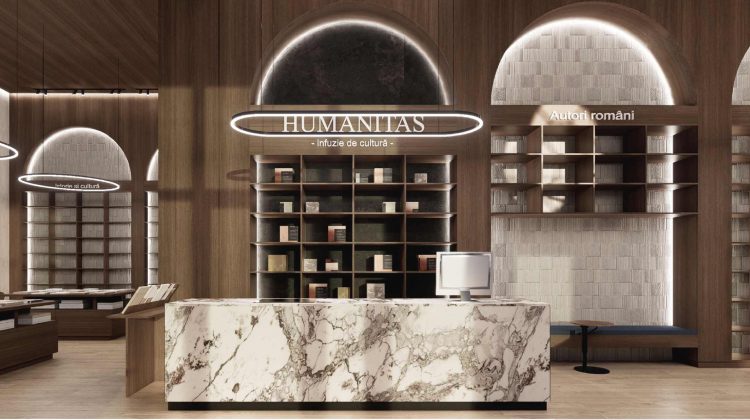
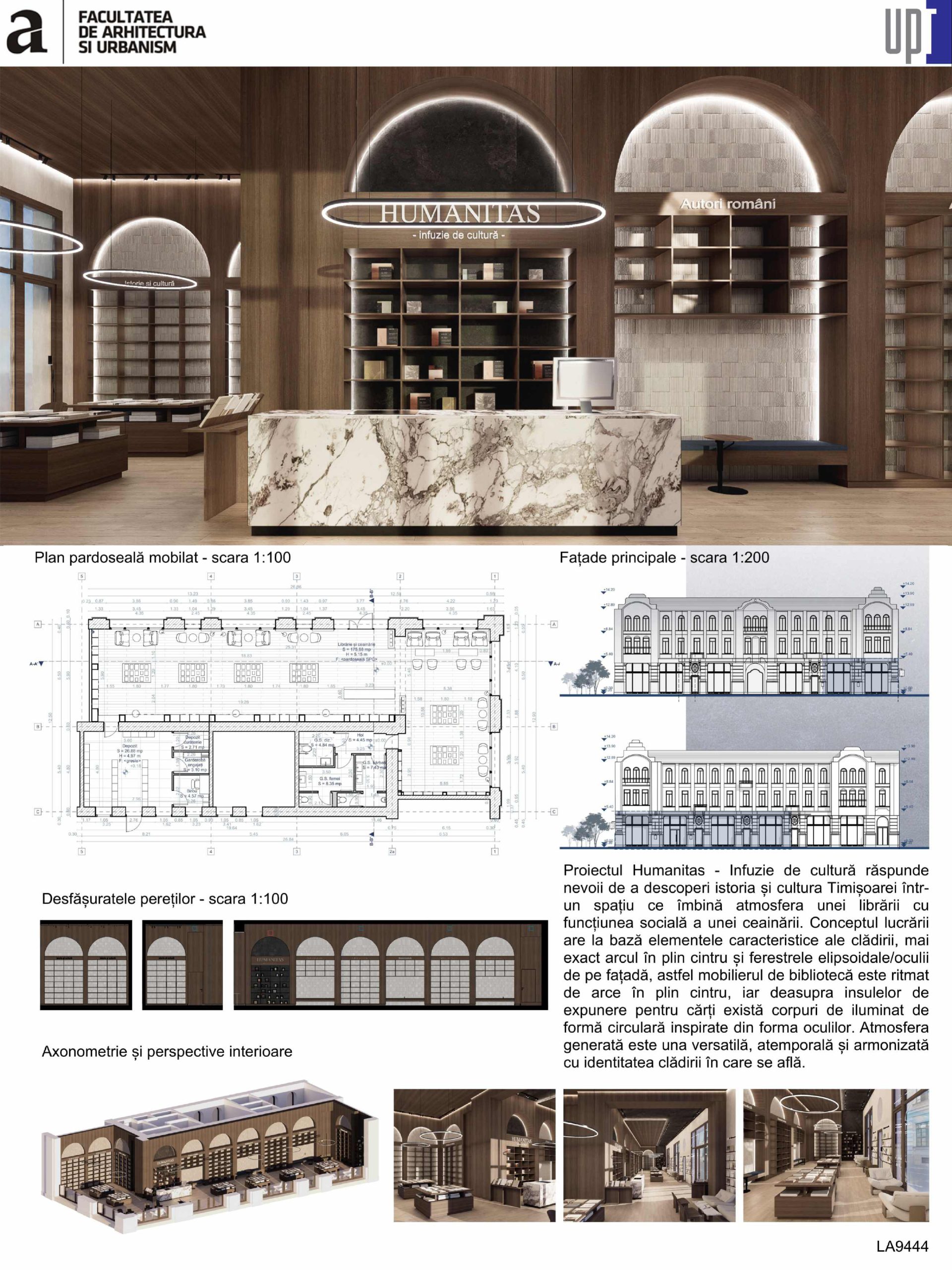
In a city with such a strong cultural identity as Timișoara, there is a growing need to highlight its historical richness in a contemporary and engaging way, particularly for younger generations. Timișoara is a city shaped by multiple cultures, nations, and ethnic groups, a diversity reflected throughout its architecture, educational institutions, religious buildings, gastronomy, population, and languages. Furthermore, Timișoara’s designation as European Capital of Culture in 2023 further reinforced the need and desire to emphasize and promote the city’s local heritage.
The project aims to create a space that responds to the need to capitalize on the cultural layers that, over time, have contributed to shaping the identity of contemporary Timișoara, while also addressing the younger generation’s interest in discovering and understanding the city in which they live or which they visit. Based on these observations and an analysis of current public needs and expectations, a strategy for implementing this concept was developed. The proposal takes the form of a cultural hub: a multifunctional space combining the cultural function of a bookstore with the social dimension of a tea house. The bookstore is conceived not merely as a place for purchasing books, but as a space in which books and culture can be experienced, complemented by areas for relaxation and the enjoyment of hot or cold beverages according to the season.
The proposed function is located on the ground floor of the Israelite Community Palace, in the Cetate district. In developing the concept, several aspects were analyzed, including the site’s position, its relationship with the surrounding urban context, the architectural characteristics of the building, its ornamentation and defining elements, as well as its historical evolution and former functions.
The design does not seek to compete with the history and character of the existing building, but rather to reactivate and reinterpret them in a contemporary and harmonious manner, creating a space inspired by the building’s historical identity. The intervention is conceived as versatile and accessible to diverse categories of users, from students, adults, and elderly people to locals and tourists, as well as from passionate readers to those simply seeking to enjoy a quality cup of tea in a culturally meaningful environment.
Student: Retezan Ania
Coordinating Professor: S.l. Dr. Arch. Alexandra Keller
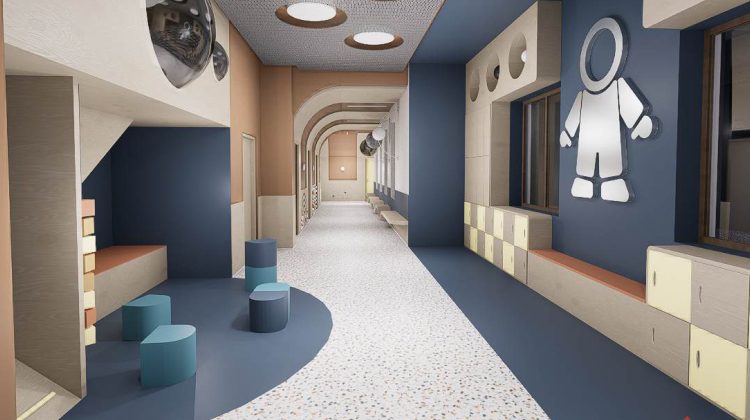
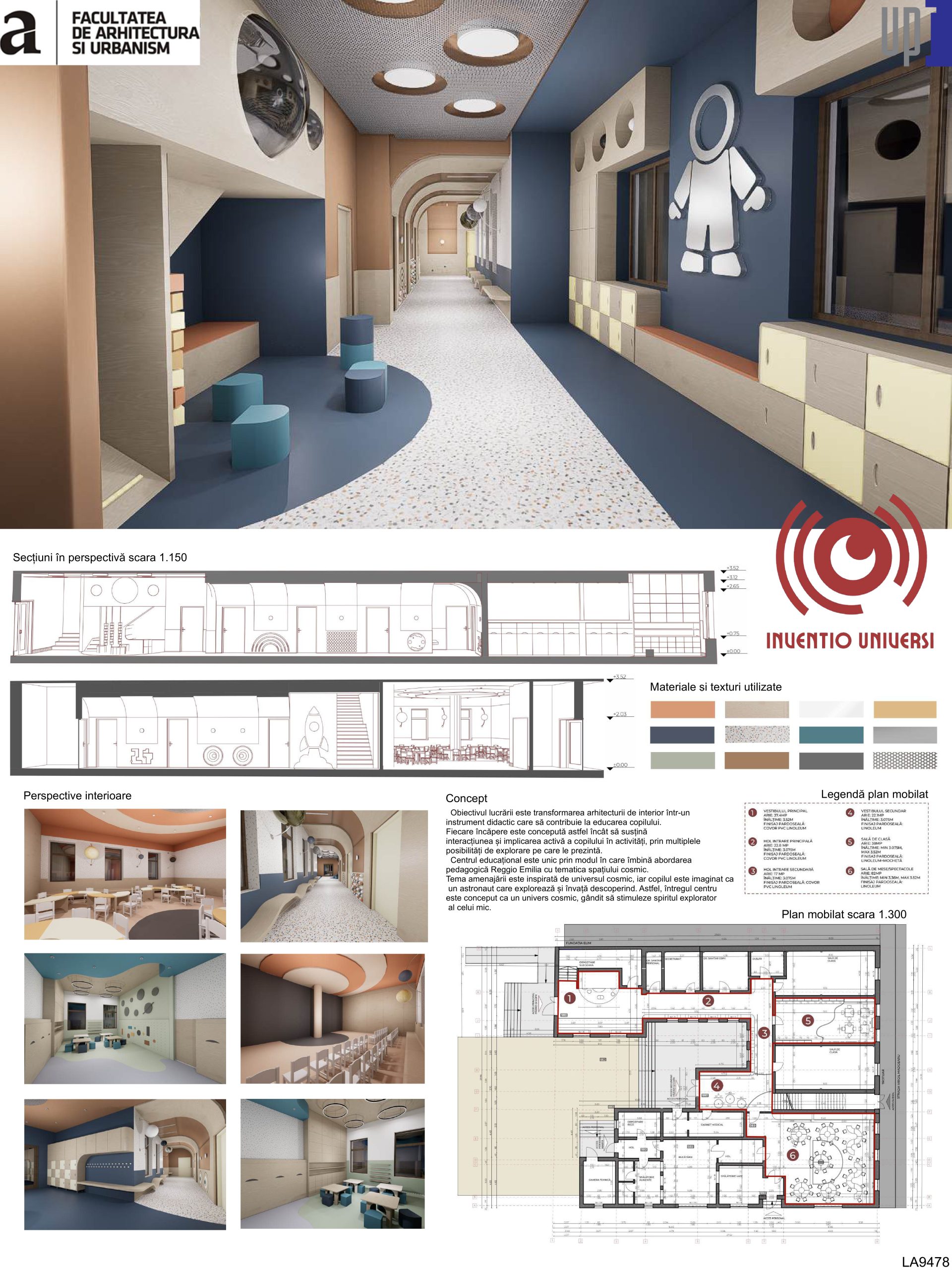
My bachelor’s thesis focuses on the interior design of an educational center for preschool children, located in a building on 28 Virgil Madgearu Street in Timișoara. The site is situated in a central area characterized by high accessibility and proximity to green spaces and educational institutions. Therefore, the selection of an educational function represents a well-justified solution that responds appropriately to the existing urban context.
The concept of the project is based on the premise that the surrounding environment plays an essential role in a child’s development and education. The space in which children spend a significant part of their day should be designed to respond to their needs while providing a stimulating environment that supports cognitive development, creativity, and imagination.
The design theme is inspired by the cosmic universe, with the child imagined as an astronaut who explores and learns through interactive experiences. Accordingly, the entire center is conceived as a cosmic universe designed to stimulate children’s curiosity and sense of exploration. Each space is planned to support both play and learning. The vestibule and corridors are treated as dynamic areas featuring interactive elements and engaging colors. The same principle extends to the classrooms and dining area, transforming everyday activities into playful experiences. The atmosphere of the cosmic universe is reinforced through the forms and volumes of the furniture, finishes, and graphic elements.
The activity spaces are designed with multifunctionality in mind, allowing them to adapt to different scenarios according to the children’s daily needs. Thus, the classroom can be reconfigured to accommodate rest activities, while the dining room can be transformed into a performance space.
An important aspect of the project is the use of color, taking into consideration its psychological effects on children. Each space is assigned a specific chromatic treatment according to its function. Furniture, materials, and lighting further contribute to creating a stimulating and engaging atmosphere that encourages children to explore their surroundings freely.
Furniture and Interior Design – YEAR III
| Generation 2026 | Diploma Thesis Development | 2025-2026 |