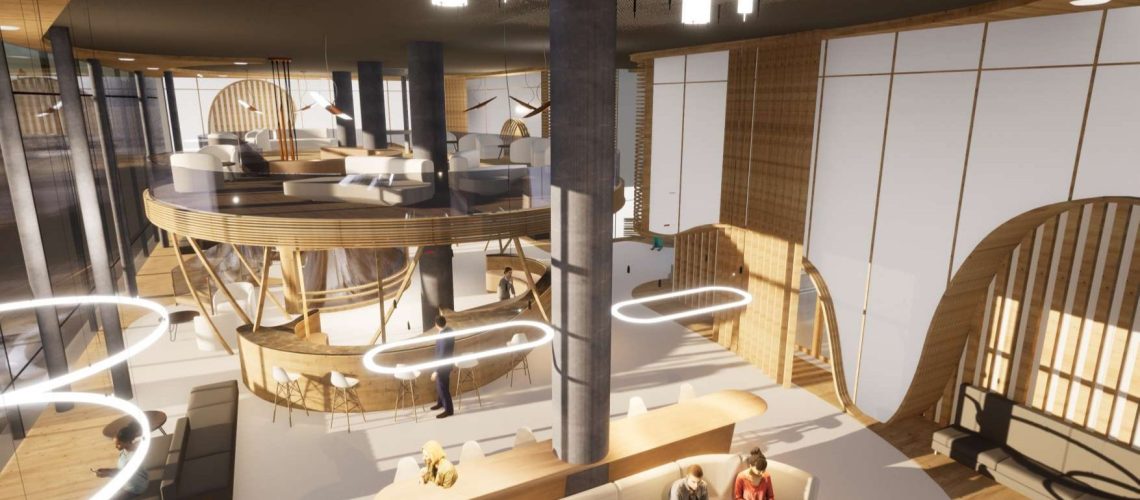
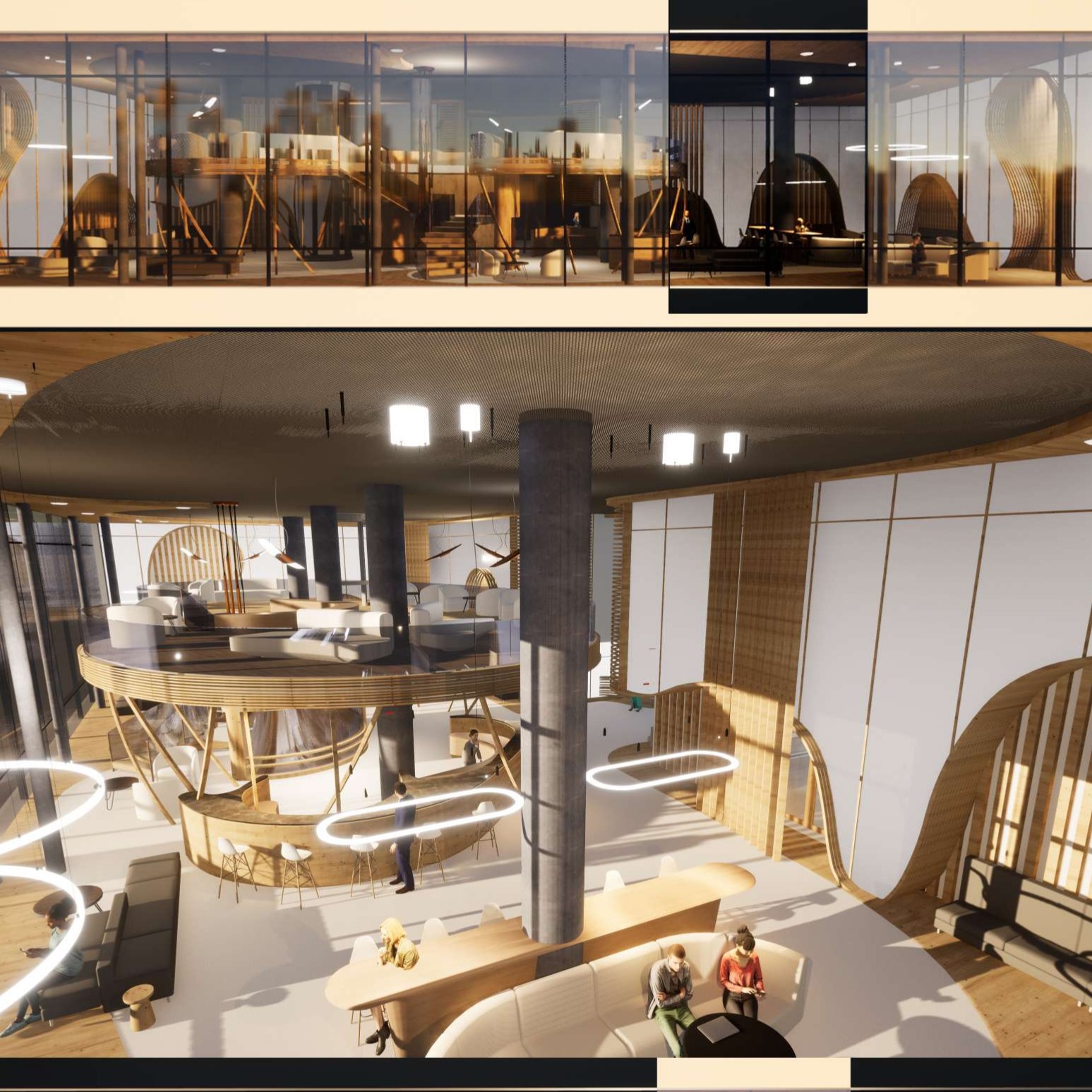
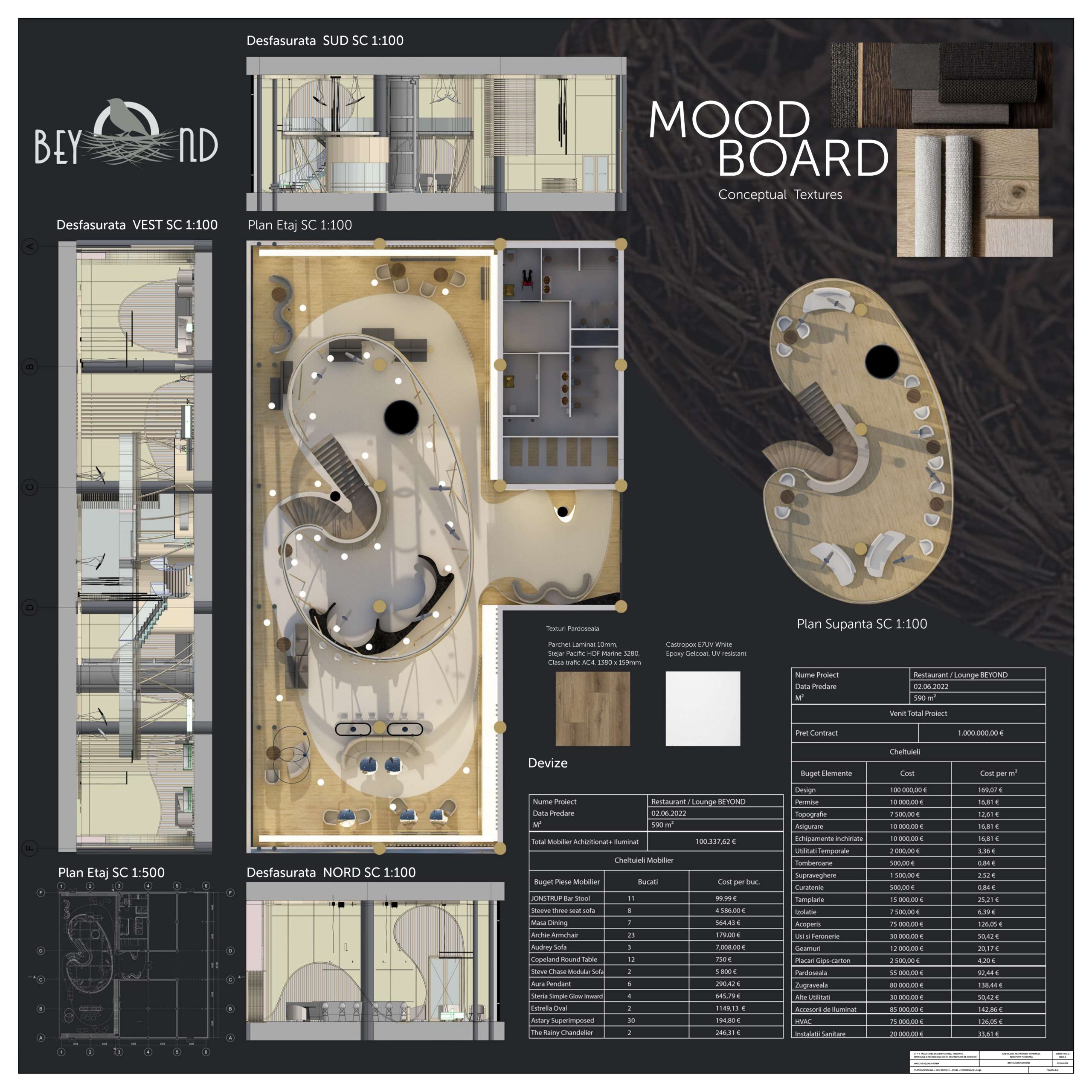
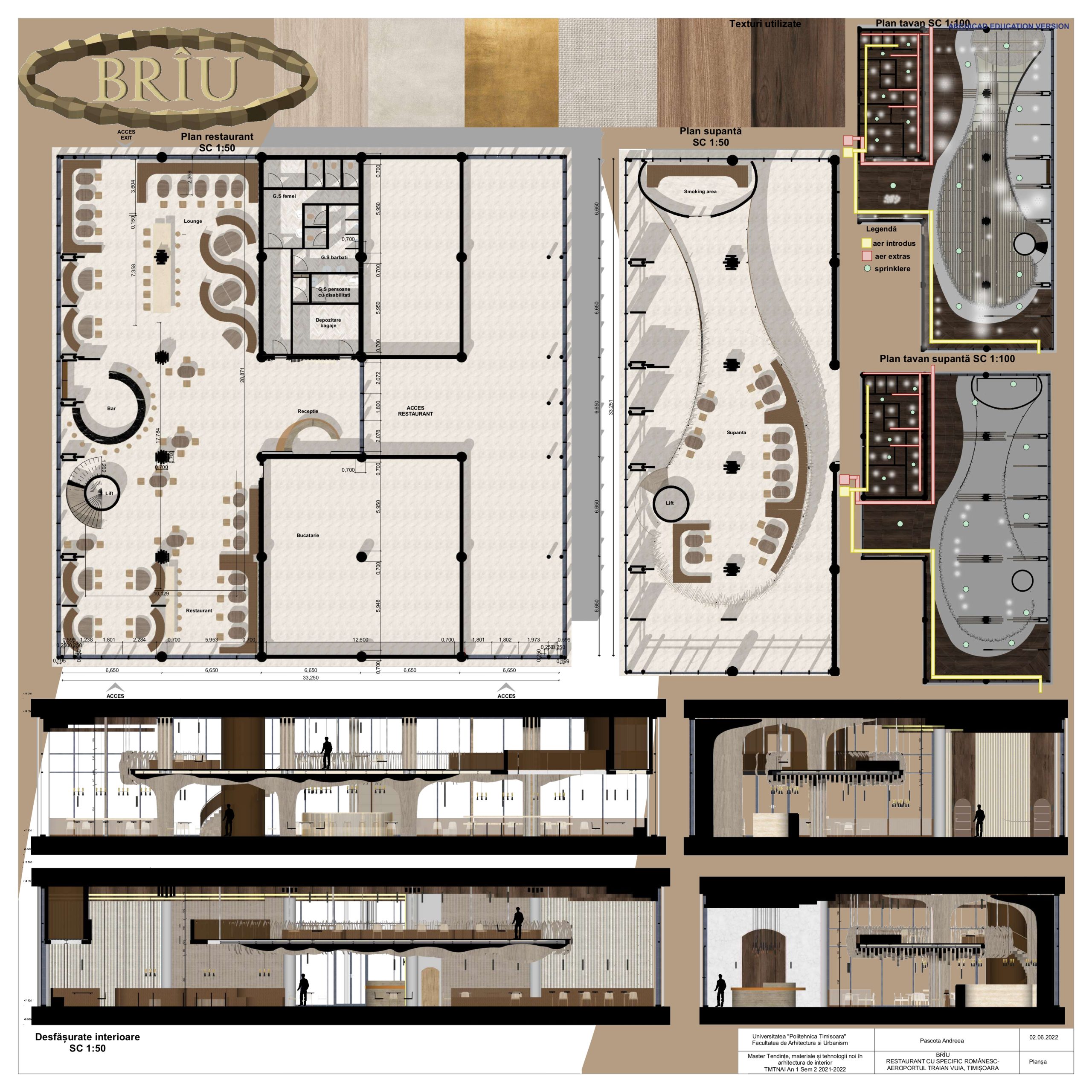
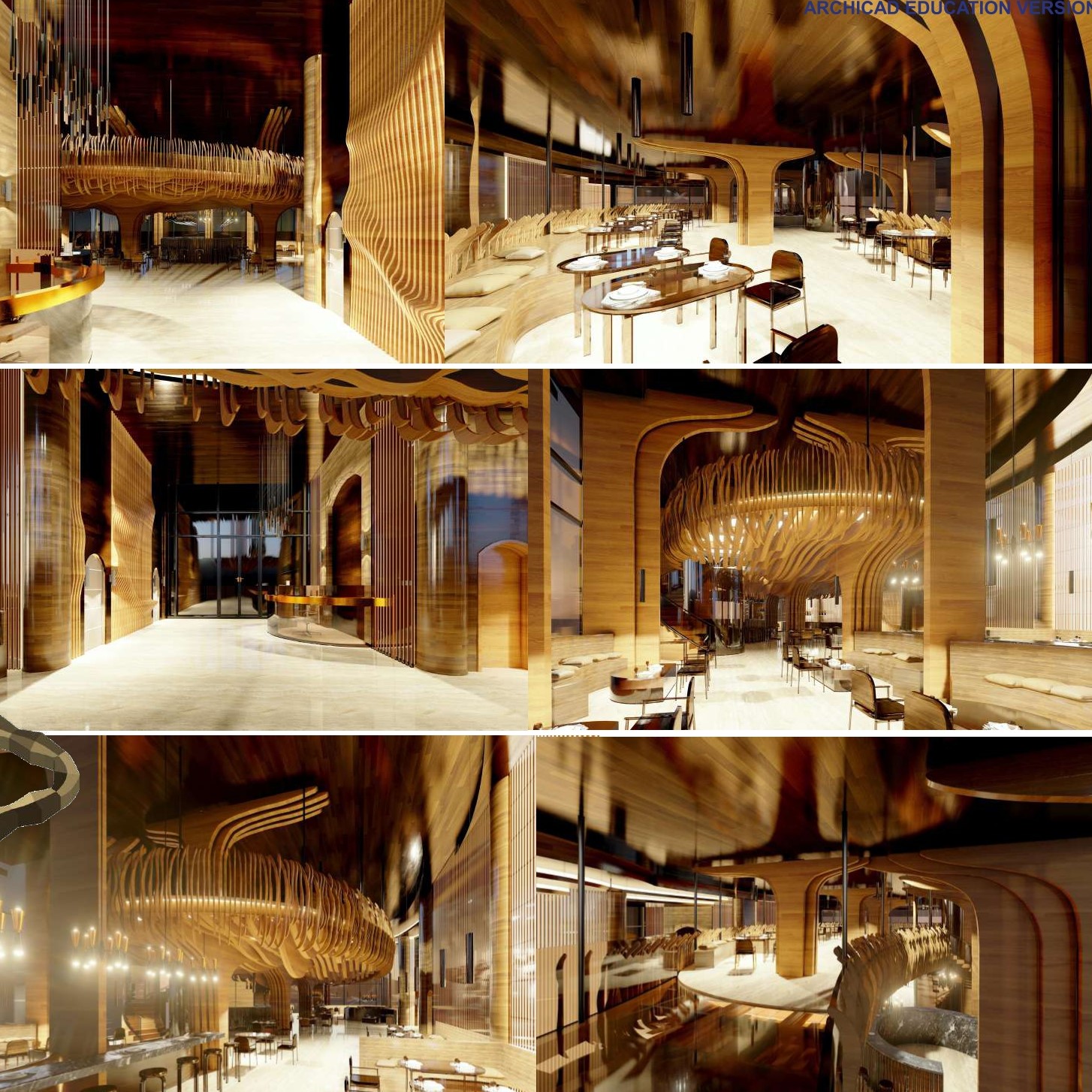
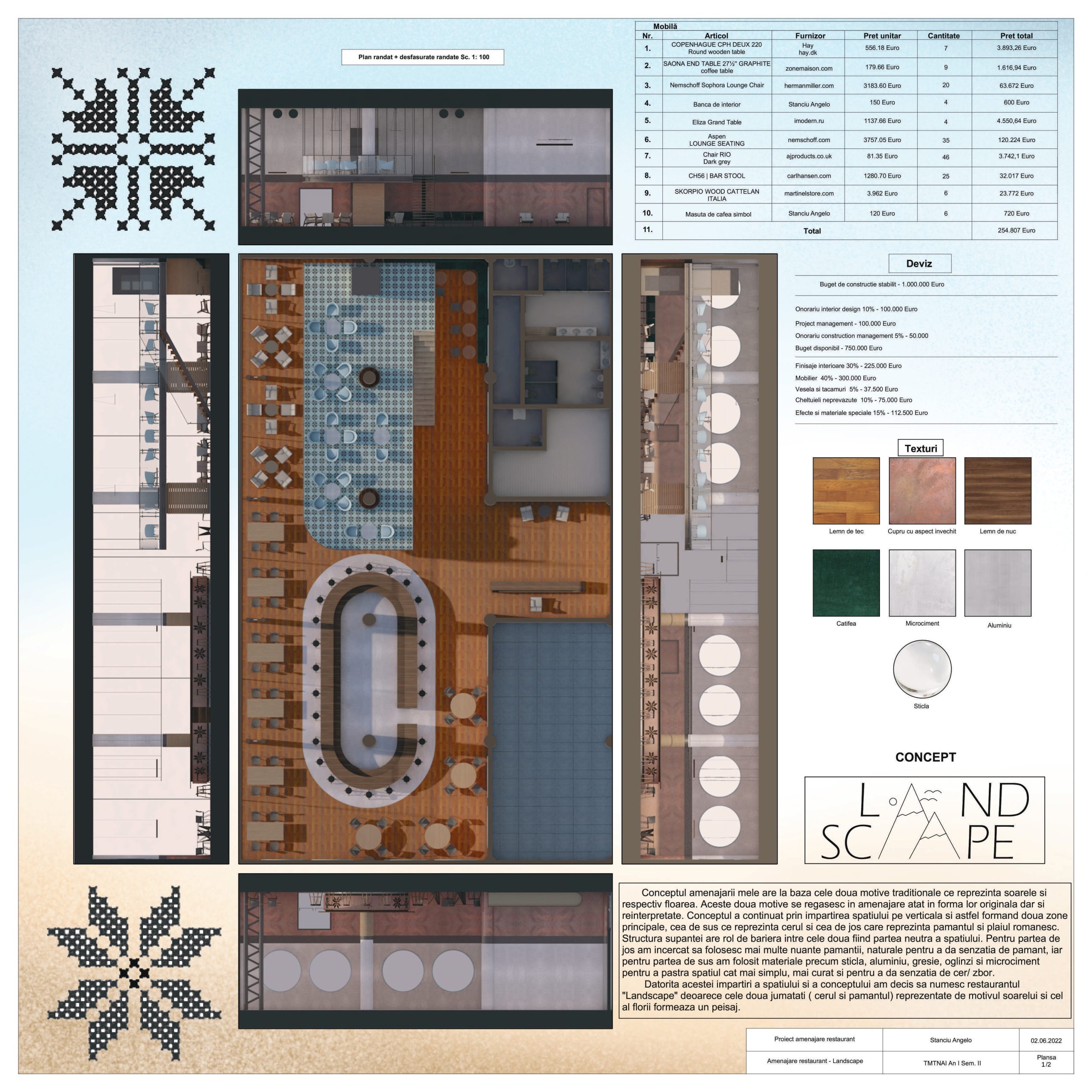
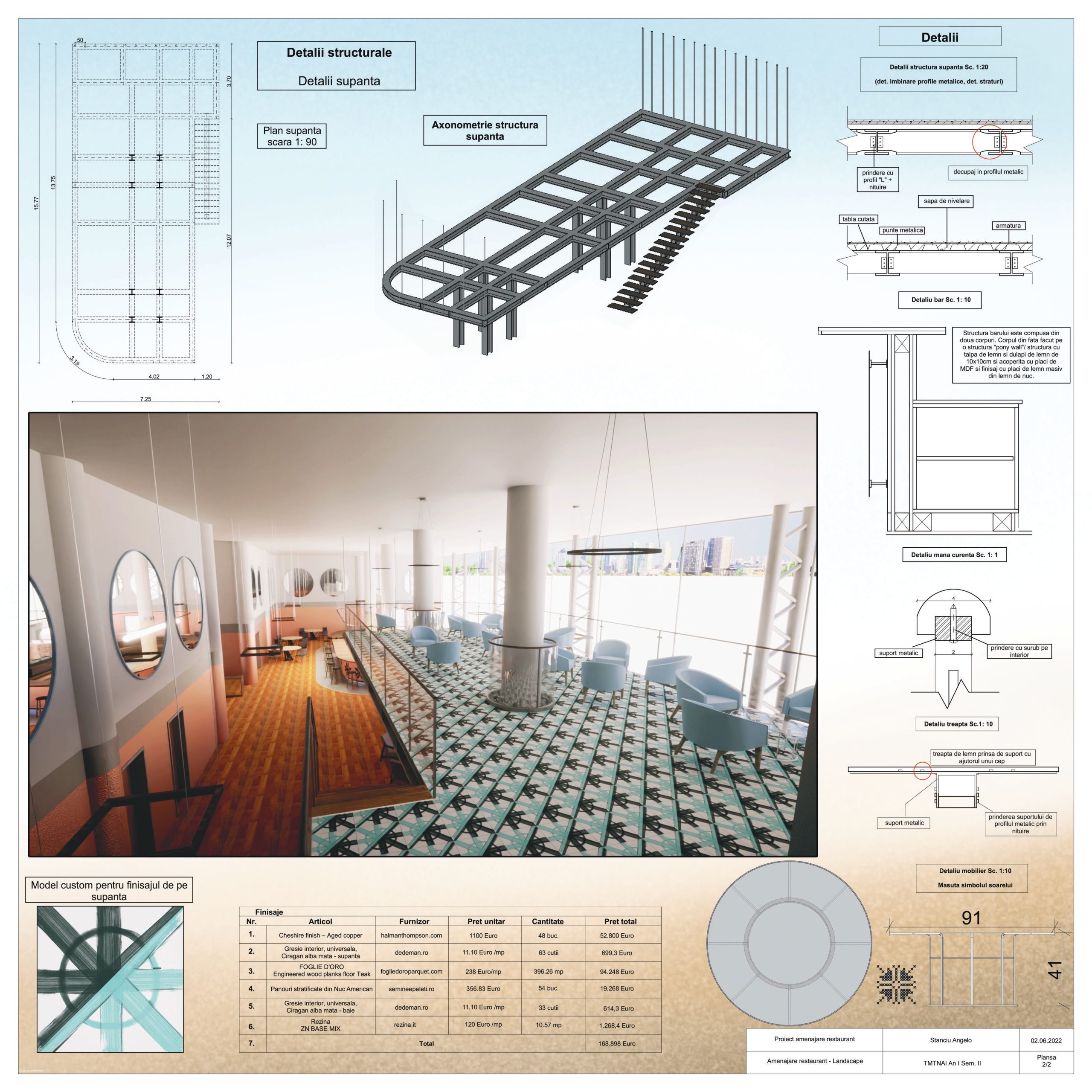
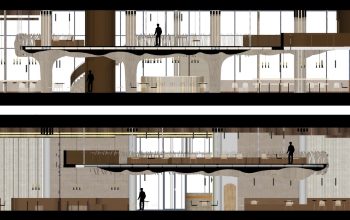
Un proiect de arhitectură de interior poate fi comparat, prin analogie, cu un poem simfonic, este o fuziune între poezie și orchestră, având scopul de a crea imagini vizuale și emoții estetice. Această materie oferă un parcurs bine definit în realizarea unui proiect complex de arhitectură de interior și ajută la dobândirea unor cunoștințe generale asupra implementării unui concept. Tema acestui proiect urmărește amenajarea unui spațiu cu funcțiunea de restaurant, prin fuziunea limbajului vizual cu cel sonor în ritmurile arhitecturale. Se efectuează cercetări preliminare fazelor de proiectare, culegerea datelor și elaborarea de sinteze documentare privind conexiunile cu mediul social și adecvarea soluției propuse la cerințele utilizatorilor, ce conduc la rezultate creative și inovative, dezvoltând sensibilitatea pentru detaliul artistic în proiectele de arhitectură de interior și design de mobilier.
METODE de LUCRU:
Studenții participă activ, prin argumentații susținute logic și critic, la dezbateri colective pe subiectele dezvoltate în cadrul proiectului. Această implicare în dialog este o componentă esențială în procesul de învățare, deoarece crează posibilitatea de a exprima observații personalizate și ajută la dezvoltarea abilității de comunicare, de argumentare și de explicitare folosind termeni de specialitate.
TEACHING OBJECTIVES
An interior architecture project can be compared, by analogy, to a symphonic poem, it is a fusion between poetry and orchestra, with the aim of creating visual images and aesthetic emotions. This subject offers a well-defined path in the realization of a complex interior architecture project and helps to acquire general knowledge on the implementation of a concept. The theme of this project aims to design a space with the function of a restaurant, by merging the visual and sound language in architectural rhythms. Preliminary research is carried out for the design phases, data collection and the elaboration of documentary syntheses regarding the connections with the social environment and the adequacy of the proposed solution to the requirements of the users, which lead to creative and innovative results, developing sensitivity for artistic detail in interior architecture and furniture design projects
WORKING METHODS:
Students actively participate, using logical and critical arguments, in group debates on topics developed within the project. This involvement in dialogue is an essential component of the learning process, as it creates opportunities to express personalised observations and helps develop the ability to communicate, argue and explain using specialised terms.