
Portfolio Category: DIPLOMA
2026 | DIPLOMA | YEAR III
The completion of the three-year program requires the development of a comprehensive interior design project, covering all stages of the design process. Both the site and the function are chosen by the student, provided that the relevance and opportunity of the proposed intervention are clearly justified.
The main objective is to define a strong spatial identity, shaped both by the qualities of the selected context and by the specific characteristics of the proposed function. Throughout the phased development of the project, theoretical and technical approaches are pursued in order to formulate spatial and formal solutions that enhance the chosen space.
This process represents a valuable exercise in preparation for professional practice, addressing adaptive reuse, the creation of an aesthetic aligned with the proposed concept, the coordination of constructive elements (finishes, furnishings, installations), the resolution of execution details for custom-designed furniture, cost anticipation, and overall budget management.
Project Development Phases
Phase I involves understanding existing conditions and defining the requirements of the proposed theme. This includes studying comparable examples of similar scale and function, as well as analyzing the site’s specific characteristics, qualities, dysfunctions, and atmosphere.
Phase II focuses on developing a general intervention concept, generating two preliminary design proposals, and further detailing one selected option.
Phase III consists of producing the technical project documentation, detailing the solution developed in the previous phase at a technical design level.
Phase IV represents the execution detailing stage. The final phase includes preparing detailed drawings for at least three key design elements (such as custom furniture pieces or constructive details), finalizing finishes and materials, and documenting them within the written report, cost estimate, and material palette.
For the full texts please click on the pages of the brochure below.
Diploma Projects
Student: Bredean Diana-Maria
Coordinating Professor: Conf. Dr. Arch. Anamaria Andreea Anghel
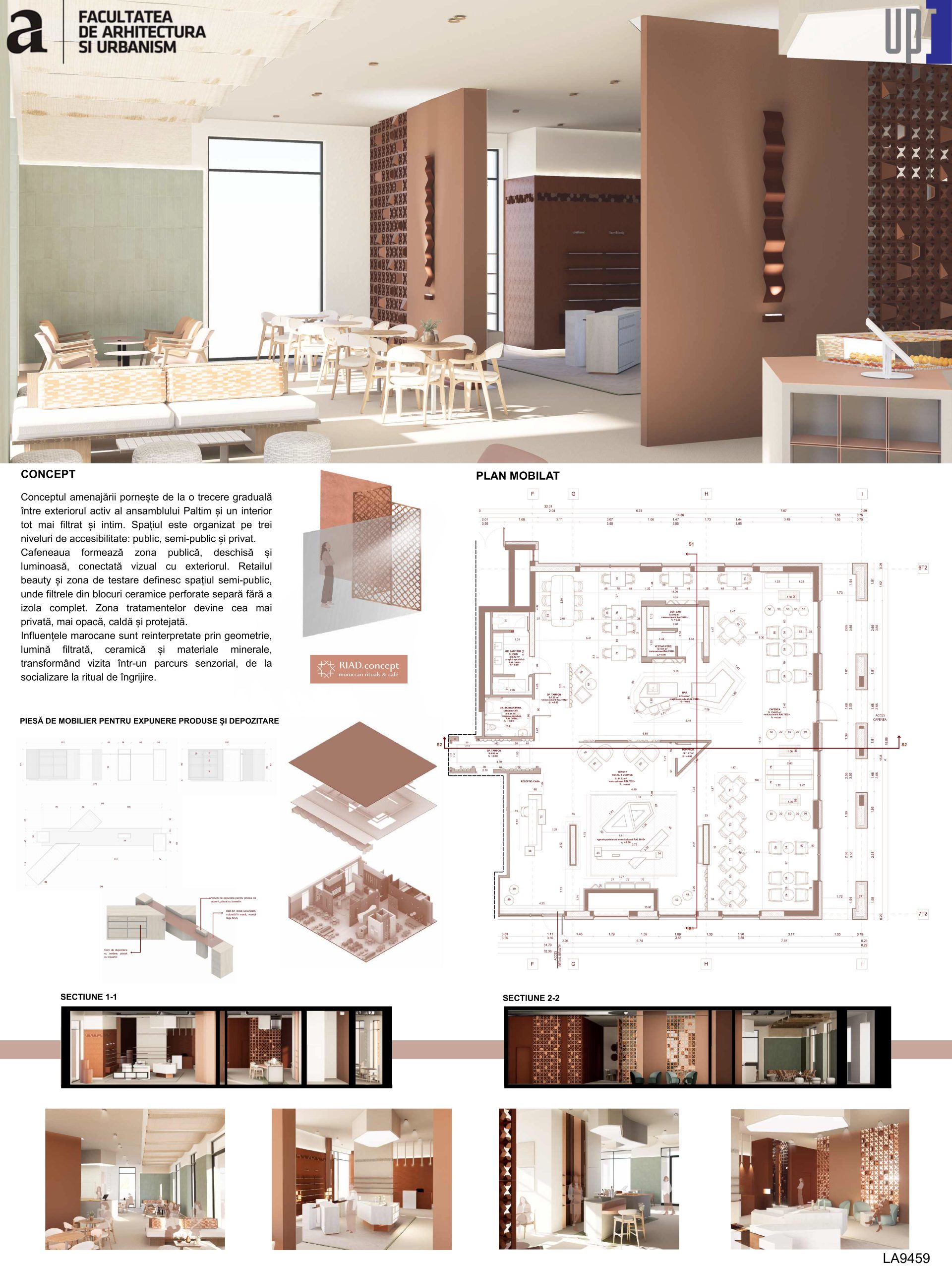
This thesis proposes the interior design of a commercial space within the Paltim complex in Timișoara, conceived as a concept store dedicated to beauty and wellness. The space integrates several functions, including a café, product retail with testing areas, and zones dedicated to facial and body treatments. The concept is rooted in a simple observation: contemporary commercial spaces are no longer defined solely by the act of purchasing, but increasingly by the experiences they offer and the time users spend within them.
The main objective is to create a coherent spatial sequence in which social interaction, product discovery, and personal care follow one another naturally, transitioning from public areas toward more private spaces. The study includes theoretical research, an analysis of relevant best-practice examples, an investigation of the urban and historical context of the site, and a functional and aesthetic interpretation of the existing space.
The resulting proposal transforms the commercial ground floor into a space for relaxation, social interaction, and contemporary care rituals. The interior is shaped through transparency, decorative perforated ceramic blocks featuring geometric patterns, and a palette of materials and colors inspired by Moroccan architecture and interiors, where personal care has traditionally been understood as a slow, sensory, and social experience.
Student: Burghelea Gabriela
Coordinating Professor: Asist. Dr. Arh.Irina Sălăgean-Mohora
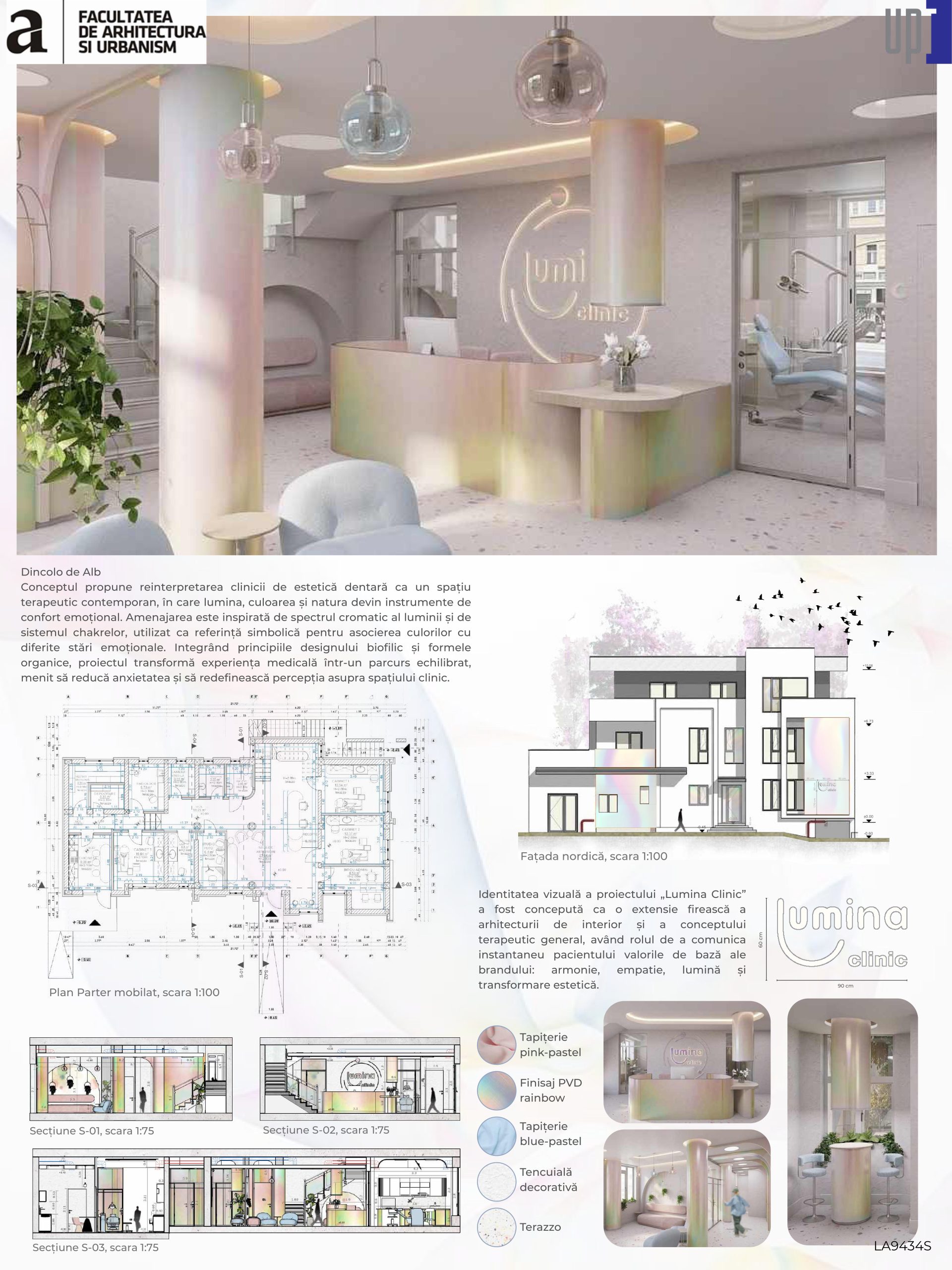
The words “dentistry,” “doctor,” and “clinic” are often directly associated with intense feelings of anxiety, fear, and stress, experienced by both children and adults. The fundamental intention of this project was to challenge this preconceived perception and collective association between dental aesthetics clinics and feelings of fear and hesitation, moving beyond the purely medical function of the space.
Therefore, the project focuses on the design of an innovative therapeutic environment capable of transforming and alleviating these negative emotions while promoting more positive experiences and supporting the patient’s psychological and emotional well-being. The core concept is based on the synergistic interaction between interior design and color psychology, drawing on two complementary directions of analysis: the chromatic spectrum of the rainbow and the system of the seven chakras, understood as symbolic references and conceptual tools for the chromatic organization of the interior.
By overlapping and integrating these two dimensions, the clinic is transformed through the use of a carefully selected chromatic palette, controlled lighting, dichroic finishes, and holographic reflective surfaces. These elements allow colors to shift dynamically according to the viewing angle and intensity of light, creating a fluid and immersive environment that guides patients through a sensory journey intended to promote calmness, safety, and relaxation.
Just as the spectrum of white light is divided through refraction into a multitude of distinct colors, the clinic becomes an architectural prism that fragments fear and transforms it into nuanced sensations of inner peace. Through this holistic approach, interior design moves beyond its role as a purely aesthetic component and becomes an active tool for the multisensory reconfiguration of the medical experience.
The resulting atmosphere demonstrates how the patient’s emotional state and psychological balance can be influenced by the chromatic palette of the environment, which has the potential to evoke a wide range of emotions and sensations. Therefore, the interior must be carefully designed and thoughtfully implemented in order to reduce anxiety and provide an immersive experience characterized by safety, relaxation, and a sense of harmony.
Students: Jangă Andreea
Coordinating Professor: S.l. Dr. Arh. Beatrice Lucaci
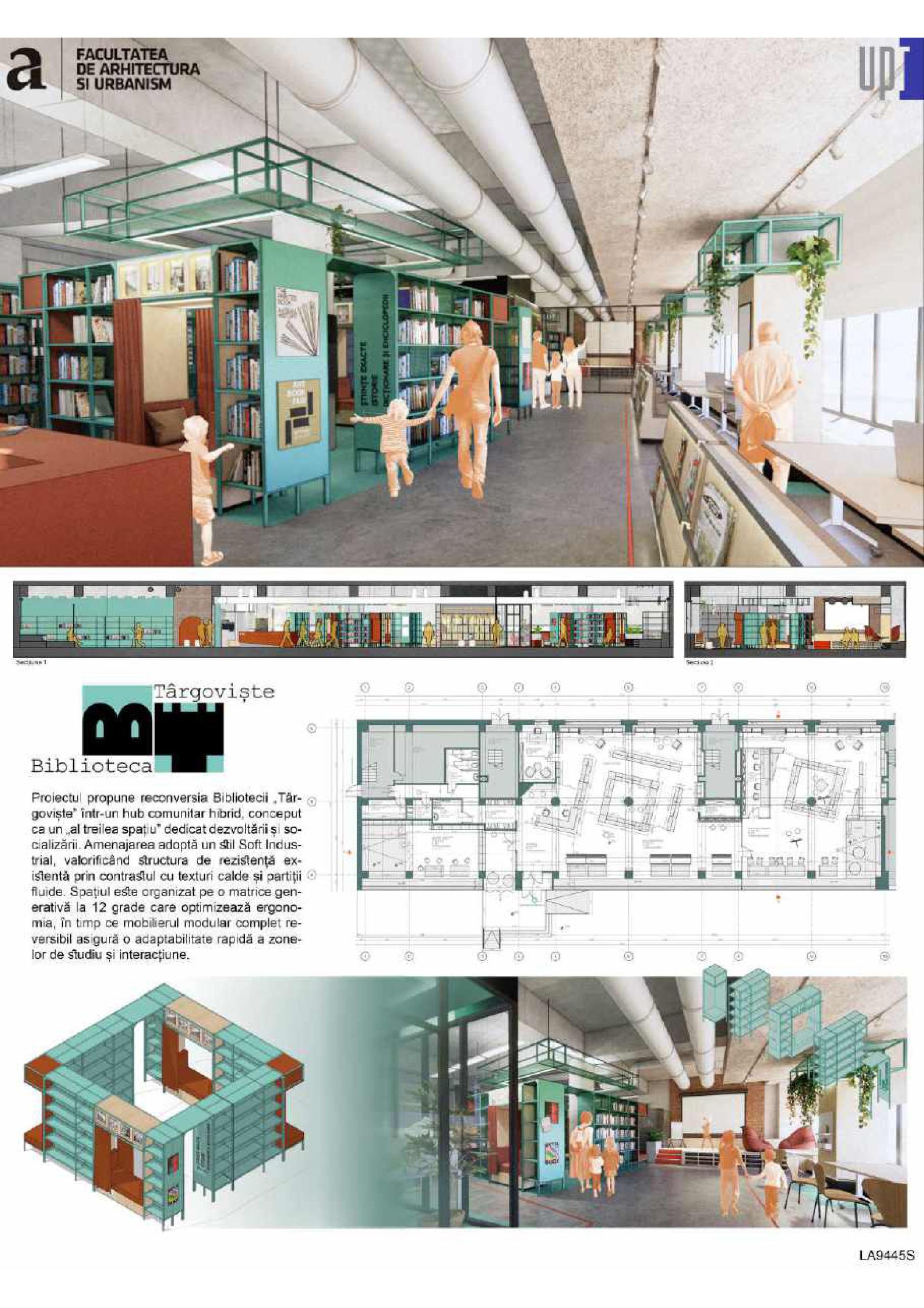
The “Târgoviște” Library has always had the mission of serving as a vibrant and unifying center for the community. This project proposes the conversion of the institution into an enhanced space capable of responding more effectively to contemporary needs. While preserving its fundamental identity as a library, the institution’s role is expanded beyond its traditional function. The proposed community hub becomes a multifunctional meeting point where public services, educational programs, and social and cultural activities can take place. Combining the valuable yet relatively static function of a traditional library with the connectivity and dynamic character of a community hub creates an institution relevant to a broad range of community members.
The transition toward a community hub represents a natural evolution. The concept emerged from the need to adapt the existing layout, which had become outdated in relation to the scale and diversity of events taking place within the space. The main challenge lies in the spatial configuration, which no longer adequately meets users’ requirements and instead limits the potential uses of the facility. The existing arrangement relies on conventional library furniture that does not allow the space to be easily reconfigured for different scenarios throughout the day. The zoning is relatively simple and lacks adequate acoustic differentiation between areas. Although the space benefits from a generous clear height of 4.00 m, this potential has been diminished by the installation of a modular suspended ceiling.
The new design proposes a reevaluation and maximum capitalization of the elements that define the space’s identity. The original structural frame and exposed concrete texture are integrated with metal and wood finishes to create a refined, soft-industrial aesthetic. The spaces are differentiated through acoustic partitions and booths, allowing for the coexistence and alternation of quiet and active activities. Three main areas are defined: a children’s area, a reading area, and a socialization area.
In conclusion, the project demonstrates that interior architecture can function as an instrument for community reactivation. The main impact of the intervention lies in returning the space to the people by creating an active community hub that preserves the building’s identity, supports the dedication of its staff, and provides young people with the “third space” needed for personal development, interaction, and socialization.
Student: Pap Alexia
Coordinating Professor: Conf. Dr. Arch. Andreea Anamaria Anghel
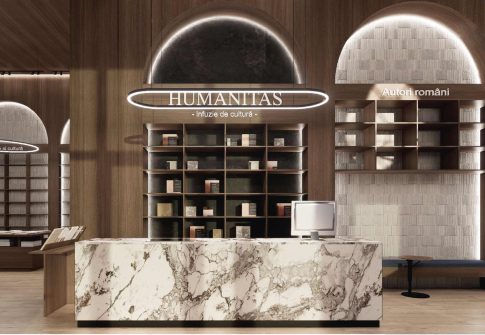
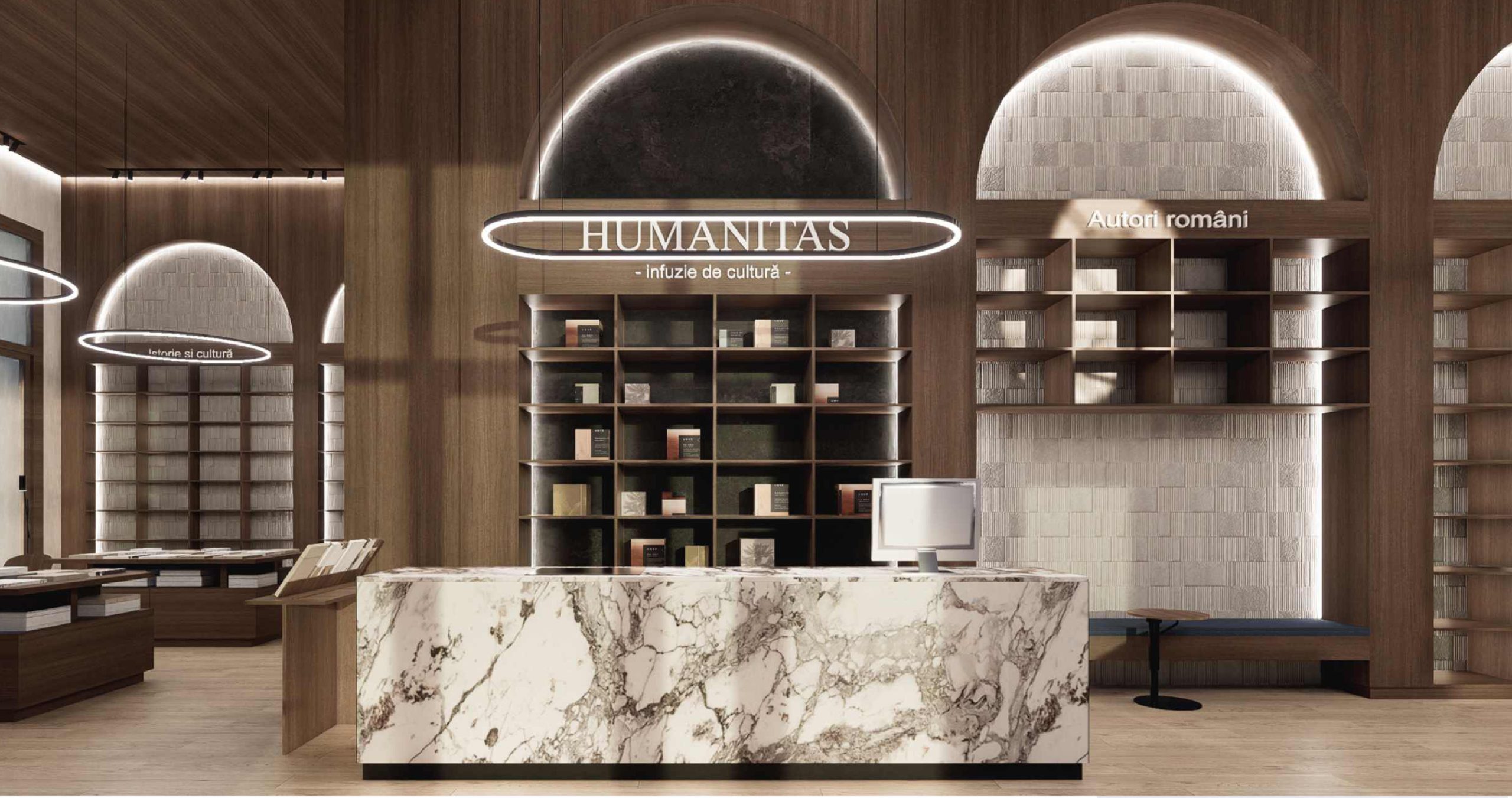
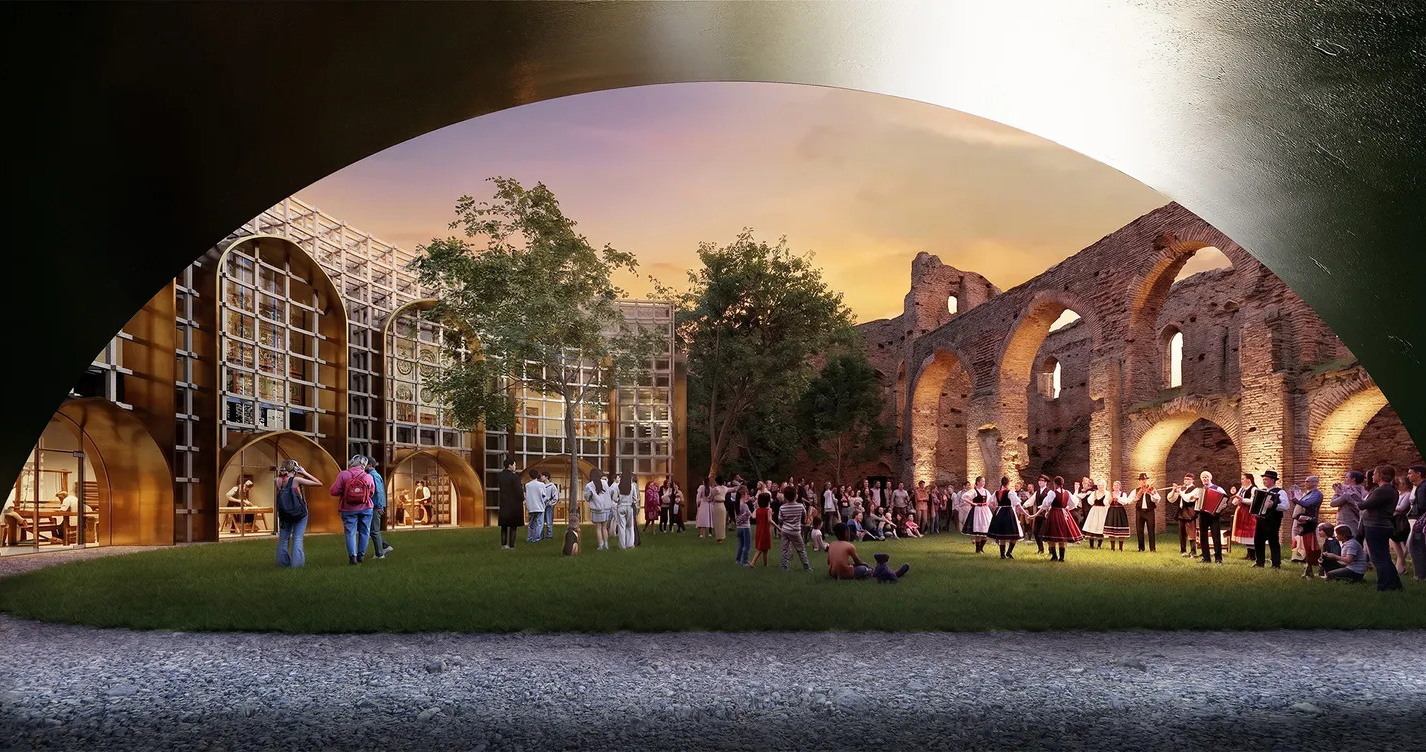
In a city with such a strong cultural identity as Timișoara, there is a growing need to highlight its historical richness in a contemporary and engaging way, particularly for younger generations. Timișoara is a city shaped by multiple cultures, nations, and ethnic groups, a diversity reflected throughout its architecture, educational institutions, religious buildings, gastronomy, population, and languages. Furthermore, Timișoara’s designation as European Capital of Culture in 2023 further reinforced the need and desire to emphasize and promote the city’s local heritage.
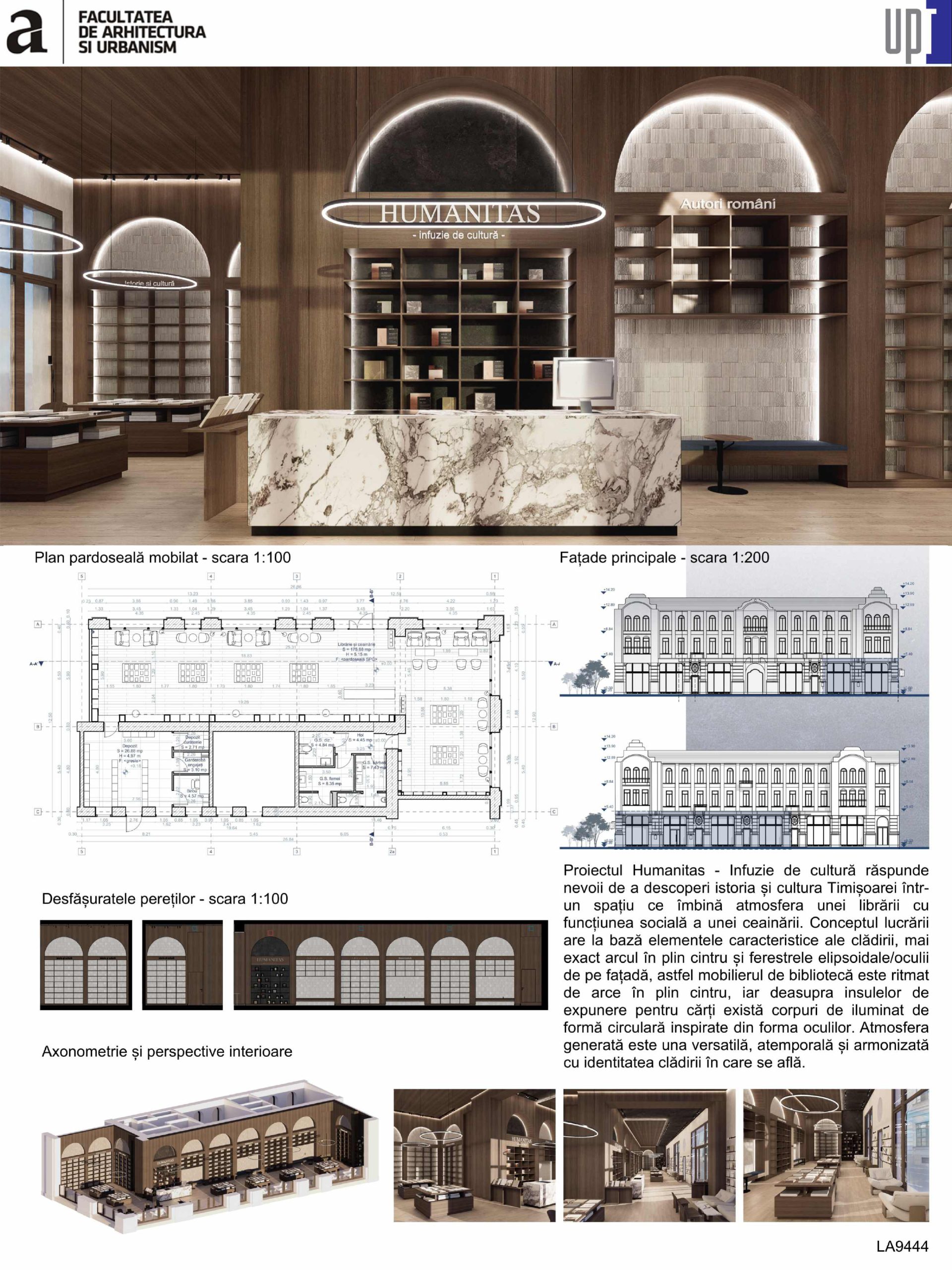
The project aims to create a space that responds to the need to capitalize on the cultural layers that, over time, have contributed to shaping the identity of contemporary Timișoara, while also addressing the younger generation’s interest in discovering and understanding the city in which they live or which they visit. Based on these observations and an analysis of current public needs and expectations, a strategy for implementing this concept was developed. The proposal takes the form of a cultural hub: a multifunctional space combining the cultural function of a bookstore with the social dimension of a tea house. The bookstore is conceived not merely as a place for purchasing books, but as a space in which books and culture can be experienced, complemented by areas for relaxation and the enjoyment of hot or cold beverages according to the season.
The proposed function is located on the ground floor of the Israelite Community Palace, in the Cetate district. In developing the concept, several aspects were analyzed, including the site’s position, its relationship with the surrounding urban context, the architectural characteristics of the building, its ornamentation and defining elements, as well as its historical evolution and former functions.
The design does not seek to compete with the history and character of the existing building, but rather to reactivate and reinterpret them in a contemporary and harmonious manner, creating a space inspired by the building’s historical identity. The intervention is conceived as versatile and accessible to diverse categories of users, from students, adults, and elderly people to locals and tourists, as well as from passionate readers to those simply seeking to enjoy a quality cup of tea in a culturally meaningful environment.
Student: Retezan Ania
Coordinating Professor: S.l. Dr. Arch. Alexandra Keller
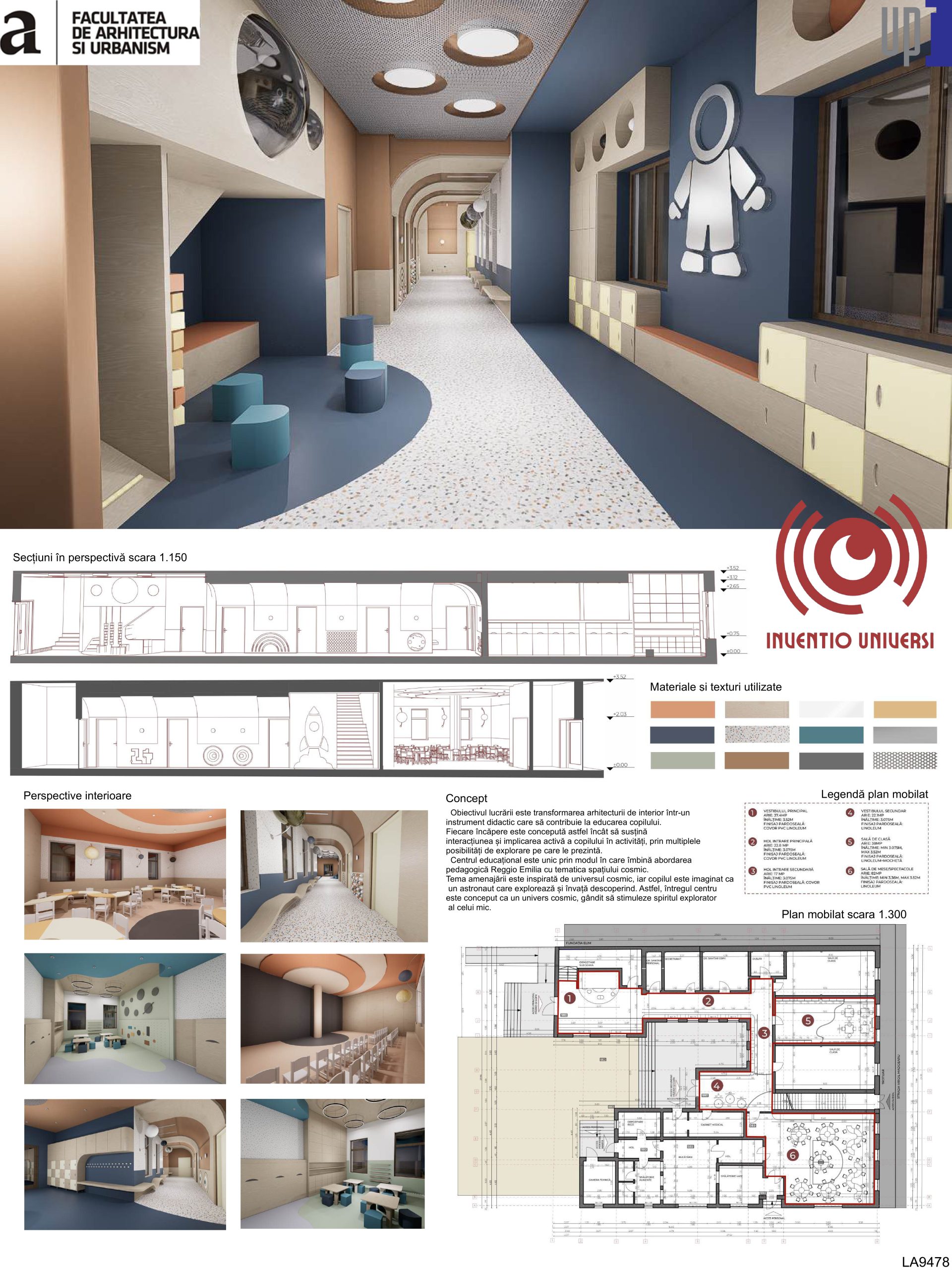
My bachelor’s thesis focuses on the interior design of an educational center for preschool children, located in a building on 28 Virgil Madgearu Street in Timișoara. The site is situated in a central area characterized by high accessibility and proximity to green spaces and educational institutions. Therefore, the selection of an educational function represents a well-justified solution that responds appropriately to the existing urban context.
The concept of the project is based on the premise that the surrounding environment plays an essential role in a child’s development and education. The space in which children spend a significant part of their day should be designed to respond to their needs while providing a stimulating environment that supports cognitive development, creativity, and imagination.
The design theme is inspired by the cosmic universe, with the child imagined as an astronaut who explores and learns through interactive experiences. Accordingly, the entire center is conceived as a cosmic universe designed to stimulate children’s curiosity and sense of exploration. Each space is planned to support both play and learning. The vestibule and corridors are treated as dynamic areas featuring interactive elements and engaging colors. The same principle extends to the classrooms and dining area, transforming everyday activities into playful experiences. The atmosphere of the cosmic universe is reinforced through the forms and volumes of the furniture, finishes, and graphic elements.
The activity spaces are designed with multifunctionality in mind, allowing them to adapt to different scenarios according to the children’s daily needs. Thus, the classroom can be reconfigured to accommodate rest activities, while the dining room can be transformed into a performance space.
An important aspect of the project is the use of color, taking into consideration its psychological effects on children. Each space is assigned a specific chromatic treatment according to its function. Furniture, materials, and lighting further contribute to creating a stimulating and engaging atmosphere that encourages children to explore their surroundings freely.
2026 | DIPLOMA | YEAR VI
The completion of studies at the Faculty of Architecture and Urbanism within Universitatea Politehnica Timișoara is achieved through a diploma examination structured into two complementary components, theoretical and applied in nature.
Part I consists of the defense of a theoretical dissertation and a preliminary research study (pre-diploma), which establishes the conceptual foundation of the final project. The dissertation is developed within one of three academic units:
Complex Architecture
Heritage Development and Reuse
Urban Planning
Part II involves the public defense of the diploma project, presented through written and graphic documentation demonstrating the candidate’s ability to integrate and apply theoretical knowledge in the coherent resolution of an architectural or urban issue.
The topic may be selected from those proposed within the thematic unit or formulated by the candidate in consultation with the academic supervisor.
The final assessment considers the rigor of the research process, theoretical grounding, conceptual coherence, interdisciplinary dimension, and the overall architectural quality of the proposed solution.
For the full texts please click on the pages of the brochure below.
Complex Architecture
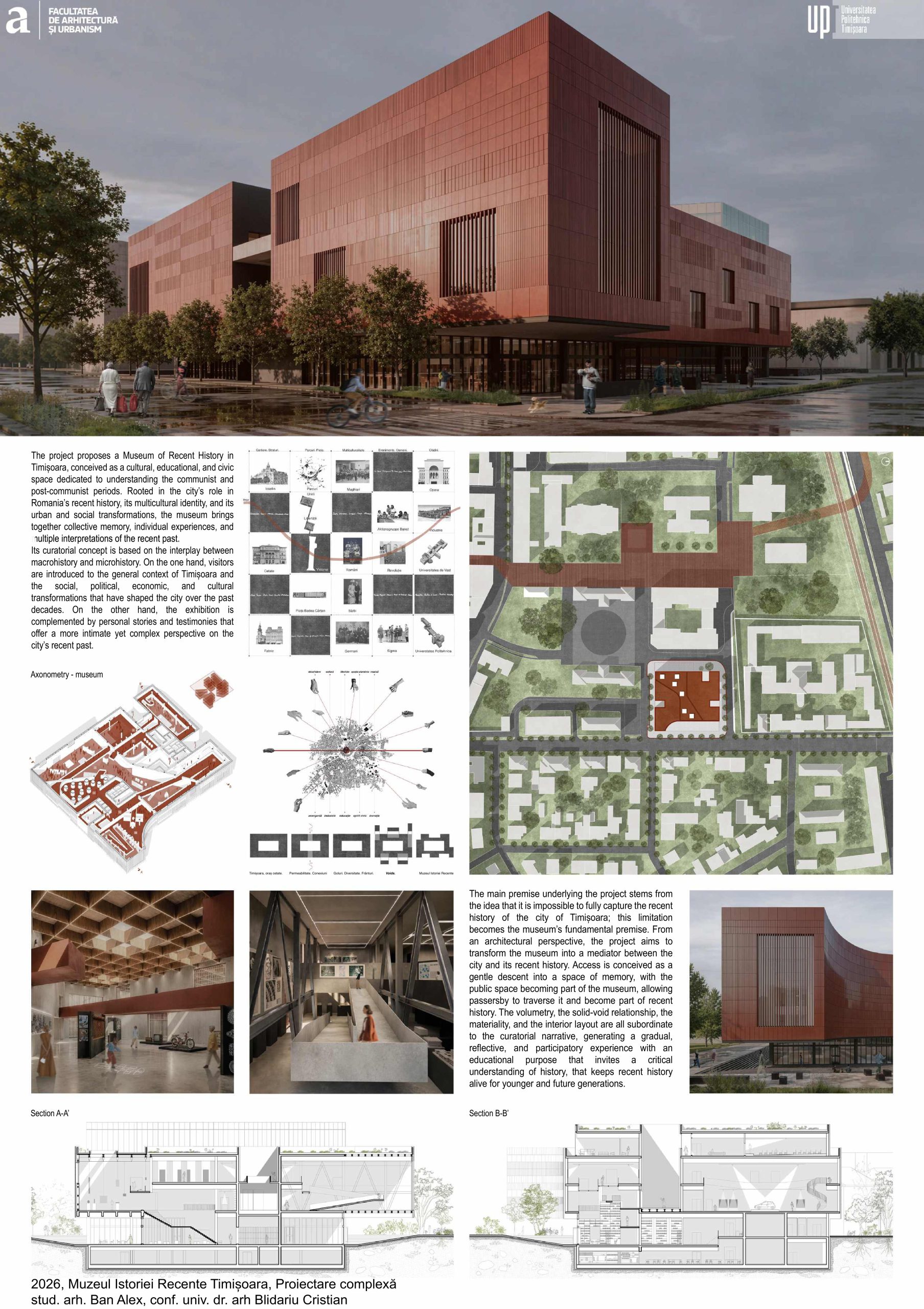
Student: Ban Alex Georgel
Coordinating Professor: Conf. Dr. Arch. Cristian Blidariu
During the pre-diploma presentation, several essential aspects requiring further development were highlighted. The first concerned the redesign of the building’s access, so that the descent towards the museum would become gentler and function as a public transitional space, accessible also to passers-by who do not enter the museum itself. In this way, the exterior space becomes part of the museum experience, while city users are indirectly engaged in the discourse on recent history.
A second aspect concerned the further development of the building’s materiality and external expression, through a clearer definition of the façades and the relationship between solid and void. Particular attention was also given to establishing a more thoughtful relationship between the public plaza spaces and important elements of the built context, such as the Memorial of the Revolution and Popa Șapcă Street. Another direction of development involved partially aligning the building with the street frontage along Popa Șapcă Street, in order to achieve a more coherent urban integration.
At the same time, the clarification of the museum route was considered necessary, so that the visitor’s journey would be more clearly defined and effectively support the curatorial narrative. During the diploma stage, these observations were incorporated into the further development of the project, contributing to a more refined relationship between the building, the city, and the museum experience.
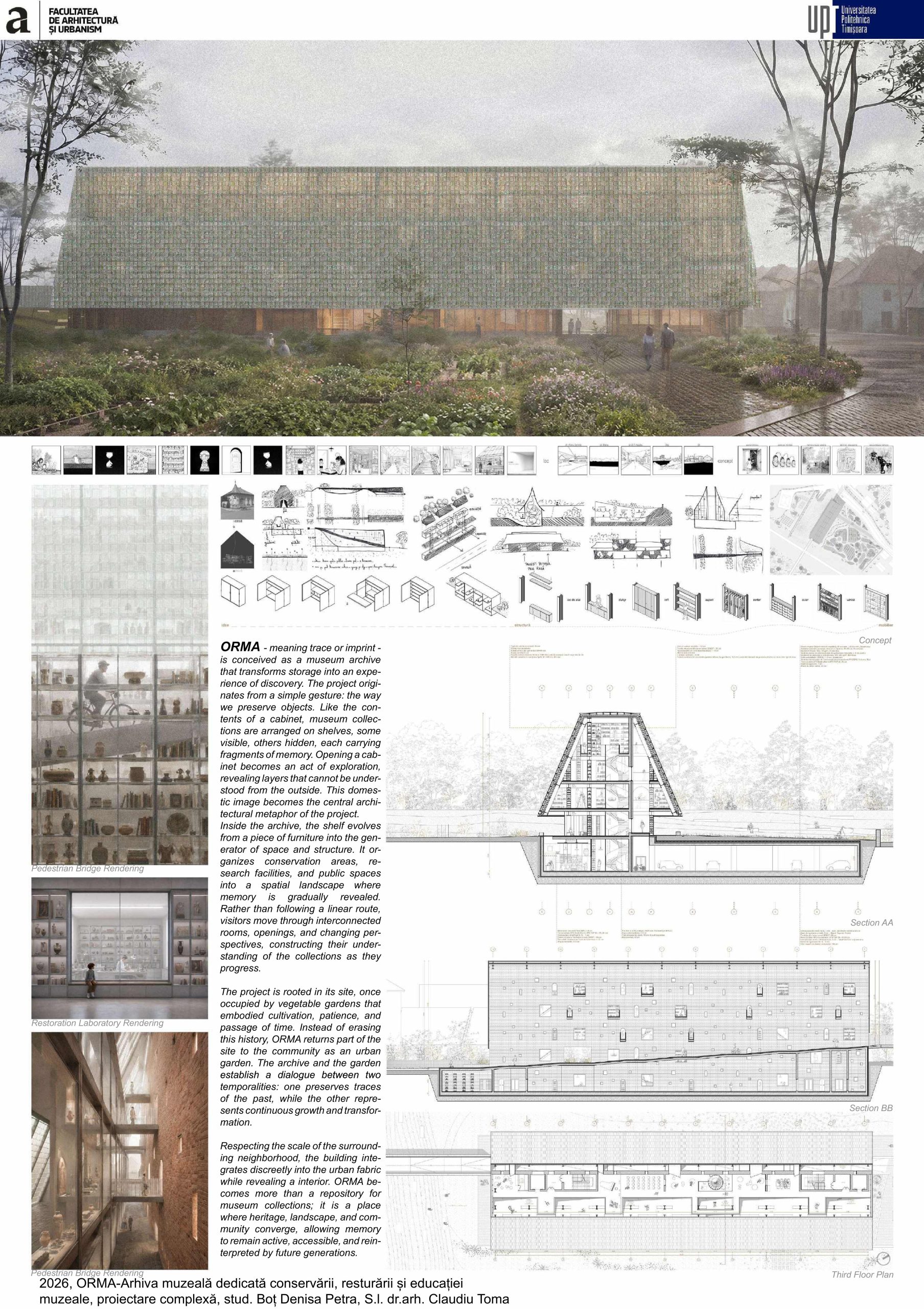
Student: Boț Denisa Petra
Coordinating Professor: S.l. Dr. Arch. Claudiu Toma
The ORMA project represents the outcome of an approach that began with research into the relationship between heritage, memory, and architecture, and continued through the development of a proposal capable of addressing a real need of the Satu Mare County Museum. Beyond providing infrastructure dedicated to the preservation of collections, the project seeks to transform the way the museum archive is understood and perceived.
Traditionally, an archive is a hidden space intended exclusively for conservation and research. ORMA proposes a different perspective, in which the protection of heritage does not exclude bringing it closer to the community. On the contrary, the project is based on the belief that memory can be better protected when it is known, understood, and shared. Thus, the archive becomes a space of discovery, where visitors not only observe the objects but also understand the processes and the people involved in preserving them.
At the same time, the project demonstrates that a museum archive can go beyond the role of a technical building and become an active element of the city. Through the public walkway, community garden, and its relationship with the Someș riverbank, the archive does not function in isolation but complements the urban structure and creates new connections between heritage, landscape, and everyday life.
The ORMA concept influenced every design decision, from the functional organization and structural solution to the choice of materials and the way light enters the interior. The cabinet, shelf, transparency, and garden are not independent elements, but fragments of the same idea: that memory is built through accumulation, discovery, and the continuous relationship between past and present.
Ultimately, ORMA proposes not merely a new museum archive, but a different way of looking at heritage. Not as a collection of objects preserved behind closed doors, but as a living memory, continuously connected to people and to the place of which it is part. Architecture thus becomes more than a shelter for heritage; it becomes the medium through which traces of the past continue to be discovered, understood, and passed on.
At the same time, the project highlights the essential role of the museum archive in safeguarding and protecting cultural heritage. Every preserved object represents a fragment of collective history, and maintaining it in optimal conditions means, in essence, preserving the identity of a community. By opening the archive to the public, heritage ceases to be merely a resource intended for specialists and becomes a tool for education, research, and cultural dialogue. The project therefore proposes an architecture that not only preserves the past but also actively contributes to shaping the cultural awareness of present and future generations, demonstrating that protecting heritage ultimately means protecting the memory and identity of a society.
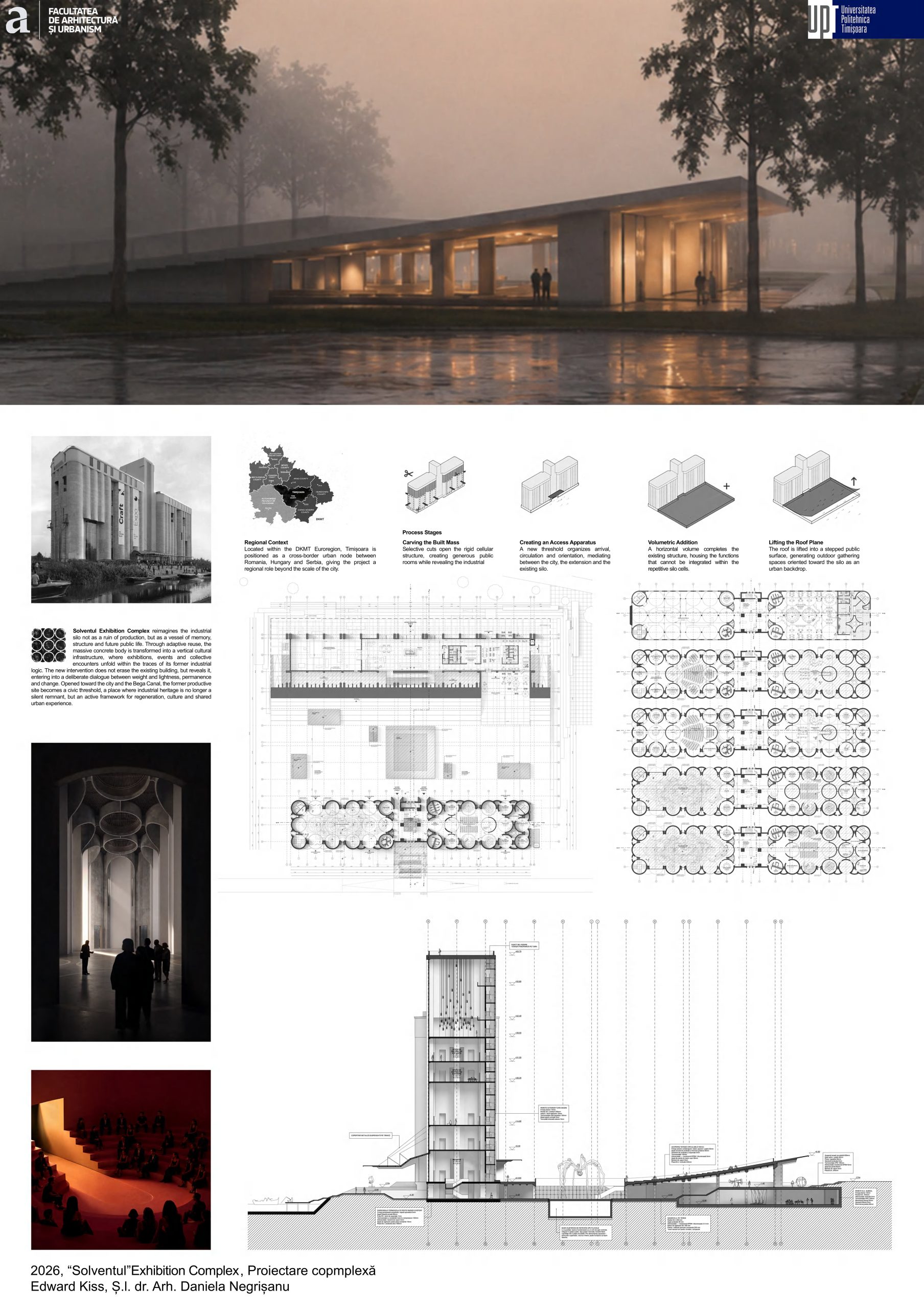
Students: Kiss Edward Ștefan
Coordinating Professor: S.l. Dr. Arch. Daniela Negrișanu
The proposal develops a regional exhibition complex on the Solventul platform, conceived as both economic and cultural infrastructure for Timișoara and as a tool for the urban regeneration of a post-industrial territory. The detailed intervention focuses on the conversion of the IPCMC II grain silo, one of the site’s most representative industrial structures, complemented by a contemporary extension that allows it to accommodate its new functional program.
The project aims to preserve and enhance the site’s industrial heritage through adaptive reuse, maintaining the silo’s architectural identity while integrating it into a contemporary complex capable of hosting exhibitions, conferences, and cultural events
Student: Naghi Alexandru
Coordinating Professor: S.l. Dr. Arch. Daniela Negrișanu
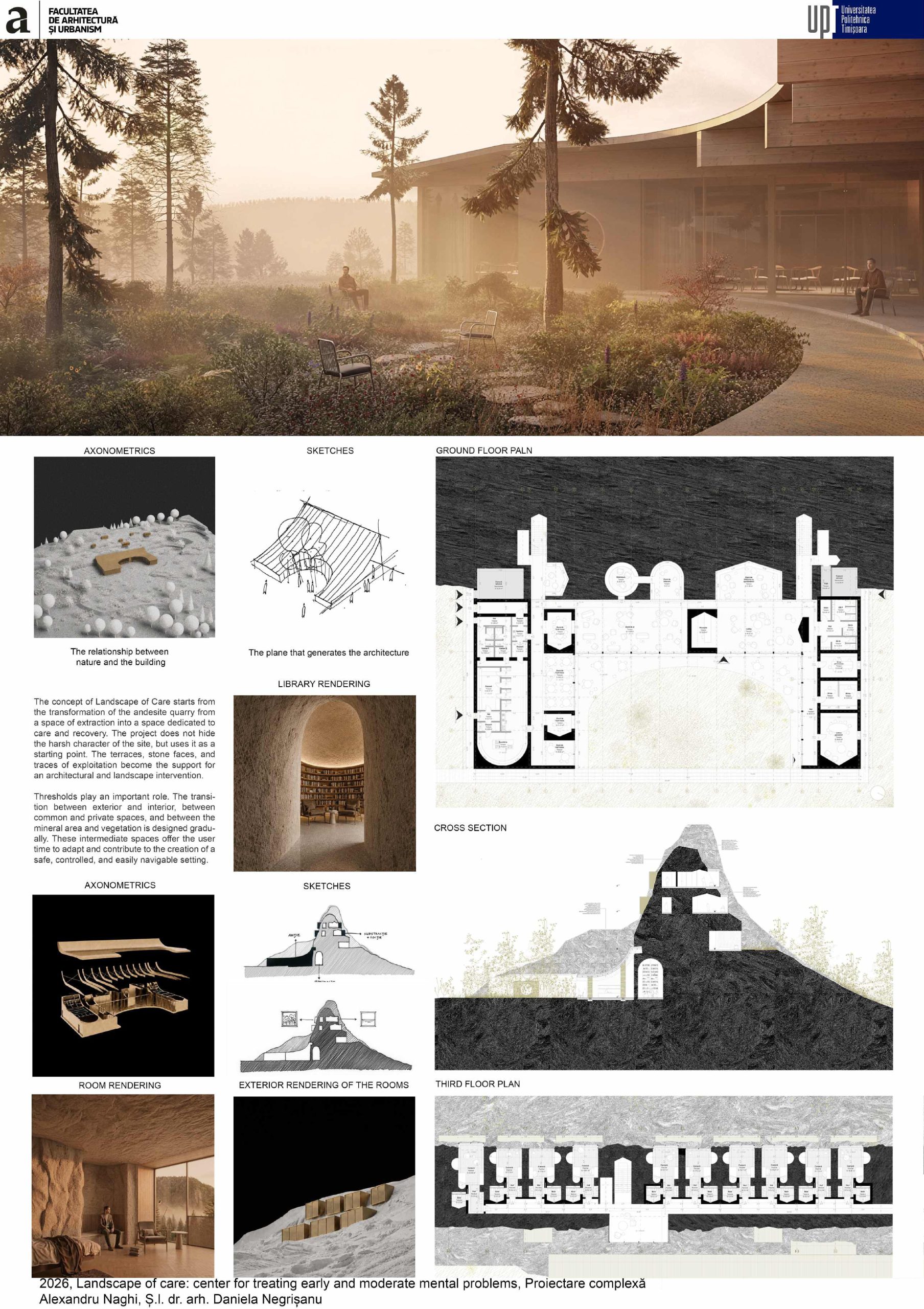
The Landscape of Care project proposes the conversion of the former andesite quarry in Colibița into a care center for people with early and moderate mental health disorders, demonstrating how a landscape shaped by industrial exploitation can become a setting for recovery and regeneration. Rather than erasing the traces of industrial activity, the intervention integrates them into a new relationship between architecture, nature, and the user.
The project seeks to preserve the existing qualities of the site while limiting interventions. Functional organization, structural systems, material choices, and sustainability strategies are developed as a unified approach, creating an environment that supports recovery through continuous contact with the landscape, carefully controlled spatial sequences, and the use of natural materials.
The project argues that architecture can contribute to the therapeutic process not only by providing appropriate functional conditions, but also by shaping the experience of space. The rhythm of movement, the balance between retreat and openness, the presence of vegetation, and the dialogue with the quarry’s exposed rock complement medical care and contribute to recovery.
Beyond its specific function, the project proposes a model for intervening in post-industrial landscapes, where environmental regeneration and user recovery are understood as complementary processes. Landscape of Care thus demonstrates how architecture can become an instrument of care—for both people and places seeking a new meaning.
Student: Tuleu Alexandra-Elena
Coordinating Professor: Conf. Dr. Arch. Cătălina Bocan
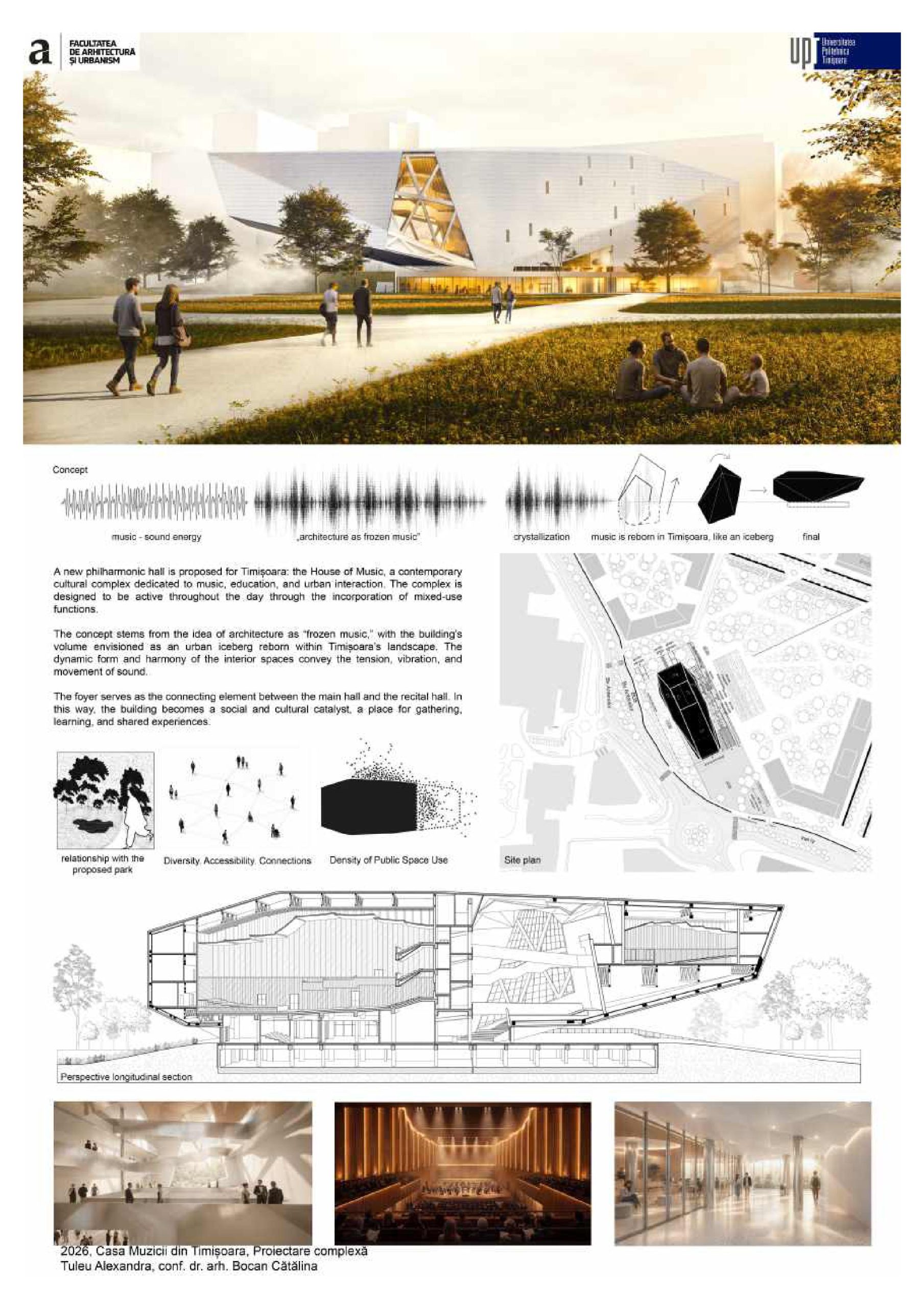
The project proposes a direct response to the shortcomings of the current headquarters of the “Banatul” Philharmonic. The Capitol building was not originally designed as a philharmonic, resulting in major acoustic deficiencies, limited hall capacity, insufficient spaces for artists, and no possibility for expansion. The new site on Antenelor Boulevard also presented geometric constraints due to its elongated plot. Nevertheless, the proposal demonstrates that the site can accommodate an extensive program through optimized functional organization and vertical development. Its highly visible corner position also creates challenges for concealing back-of-house and logistical areas, but is ultimately used to transform the building into a visual landmark and focal point along several major urban axes.
Structurally, the project involved significant technological challenges, requiring multiple iterations and calculation variants. The main difficulty was the design of the 40-meter cantilever, which provides climatic protection for the entrance while creating a gradual transition between the public and urban spaces and the proposed natural landscape.
Acoustics represent another key aspect of the project. The main concert hall and recital halls are designed according to the high acoustic requirements of the shoebox typology. Independent volumes and specialized rehearsal rooms address the acoustic and spatial deficiencies of the former venue, while HVAC equipment is acoustically isolated within dedicated buffer spaces. Logistical circulation is completely separated from the routes used by artists and the public.
In terms of long-term sustainability, the project goes beyond the limitations of conventional performance venues by creating a building that can remain active throughout the day. An accessible mixed-use component includes a learning center, music education spaces, a café, restaurant, and commercial areas, attracting diverse audiences while generating additional revenue and supporting long-term economic viability.
Ultimately, the new House of Music goes beyond being an isolated architectural object, becoming an important project for the urban and cultural development of Timișoara. By relocating the Philharmonic from the overstressed historic center, the intervention not only helps decongest the Cetate area but also acts as a social catalyst for the regeneration of a previously declining urban landscape.
Heritage Development and Reuse
Student: Alessio Cerantola
Coordinating Professor: Asist.drd.arh. Daniel Tellman
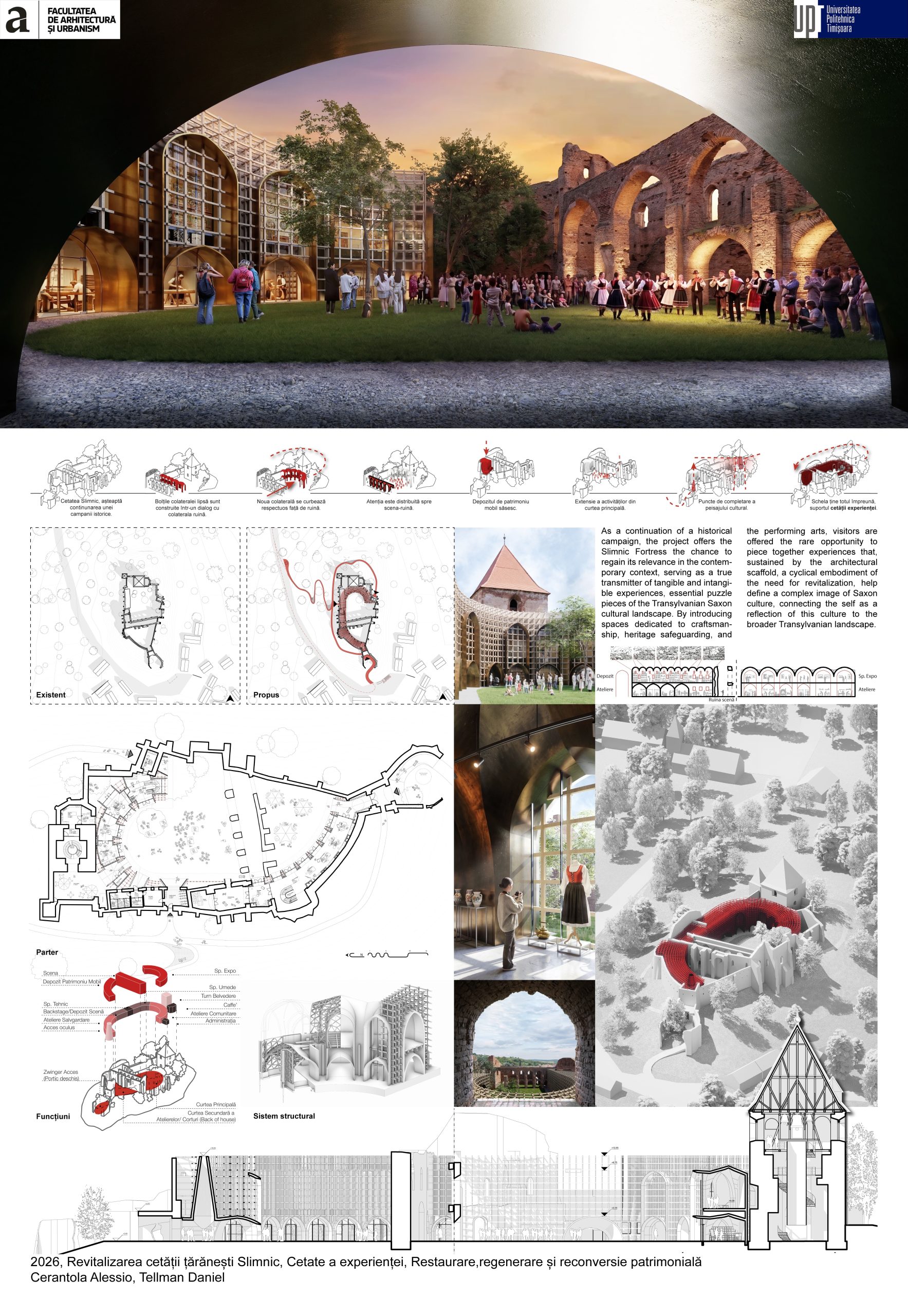
The Slimnic Fortress project represents, in my view, how a place can unconsciously shape an architectural theme and program through its history, its process of decay, and, above all, its story—so deeply intertwined with the character of the site that the solution seems to have been shaped by the fortress itself.
My role in this process, which represents the culmination of my personal journey, was similar to that of an “identity archaeologist.” I believe the solution does not belong entirely to me, but rather emerged from the process described above.
Slimnic Fortress is, in essence, a Fortress of Experience, not because the proposed interventions transform it into one, but because it has always been a place of experience through its identity, atmosphere, and history. For this reason, the proposed intervention is also ephemeral.
The proposal within the fortress acts as a means of activating and intensifying its existing character, while accelerating efforts to preserve not only the fortress itself, but also the wider Transylvanian Saxon cultural heritage. By using a cyclical architectural language rooted in the identity of the place, the project creates a generational pulse of site reactivation, transforming the fortress into a timeless anchor.
Moreover, Slimnic becomes a Fortress of Experience because it does not exist in isolation. The network of Saxon fortifications, historical witnesses, and the surrounding landscape collectively transform it into a carrier of shared experiences.
Ultimately, the abandoned construction site of the Gothic hall church and Slimnic Peasant Fortress reflects a broader regional reality, where heritage loss has already occurred and continues today. “Revitalization of Slimnic Peasant Fortress – Fortress of Experience” seeks to preserve this heritage, both directly and indirectly, through a total experience aimed at reintegrating the fortress into the consciousness of the present.
Student: Bojici Ivana-Maia
Coordinating Professor: Conf. Dr. Arch. Bogdan Demetrescu
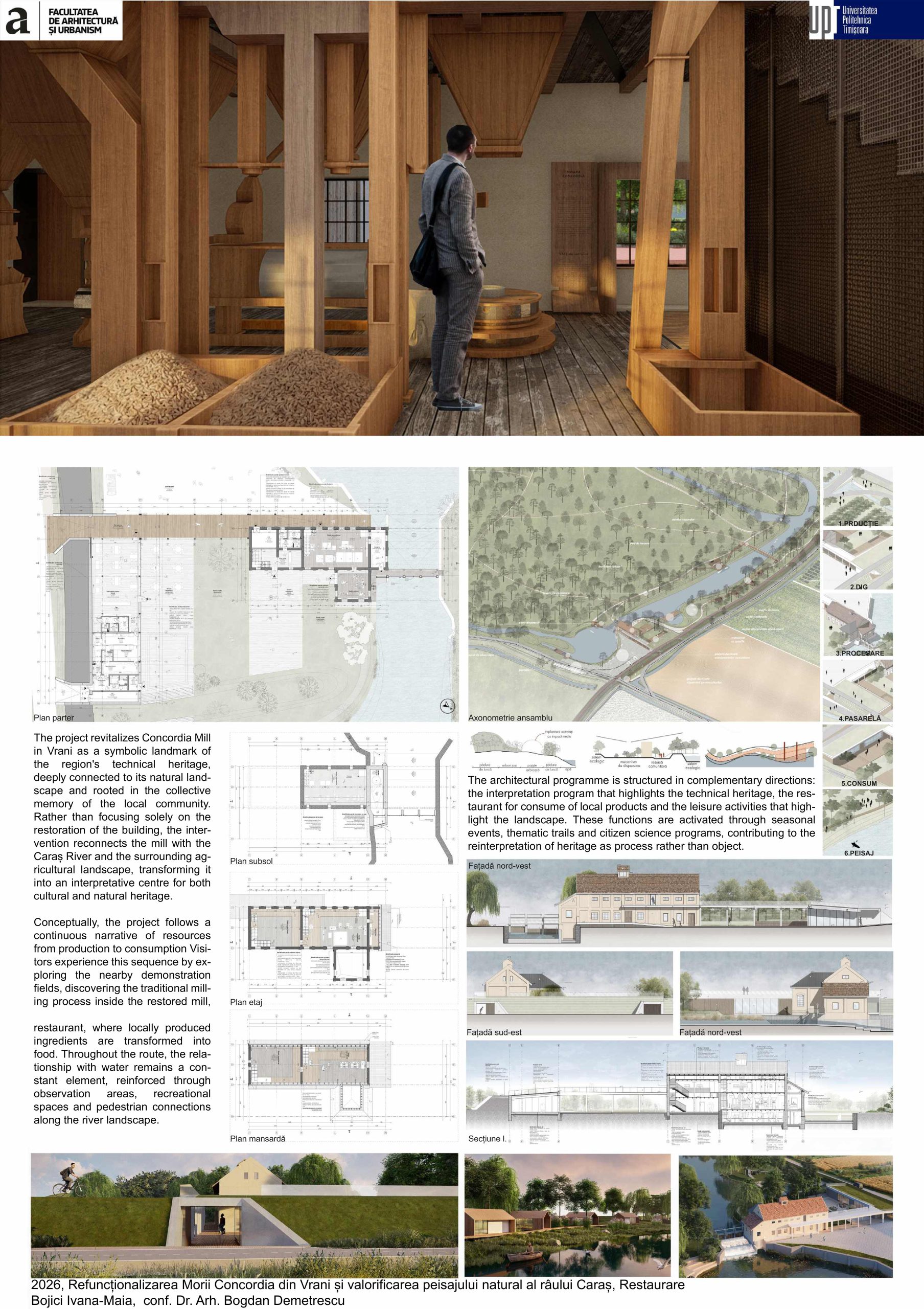
The analysis of this stage highlights that the transition from the macro to the micro scale requires incorporating the concept of the relationship between people and water. All landscape interventions are unified through the materialization of two axes: one perpendicular and one parallel to the river. The historic Concordia Mill has significant potential for adaptive reuse, not only as a tourist destination but also as a community hub, activated periodically through activities that strengthen community cohesion. For this reason, involving local stakeholders is essential for easier management and greater tourism potential.
All the necessary resources for the project’s sustainable development are available, provided that the Caraș renaturalization interventions are addressed during the initial stages. In areas exposed to fluctuations, particularly within the natural accommodation zone, the design responds to these risks by raising the walking levels of the platforms forming the routes.
The defining element of the project is the relationship between people and water, which has historically generated various types of infrastructure along the river, including dams, canals, and agricultural processing facilities. The project therefore proposes to reinterpret this infrastructure as a landscape device, centered around a route articulated through wooden elements that connect the interior of the mill with the exterior landscape.
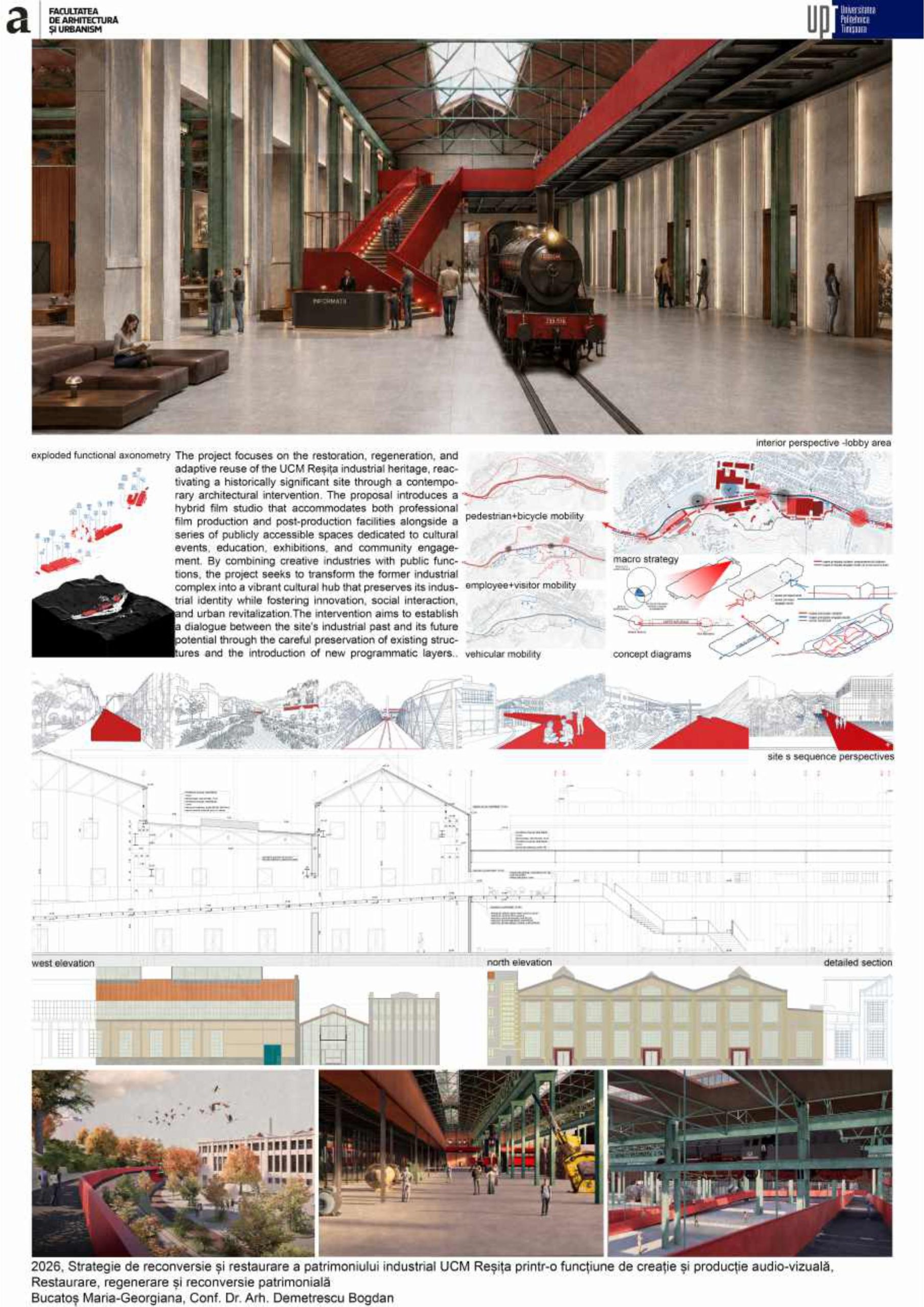
Student: Bucatoș Maria-Georgiana, Popa Nicolae-Daniel
Coordinating Professor: Conf. Dr. Arch. Bogdan Demetrescu
The pre-diploma stage provided the theoretical and conceptual foundation for the diploma project, focusing on an in-depth understanding of the former UCM Reșița industrial platform and the identification of a viable direction for its adaptive reuse.
The outcome was the development of a conversion strategy at both macro and micro scales, based on introducing an audiovisual creation and production program, considered compatible with the spatial and structural characteristics of the industrial complex.
During the pre-diploma presentation, the strategic directions, intervention concept, and approach to the selected industrial heritage were validated as the basis for further project development. The feedback mainly concerned the further development and detailing of the proposal, without altering its fundamental principles. The project therefore required development at all levels of intervention, from territorial and urban strategy to the detailed design of the selected implementation area.
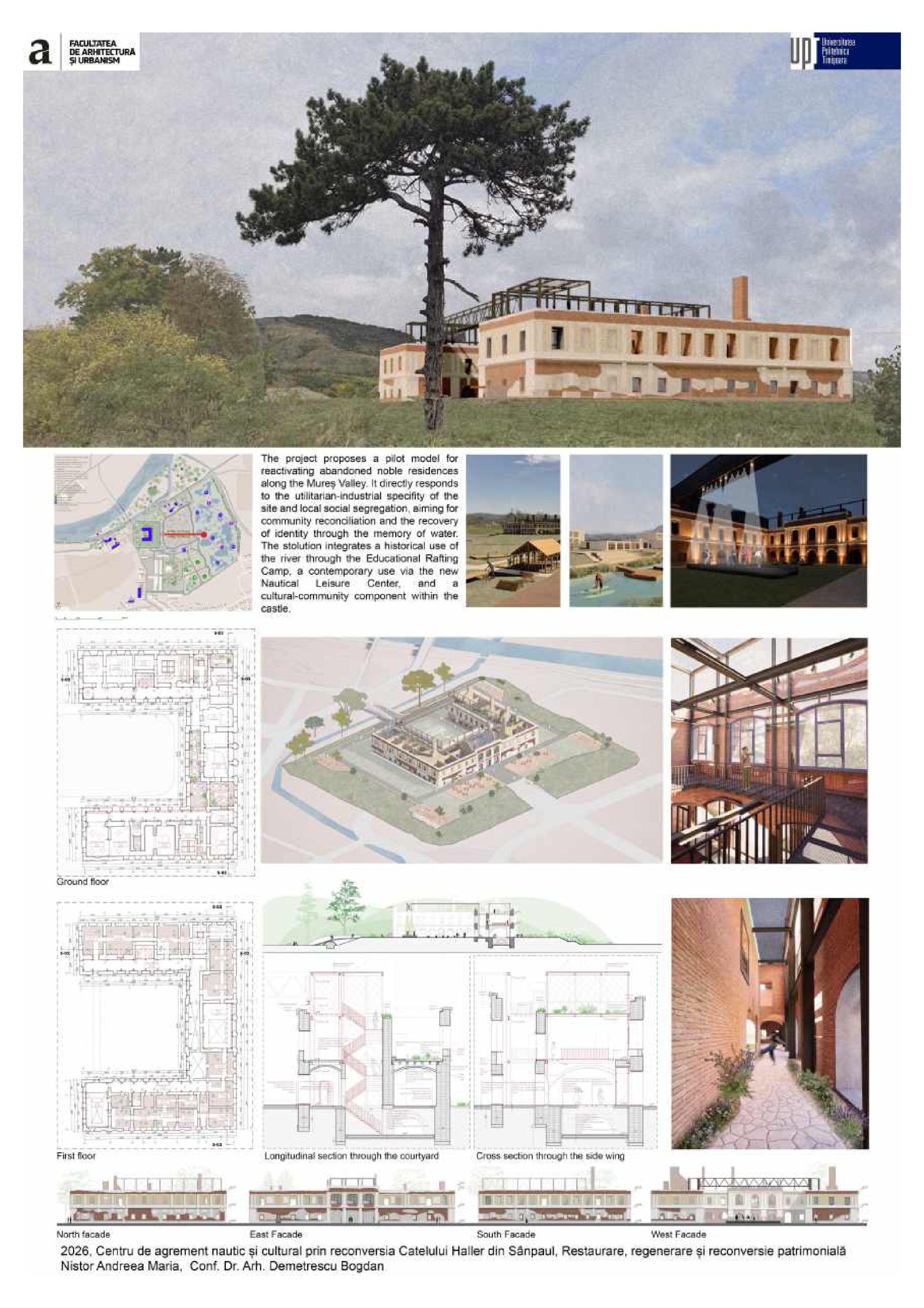
Student: Nistor Andreea Maria
Coordinating Professor: Conf. Dr. Arch. Bogdan Demetrescu
The project establishes a complex strategic model for the revitalization of the built and intangible heritage of the Mureș Valley. It demonstrates how a landscape marked by a traumatic past and fragmented by utilitarian industrial development, such as the expansion of the gravel quarry, can be healed and returned to a human scale and to nature.
At the level of the monument, the intervention at Haller Castle in Sânpaul proposes a new approach to restoration. Instead of a rigid and historically inaccurate reconstruction, the project adopts the concept of a “stabilized ruin,” preserving the monument’s narrative value, highlighting the patina of time, and transforming the imperfections of the masonry into an intentional theatrical setting. New architectural insertions—from independent box-in-box volumes to a movable walkway transformed into a scenographic device—use a contemporary, reversible, and non-invasive language.
This approach is complemented by sensitive technical and ecological solutions, combining hard capping with soft capping through controlled vegetation, mediating between historic fabric and the vitality of nature.
Functionally and economically, the project demonstrates that conservation alone is insufficient without community involvement and a self-sustaining model. The proposed hybrid program combines a nautical recreation center as the economic component, cultural spaces within the ruin as the community component, and a traditional camp dedicated to rafting as the tourism and educational component. Together, these functions honor the “memory of water,” reconcile the history of the nobility with that of the rafting communities, and restore the lost connection between local inhabitants and the Mureș River.
Ultimately, the strategy proposed for Sânpaul aims to become a pilot project extending beyond the site itself. It offers a replicable methodology for the declining noble residences along the Mureș Corridor, demonstrating how heritage architecture, supported by technical innovation and landscape sensitivity, can generate ecological regeneration, sustainable development, and social cohesion.
Urban Planning
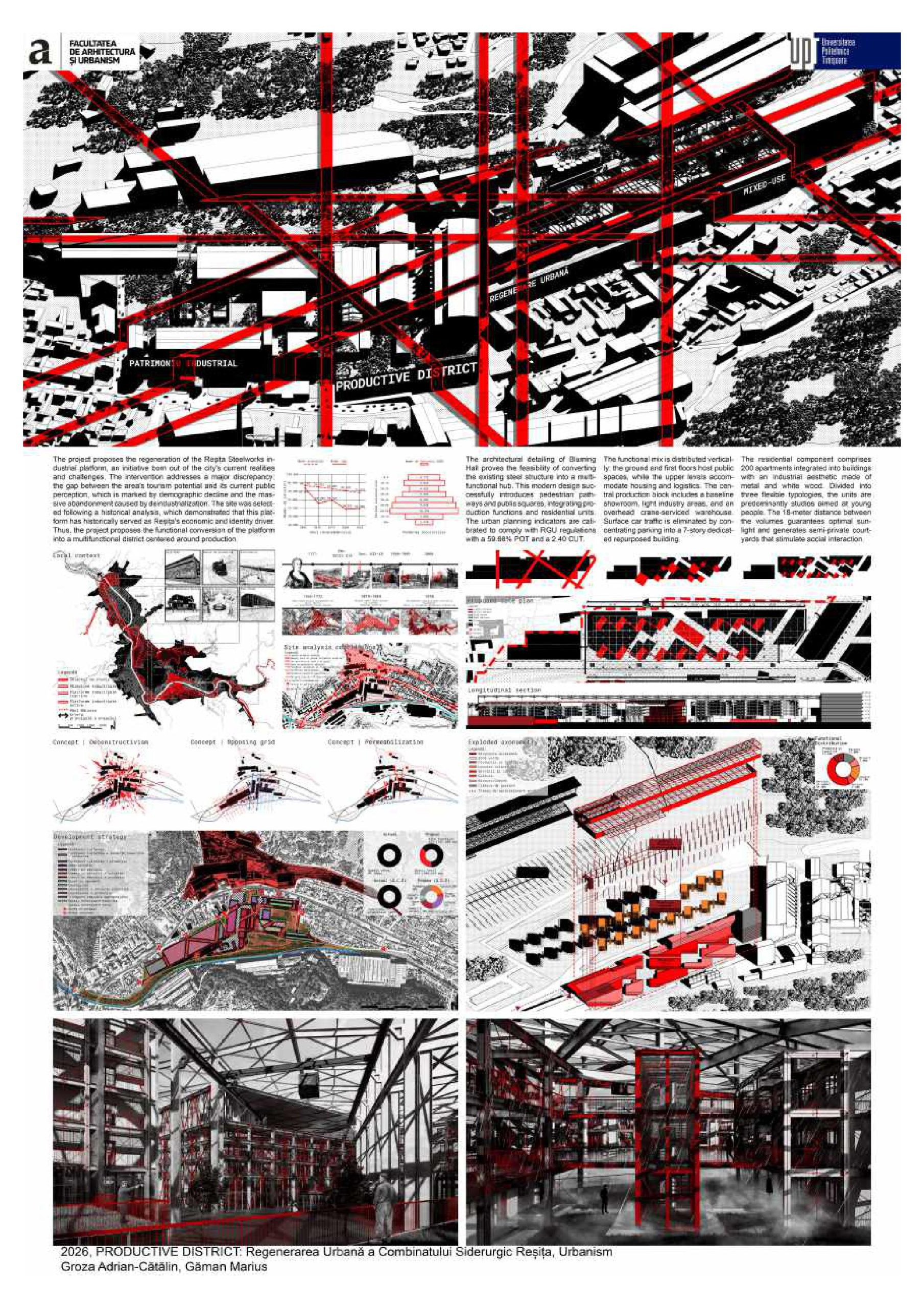
Student: Groza Adrian-Cătălin
Coordinating Professor: Conf. Dr. Arch. Marius Găman
The project proposes an urban regeneration strategy for the southern platform of the Reșița Steel Plant (CSR), transforming a 28.80-hectare underused industrial territory into a mixed-use district based on the Productive District concept. Rather than relying on large-scale demolition or passive museification, the strategy combines light urban production, culture, commerce, offices, and collective housing.
Grounded in the principles of Productive City, Human Scale Development, and Regenerative Tourism, the project operates from the urban scale to the scale of housing. The masterplan is structured around a linear park along the Bârzava River, reactivated through three landscape interventions: a natural area with an exhibition pavilion, a cultural area with an open-air cinema, and a viewpoint area with a metal tower. Together, they transform the riverbanks into active destinations for the community.
The network of public spaces, organized through urban corridors and mineral plazas created at pedestrian intersections, supports the adaptive reuse of the Bluming Hall. The intervention combines façade subtraction, roof perforation, and structural extension, allowing different functions to coexist within a hybrid program. Public and commercial functions occupy the ground floor, activating the building at street level, while private programs are placed above. Logistics are similarly organized, with commercial servicing at the periphery and industrial circulation separated vertically, using the overhead crane as a visible technological feature above the public spaces.
The urban parameters were calibrated according to the General Urban Planning Regulation (RGU), with a site coverage ratio (POT) of 59.66%, a floor area ratio (CUT) of 2.40, and 27.40% green space. The mobility strategy removes surface car traffic and prioritizes pedestrians by concentrating 700 parking spaces in a dedicated G+6 building, optimized on a 1,990 m² footprint.
At the residential scale, the project responds to local socio-economic conditions through small-scale modular collective housing, adapted to the industrial hall and organized around semi-private courtyards. Targeted primarily at young people, the residential component offers three flexible typologies (A, B, and C), dominated by compact apartments. Access via external corridors and metal walkways acts as both an urban filter and a social space. The visual identity is defined by the contrast between white wooden panels and red metal structures, creating a direct dialogue with the language of the central production buildings.
Through long-term phasing and rigorous technical calibration, the project reintegrates the former industrial enclave into Reșița’s economic and social network, establishing a model of sustainable, human-scale urban regeneration.
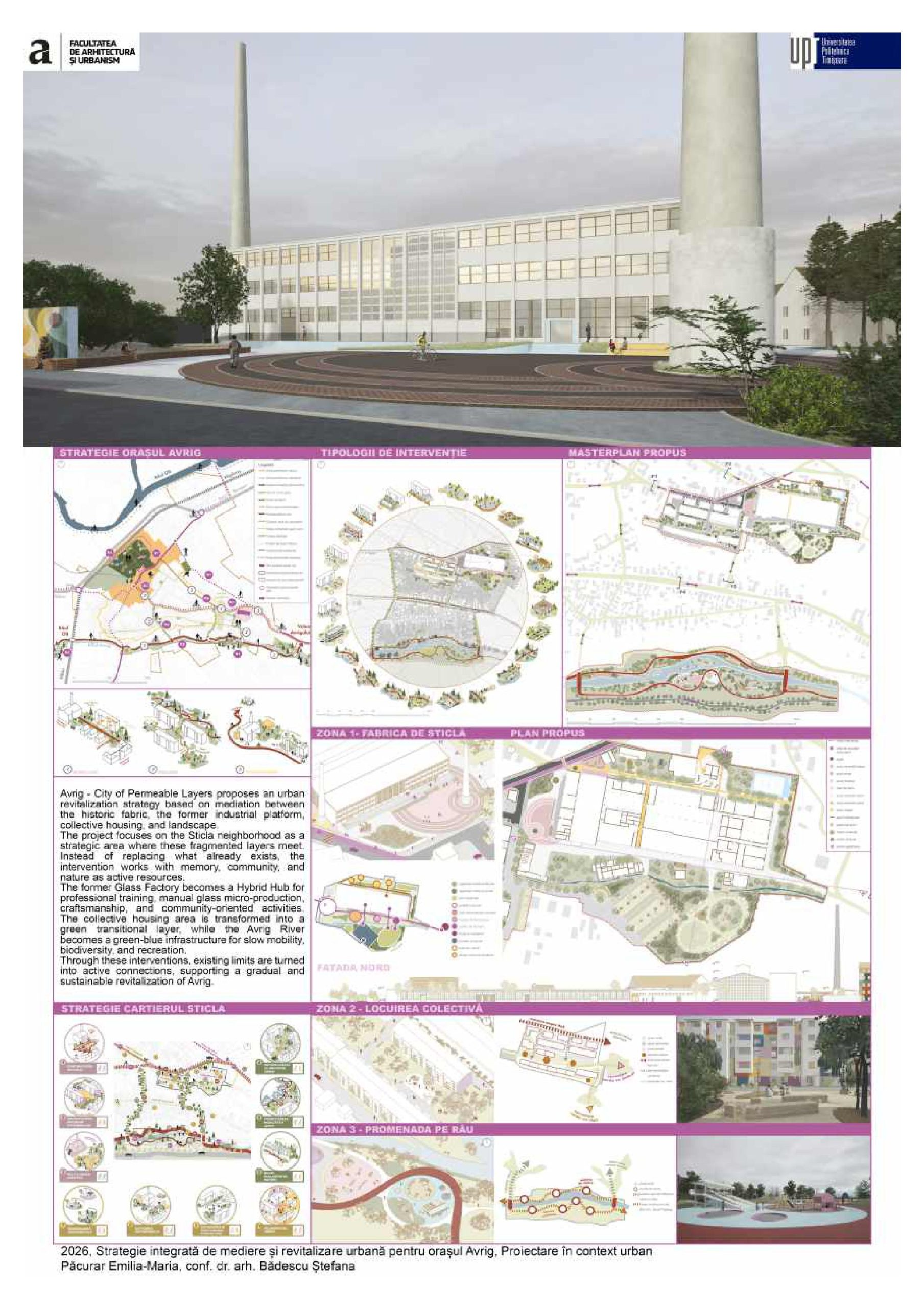
Student: Păcurar Emilia-Maria
Coordinating Professor: Asist. dr.arh. Ștefana Bădescu
The project starts from the observation that Avrig’s main challenges are not caused by a lack of resources, but by the fragmented relationships between them. The historic center, modernist neighborhood, industrial platform, and Avrig River are located close to one another but do not function as a coherent system. The project therefore proposes a strategy of mediation between these layers, using the past as a foundation for new forms of urban life rather than erasing it.
The conversion of the former Glass Factory represents the central intervention. By selectively preserving valuable structures, reopening historic routes, introducing vocational training, and activating micro-production, the industrial platform regains its role as an urban generator. The Hybrid Hub is conceived not simply as a cultural or tourism facility, but as an economic and community mechanism capable of providing jobs, skills, and continuity of local identity.
The collective housing area complements this intervention by improving everyday quality of life. Reorganized parking, increased green areas, inclusive furniture, community gardens, and neighborhood spaces transform the district into an active transition between the hub and the river. Housing is therefore treated not as a passive backdrop, but as an essential part of the proposed urban network.
The Avrig River corridor completes the system by reconnecting the city with nature. The promenade, biodiversity areas, rain gardens, active spaces, and observation tower transform the river from a boundary into a public and ecological infrastructure. It becomes a natural extension of the hub and neighborhood, while also establishing a broader connection towards the Olt River and the surrounding mountain landscape.
Through these three interventions, the project demonstrates that the regeneration of a small post-industrial city can be achieved without radical demolition or generic development. The strategy is based on continuity, adaptive reuse, mediation, and adaptation, redefining Avrig as a city of permeable layers where industrial memory, collective housing, and natural infrastructure are brought together to support a better quality of urban life.
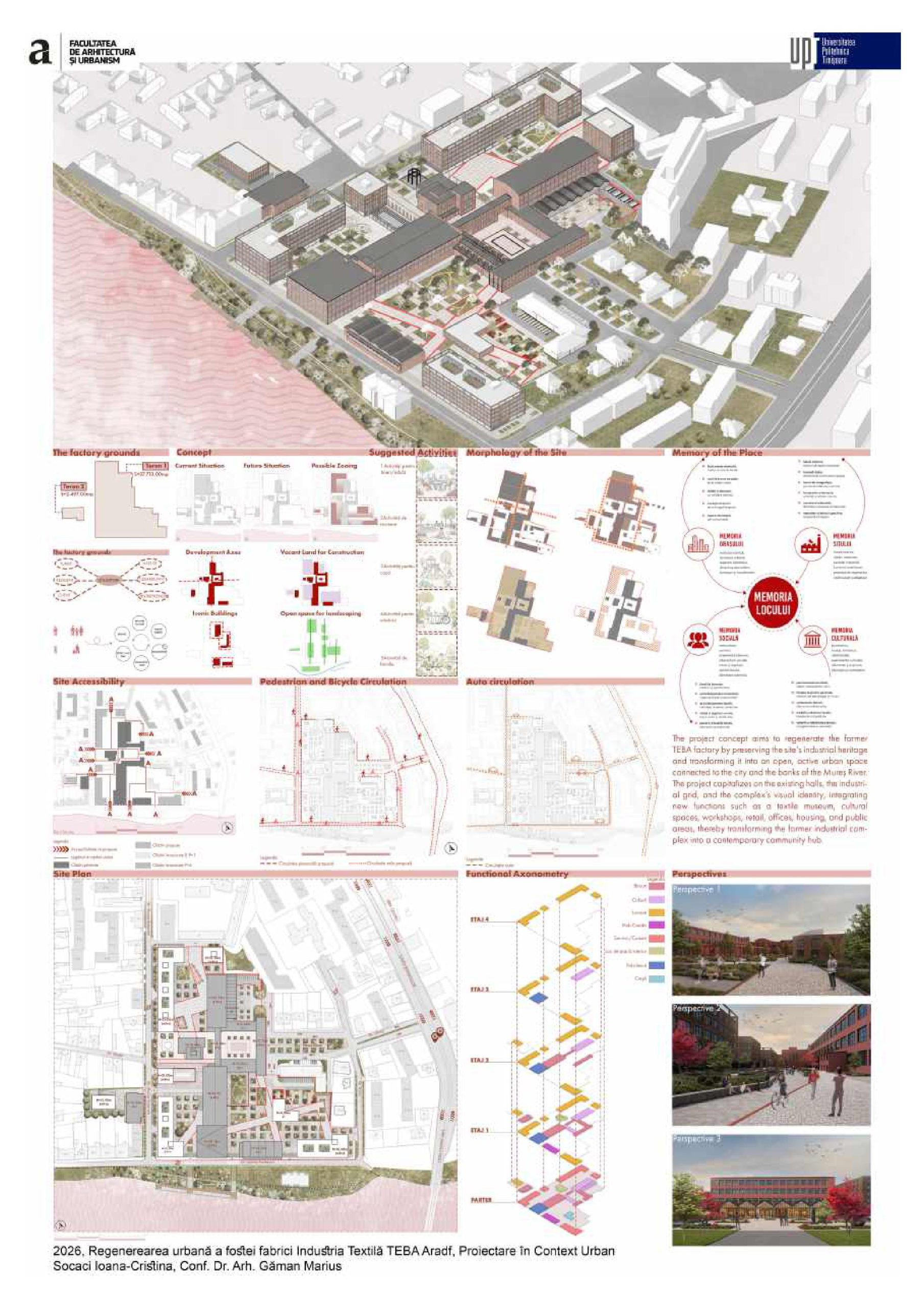
Student: Socaci Ioana-Cristina
Coordinating Professor: Conf. Dr. Arch. Marius Găman
The project demonstrates that the urban regeneration of the former TEBA Textile Factory in Arad is not merely an intervention on a disused industrial site in the heart of the city, but a complex process of recovering, reinterpreting, and reintegrating an important fragment of the city’s memory. The site is understood as a place shaped by historical, social, architectural, and urban layers that have contributed to its identity. The former TEBA factory is therefore not treated as an abandoned enclosure, but as a landmark of local industrial development, collective labor, and the transformations experienced by Arad over time.
A central idea of the project is that industrial heritage can become an active resource for contemporary development. Existing buildings, the hall structure, organizational axes, industrial grid, and architectural character are preserved and integrated into a new urban scenario. Through the rehabilitation and adaptive reuse of valuable structures, the site’s past is maintained without becoming rigid or museum-like, but is adapted to the current needs of the community. Memory thus becomes a design tool, providing continuity, meaning, and architectural authenticity.
The memory of the place is essential because it establishes a connection between space, time, and community. In the TEBA site, industrial memory is reflected in the preserved buildings, the structure of the complex, its relationship with the Mureș River, and the role the factory played in the local community. The intervention therefore does not erase the past, but transforms it into a foundation for a new form of urban life.
The main objective of the proposed regeneration is to open the site towards the city and the Mureș riverbank. The former closed, fragmented, and difficult-to-access platform becomes a permeable, active, and connected urban environment. New pedestrian routes, green spaces, public areas, and community hubs create a more accessible and welcoming setting, while cultural, educational, commercial, community, and work functions ensure activity throughout the day.
The project ultimately demonstrates that urban regeneration is not only about physically revitalizing buildings, but also about socially, culturally, and economically reconnecting a place with the city. Through public spaces, adaptive reuse, and integrated green areas, the former TEBA factory can become an urban destination and a place of encounter, culture, memory, and community.
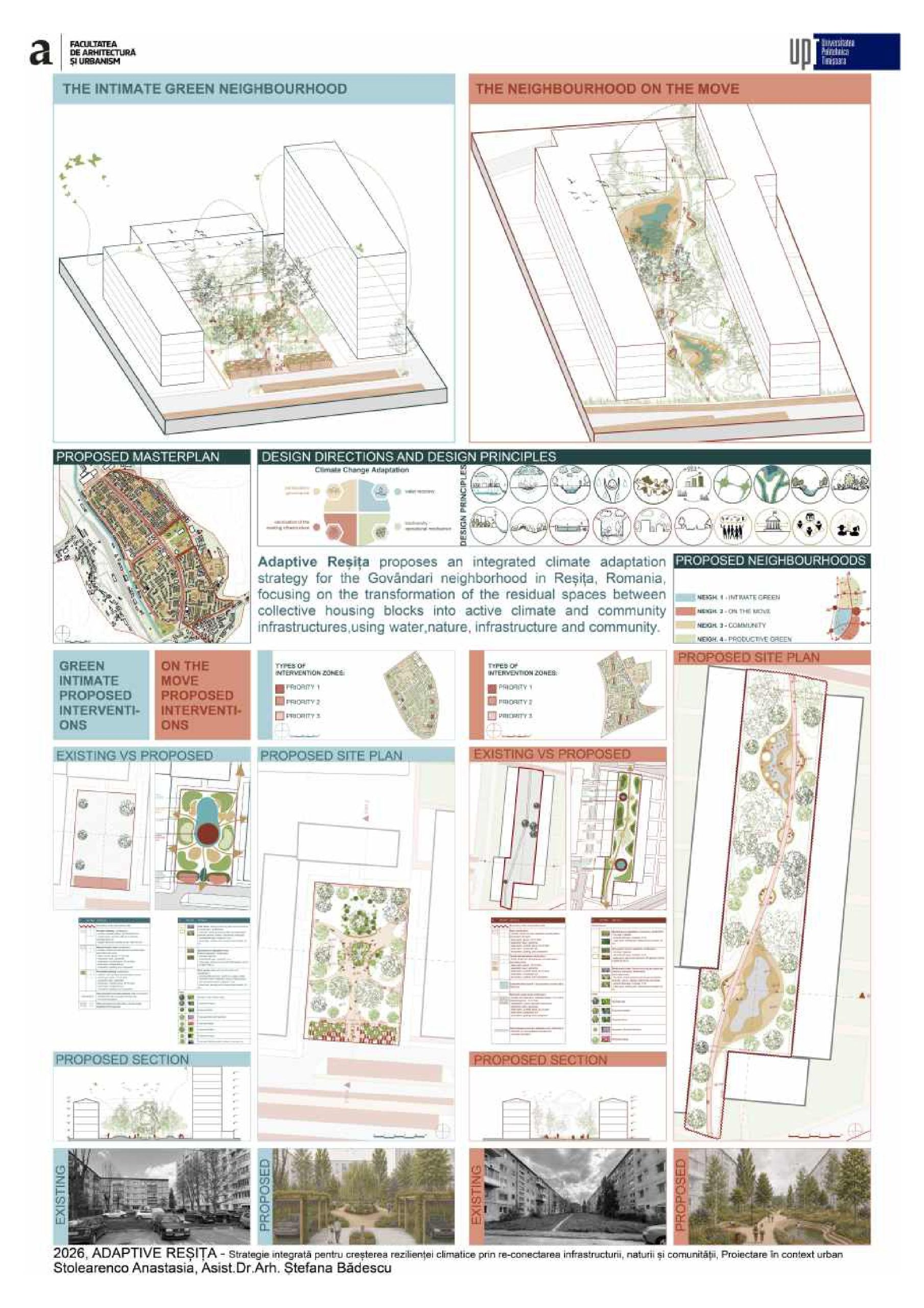
Student: Stolearenco Anastasia
Coordinating Professor: Asist.Dr.Arh. Ștefana Bădescu
The project started from the hypothesis that climate adaptation should not be treated exclusively as a technical issue, but as an integrated process in which water, biodiversity, existing infrastructure, and the community work together. In the Govândari district, this hypothesis was tested through multi-criteria interventions that transformed residual spaces between apartment blocks into areas supporting climate adaptation, community life, and biodiversity.
One of the main conclusions is that climate adaptation interventions become relevant only when they are firmly grounded in the specific reality of the place. By combining funding priorities, local administrative priorities, community consultation, and on-site diagnosis, the project was able to test its theoretical assumptions and adapt the interventions accordingly. This demonstrates that feasibility cannot be determined through theoretical analysis alone, but also depends on the actual condition of the site and the perceptions of its residents.
A second conclusion is that interventions, whether climate-related or not, should never be treated as isolated elements, but as parts of an integrated and coherent system, ensuring that positive impacts in one area do not generate negative consequences elsewhere.
A third important conclusion is the value of community involvement. The analysis of projects submitted for participatory budgeting, including those that were not funded, demonstrates that even limited community participation can reveal needs that are often overlooked.
Finally, the project shows that although urban administrations often prioritize large and highly visible spaces, the most vulnerable areas are frequently the “in-between spaces”—circulation routes, transitional areas, and spaces immediately surrounding residential buildings. These overlooked spaces can therefore become important elements in building climate-resilient, connected, and community-oriented neighborhoods.
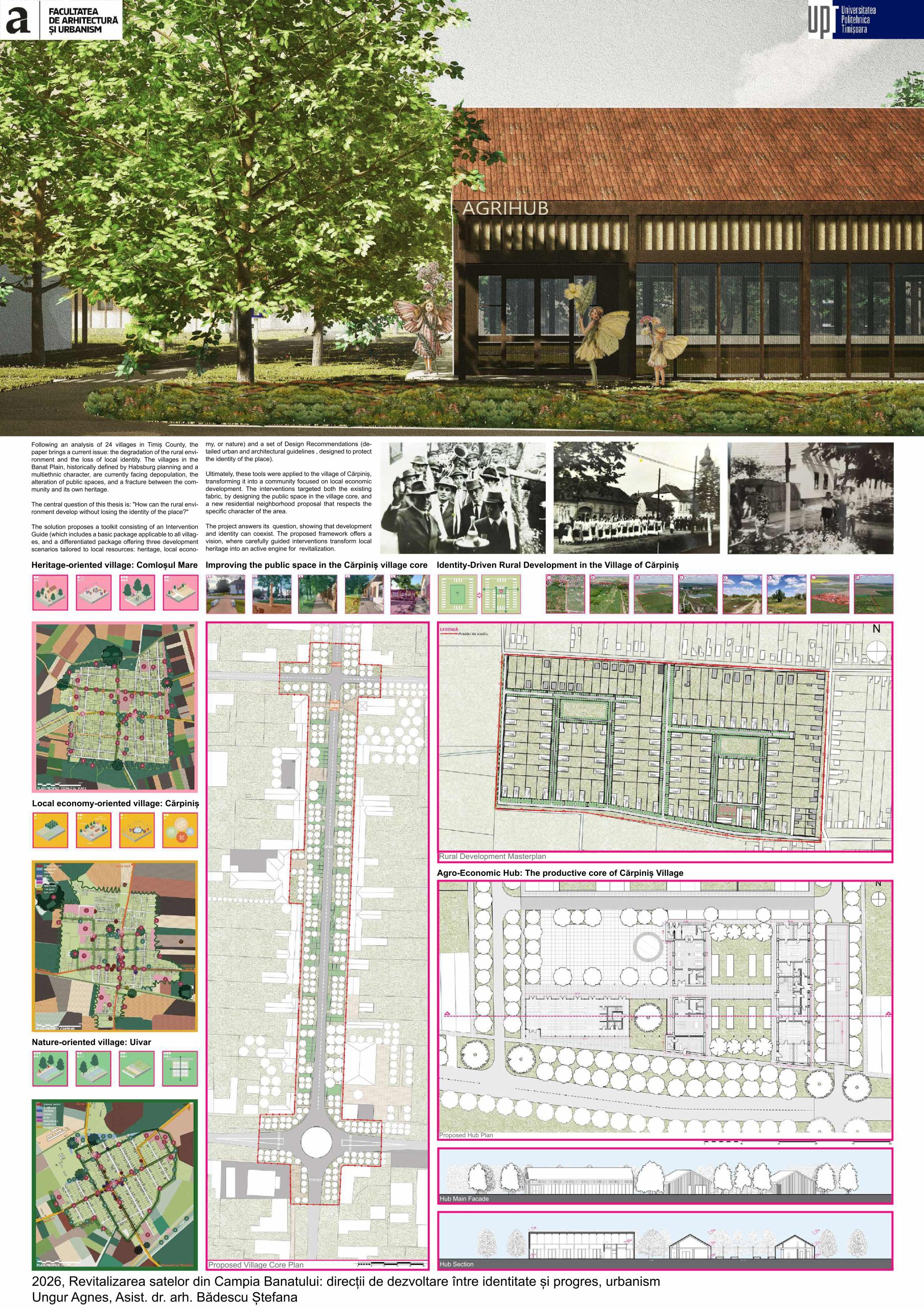
Student: Ungur Agnes
Coordinating Professor: Asist.Dr.Arh. Ștefana Bădescu
The project demonstrates that the sustainable revitalization of the contemporary Banat village, with Cărpiniș as a case study, does not mean preserving the settlement in the past, but implementing clear urban and technological regulations capable of balancing cultural and historical identity with socio-economic progress.
The project follows two interconnected directions:
1. Protecting and regenerating identity – Healing the present
A comparison between the idealized villages depicted in the paintings of Ștefan Jäger and the current landscape reveals severe degradation of public space caused by uncontrolled urbanization, excessive paving, and visual inconsistency. The proposed guidelines include P/P+M building heights, preservation of the rational street grid, honest materials such as brick, ceramic tiles, and wood, retention of grass-lined drainage channels, and restoration of tree alignments. Their immediate application is demonstrated through landscape proposals for pedestrian spaces around key village landmarks: the Town Hall, Secondary School, and Orthodox Church.
2. Ensuring progress – Developing the future
Future expansion should be carefully controlled through the rigorous continuation of the traditional orthogonal “chessboard” grid, while introducing innovative elements: more compact plots for young families, transforming the centers of blocks into public green parks instead of oversized productive gardens, and restricting car traffic within new residential areas.
The proposed Agro-Economic Hub becomes the engine of this active community. Reinterpreting the typology of the traditional Banat barn, it functions as a contemporary agora, incorporating EU-compliant production circuits for small-scale artisanal processing of vegetables, fruit, and dairy products. It provides local producers with year-round stability, permanent sales space, ecological education for students, and a platform for regional economic cooperation.
Ultimately, the project offers a replicable model for rural planning, in which traditional elements—such as the front-gate bench or the silhouette of Swabian houses—are functionally adapted to contemporary requirements of sustainability, hygiene, and social cohesion. In this way, the village can evolve from a simple “dormitory settlement” into a living cultural and economic organism.


2025 | DIPLOMA | YEAR III
The completion of the three-year program requires the development of a comprehensive interior design project, covering all stages of the design process. Both the site and the function are chosen by the student, provided that the relevance and opportunity of the proposed intervention are clearly justified.
The main objective is to define a strong spatial identity, shaped both by the qualities of the selected context and by the specific characteristics of the proposed function. Throughout the phased development of the project, theoretical and technical approaches are pursued in order to formulate spatial and formal solutions that enhance the chosen space.
This process represents a valuable exercise in preparation for professional practice, addressing adaptive reuse, the creation of an aesthetic aligned with the proposed concept, the coordination of constructive elements (finishes, furnishings, installations), the resolution of execution details for custom-designed furniture, cost anticipation, and overall budget management.
Project Development Phases
Phase I involves understanding existing conditions and defining the requirements of the proposed theme. This includes studying comparable examples of similar scale and function, as well as analyzing the site’s specific characteristics, qualities, dysfunctions, and atmosphere.
Phase II focuses on developing a general intervention concept, generating two preliminary design proposals, and further detailing one selected option.
Phase III consists of producing the technical project documentation, detailing the solution developed in the previous phase at a technical design level.
Phase IV represents the execution detailing stage. The final phase includes preparing detailed drawings for at least three key design elements (such as custom furniture pieces or constructive details), finalizing finishes and materials, and documenting them within the written report, cost estimate, and material palette.
For the full texts please click on the pages of the brochure below.
Diploma Projects
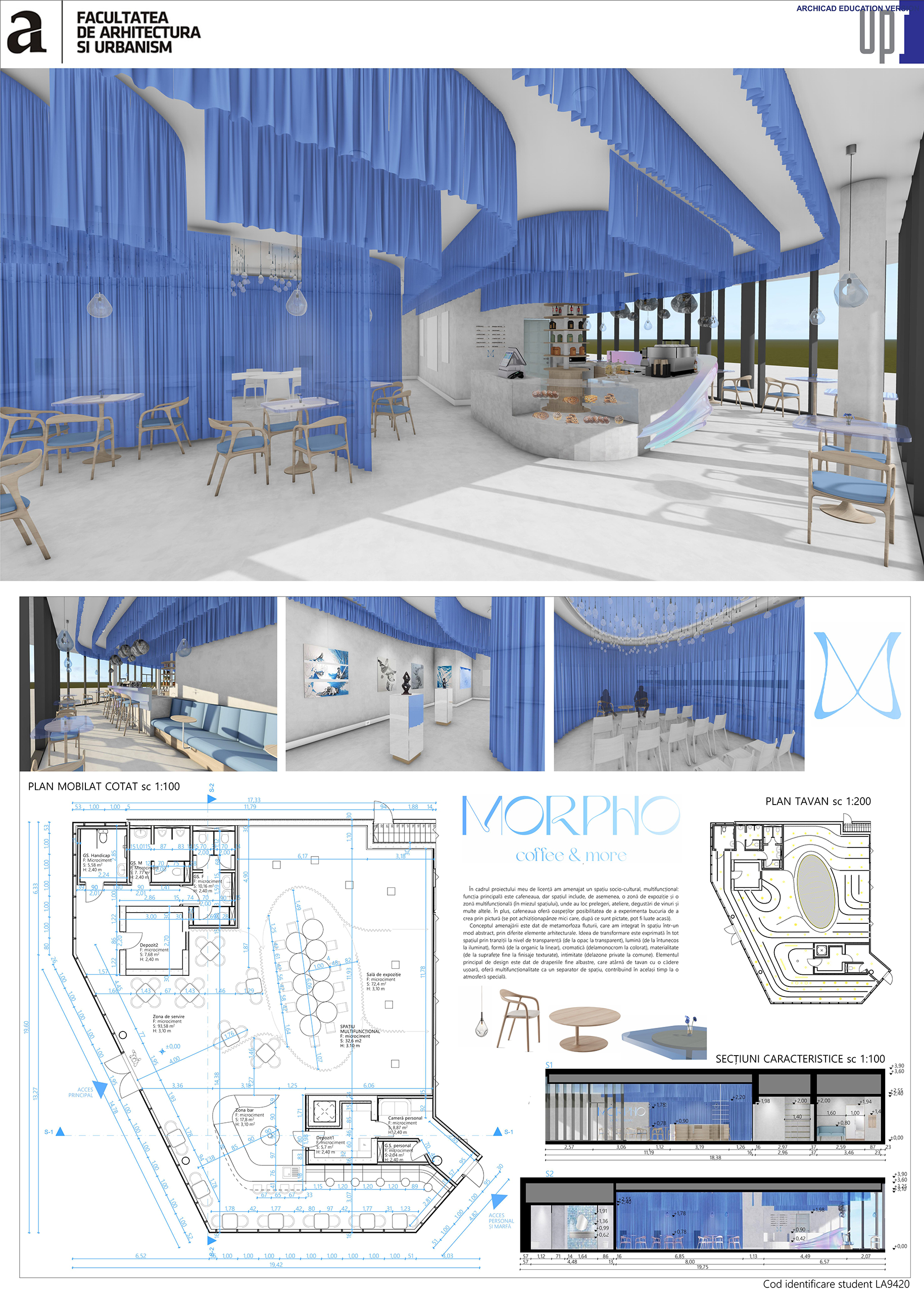
Student: Boglárka Bálint
Coordinating Professor: Conf. Dr. Arch. Diana Giurea
As part of my bachelor’s degree project, I created a unique space with a distinctive design that engages all the senses and offers a culinary experience for those who enter: a specialty coffee shop with an art gallery, designed in the ISHO Pavilion in Timișoara.
This café offers more than just refreshments and relaxation; it contributes to the personal and cultural development of individuals. In addition to admiring the artworks, guests have the opportunity to experience the joy of creating through painting (small canvases can be purchased and, once painted, taken home).
The design concept is inspired by the metamorphosis of the butterfly, which I integrated into the space in an abstract way through various architectural elements. The idea of transformation is expressed throughout the space through transitions in transparency (from opaque to transparent), light (from dark to illuminated), form (from organic to linear), color (from monochrome to vibrant), materiality (from smooth surfaces to textured finishes), and intimacy (from private to communal areas).
The main design element consists of fine blue curtains hanging lightly from the ceiling, providing multifunctionality as space dividers while also contributing to a special atmosphere.
This study includes the preliminary research necessary for the proper implementation of the project, the verification of the hypothesis—can a multifunctional space be created based on the concept of metamorphosis?—as well as a complete description of the design solution, and the list of materials and objects used.
In conclusion, I successfully designed a socio-cultural and artistic center within the ISHO Pavilion building, which hosts numerous events and features a permanent gallery. Through the resolution of the concept, the café offers a sensory experience, engaging sight, hearing, touch, smell, and taste. MORPHO Coffee & More supports emerging artists and promotes artistic practice, thereby enhancing the appreciation of art within the community.
Student: Bodan Bianca Ioana
Coordinating Professor: S.l. Dr. Arch. Otilia Tudoran
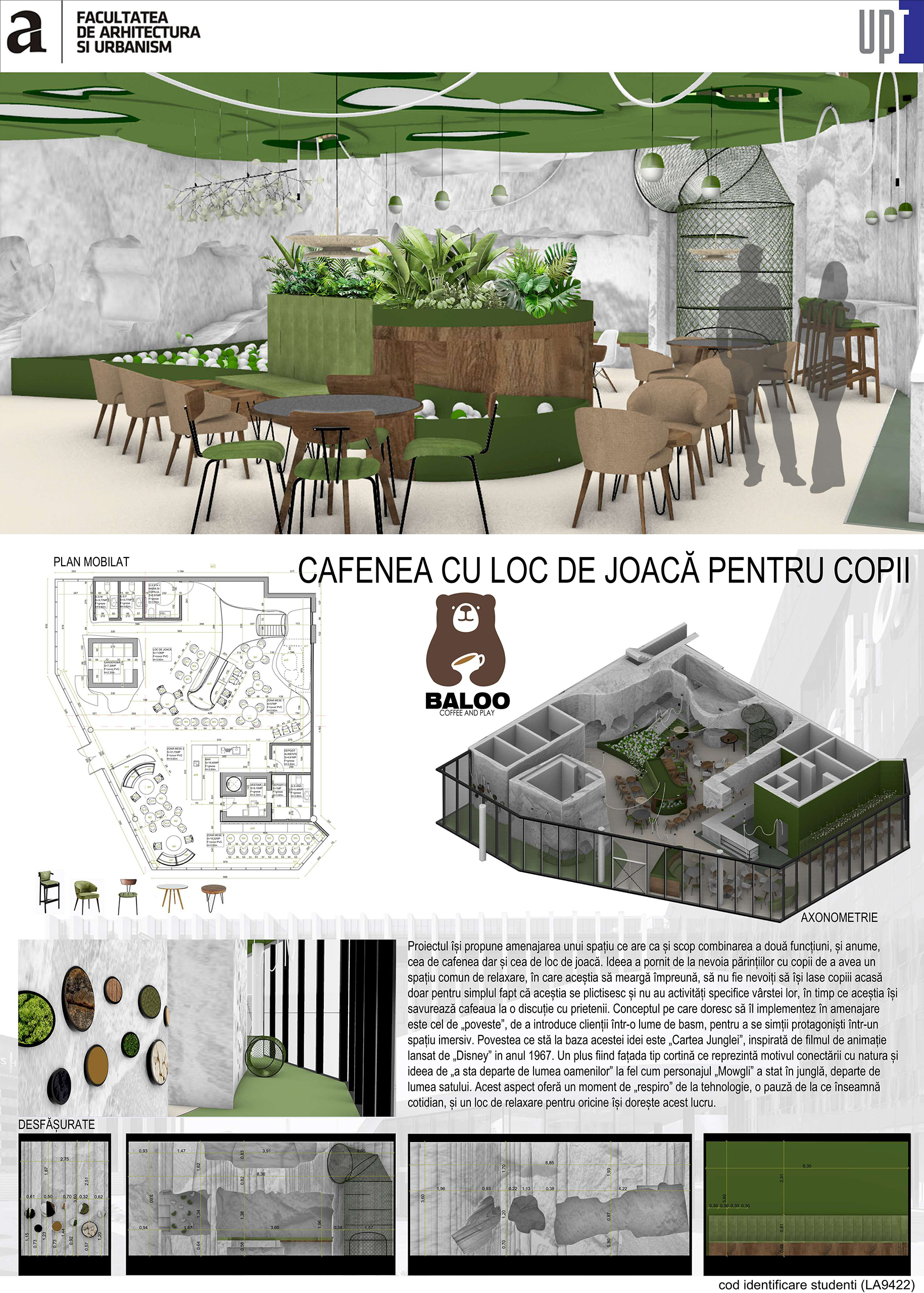
The chosen space will be designed taking into account the architectural program of which it will be part, more precisely it will combine two architectural programs, namely the café, but also the playground. The space will serve all people, regardless of age, and it will also be easily accessible, being located on the ground floor.
The idea of a cafe with a playground started from the need of families with children to have a common meeting place, where their children can have interactive activities, playgrounds, while parents enjoy their coffee, the little ones end up not getting bored on an outing with adults.
The game is also introduced into the world of adults, where they can also enjoy an unforgettable experience. Every adult was once a child, and this helps to combine their needs and the possibility of starting from a common point for both categories, namely the story, which is also the concept behind the cafe’s layout, a story known to both children and adults. The chosen story is “The Jungle Book”. This story correlates with the chosen space, through nature, with the help of the showcase and the exterior of the building area. Bringing the “jungle” into the heart of the ISHO residential complex represents a respite from technology in a pleasant and modern ambiance. The motif of the showcase represents the idea of staying away from the “human world”, just as the main character of the story, Mowgli, stayed in the jungle with the animals, and away from the village population. The beneficiaries have an “exit” from the city world, in a relaxing space, with activities that will take them out of their daily routine.
Students: Gligor Denisa
Coordinating Professor: Conf. Dr. Arch. Andreea Anghel
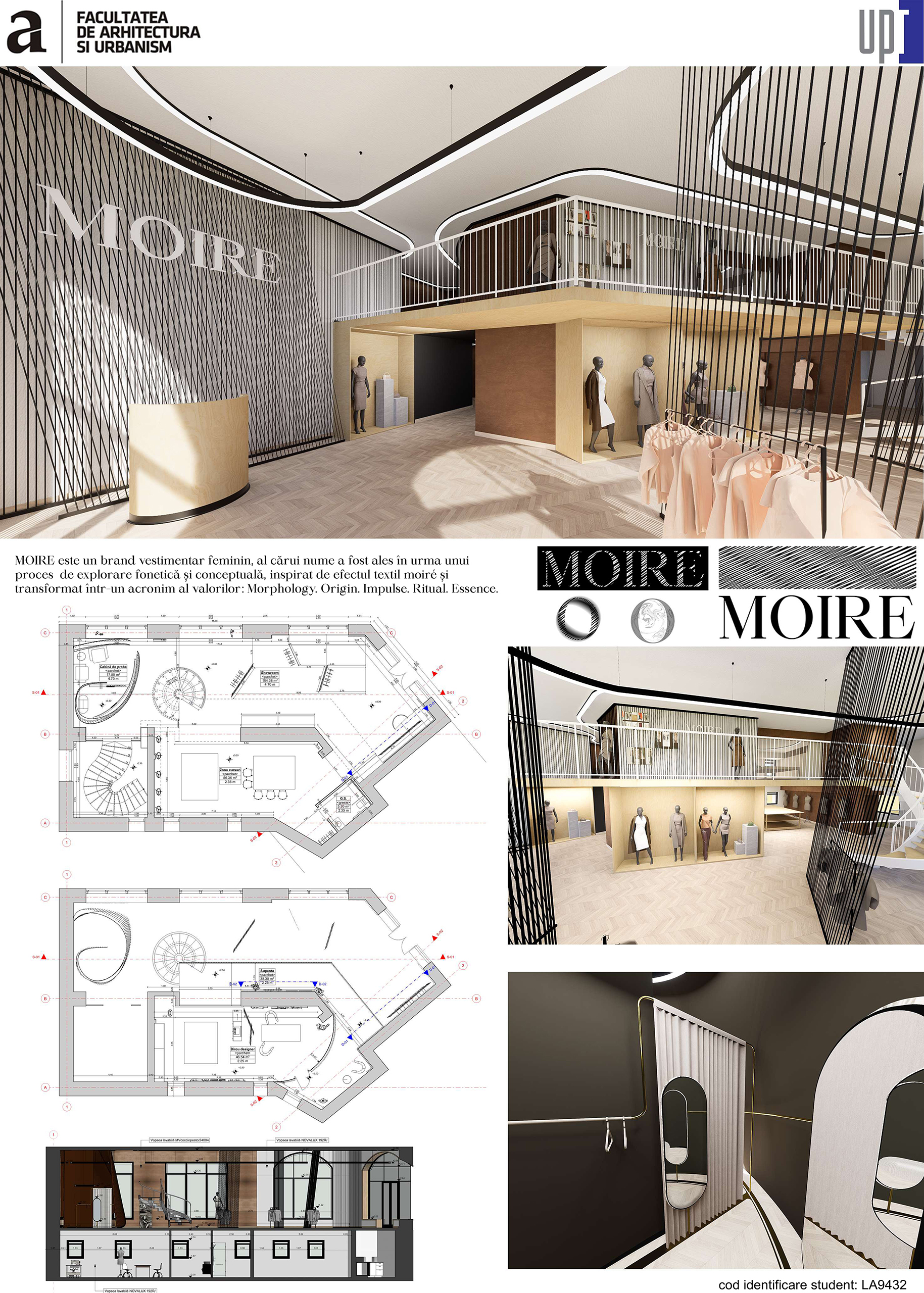
This project presents the design proposal for a womenswear showroom with an area dedicated to sewing workshops, located within an existing space on the ground floor of a historic building in the center of Timișoara: Palatul Bănățean, Piața Sf. Gheorghe no. 2. The intervention aims to enhance the relationship between interior design and brand identity through a unified visual language inspired by the process of garment production.
The space has a total surface of 595.99 sqm, distributed across three levels—basement, ground floor, and a partial mezzanine—and occupies part of the building’s basement and ground floor. Currently functioning as a political headquarters, the project proposes its refunctionalization into a womenswear showroom.
The working hypothesis starts from the premise that, in the context of a fashion showroom, interior design can serve as a direct extension of brand identity, actively contributing to visual communication and to shaping a coherent user experience.
The design concept is inspired by the transformation process of garment patterns, exploring the transition from two-dimensional surfaces to three-dimensional volumes. This principle is spatially translated through the use of ruled surfaces made of tensioned cables, evoking both the structure of woven fabrics and the fluid dynamics of material in garment construction. The interior aims to balance rigidity and flexibility, generating an atmosphere aligned with the brand’s values.
The visual identity of the brand “MOIRE” reflects the same idea of rhythm and layering, inspired by the visual effect created through superposition. The name selection and logo development express, both visually and symbolically, the essence of the project and contribute to integrating the interior design into a coherent spatial–brand communication system.
The project was developed based on the analysis of the existing historically valuable space, currently affected by provisional interventions, and on the need to adapt it to a commercial function. The functional layout is organized into public, semi-public, and private areas according to activities and user categories, while the design concept is implemented through reversible materials and constructive elements compatible with the building’s heritage status. The choice of furnishings, materials, and overall spatial scenography supports the brand identity and proposes a coherent experience that balances functionality and expressiveness.
Student: Hadar Amanda Vivienn
Coordinating Professor: Asist. Dr. Arch. Brîndușa Havași
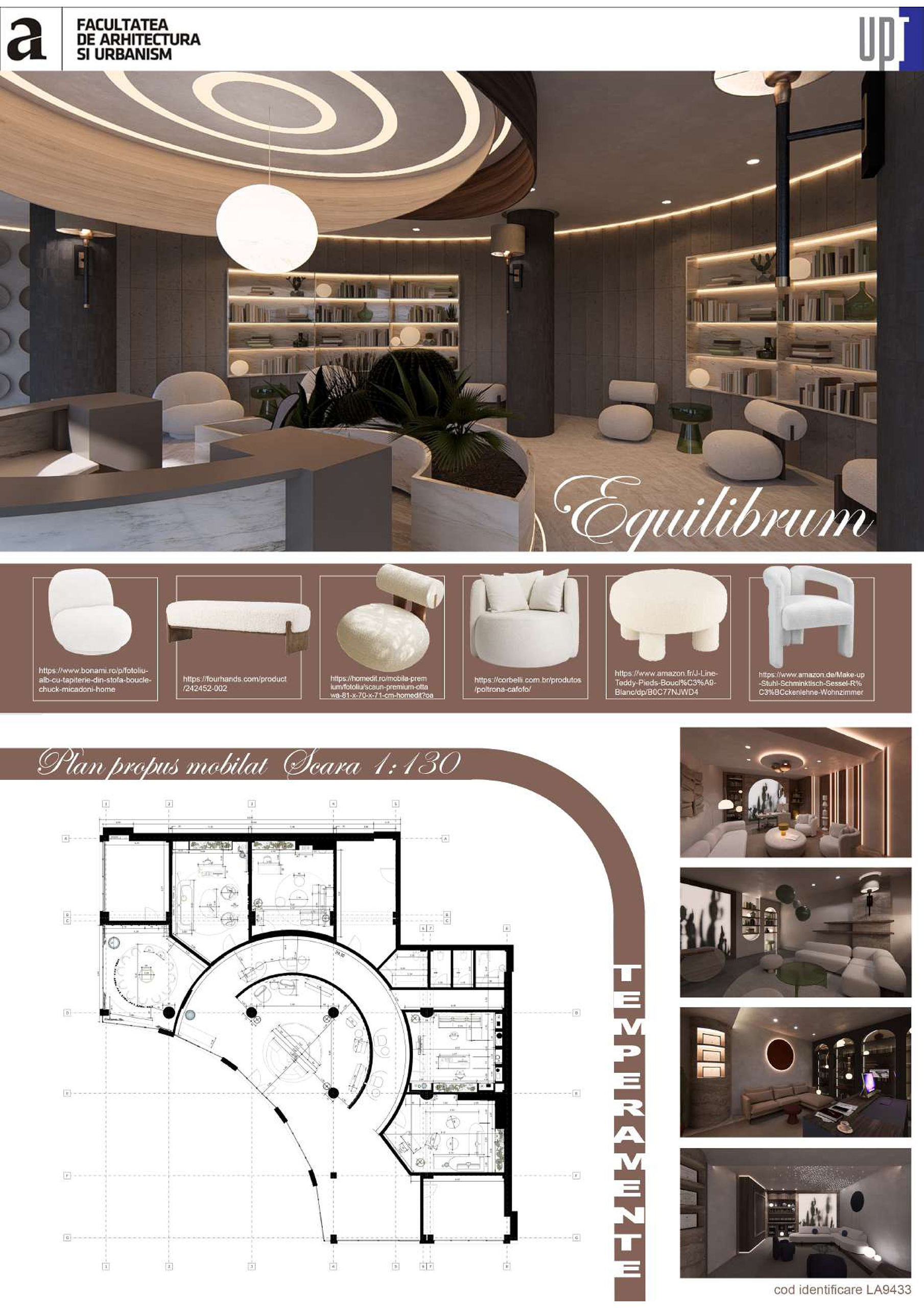
This bachelor’s thesis proposes the design of a psychotherapy center based on the concept of balance between body and mind, achieved through a calm, minimalist, and harmonious atmosphere. The chosen intervention space is defined by a semicircular storefront and imposing, obstructive structural elements, such as columns, which have been integrated into a contemporary interior concept inspired by nature and the aesthetics of simple lines.
Starting from the real need of urban residents to enhance their emotional well-being in environments tailored to their personal needs, the project proposes a spatial organization that merges functionality with aesthetics. The access area—the reception with a semicircular library—acts as a neutral transitional space, offering a first impression of the concept of balance. It can be described as a “central node” from which the four temperaments and relaxation areas branch out.
The thesis explores how interior space influences the psychotherapeutic process, aiming to adapt therapy rooms to the four temperament types: choleric, sanguine, phlegmatic, and melancholic. The proposed psychotherapy center, titled Equilibrum, is conceived as a unified and aesthetically coherent space, with subtle variations that evoke different moods and sensations suited to each temperament.
The methodology includes theoretical documentation on temperament psychology and interior design principles, as well as applied research based on surveys and questionnaires conducted personally with close contacts (friends, family members, colleagues), tracking their preferences according to temperament profiles. Additionally, a functional analysis was carried out on three similar spaces identified online and on a real psychotherapy center in Târgu Mureș — Del Alma. Conversations with psychotherapist Daniel Popescu, one of the city’s most renowned specialists, helped shape a professional perspective on the relationship between space and the therapeutic process. To complement the research, the book Surrounded by Idiots by Thomas Erikson was studied, offering a clear and detailed analysis of the four temperament types.
The proposed outcome is an innovative interior design that integrates psychology and design into a unified, minimalist, and modern concept. Through the use of a neutral color palette, similar textures, and curved forms, the space conveys a calm and welcoming ambiance, inspired by spa-like environments. At the same time, each therapy room is subtly differentiated through details that evoke the dominant traits of the corresponding temperament: control and professionalism for choleric; optimism and energy for sanguine; calm and stability for phlegmatic; and depth and introspection for melancholic.
The thesis emphasizes the importance of personalizing space according to the psychological characteristics of its users, demonstrating that a thoughtful design approach can support the therapeutic act and contribute to the individual’s sense of balance.
In conclusion, the project offers an innovative therapeutic space that enhances the existing architecture through a carefully crafted design, adapted to current needs and oriented toward balance and harmony.
Student: Truică Daiana-Cristina
Coordinating Professor: S.l. Dr. Arch. Alexandra Keller
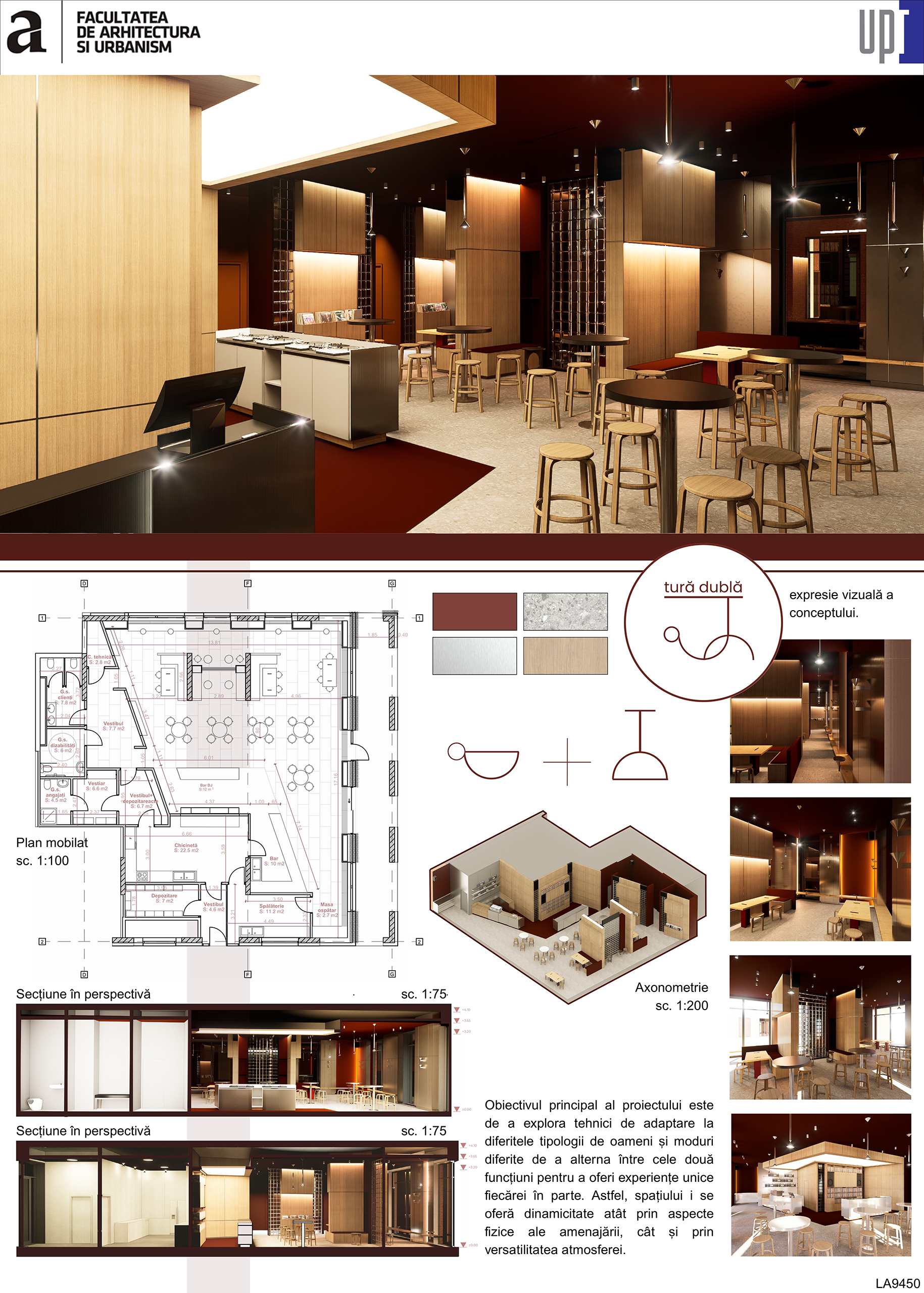
Located in a former industrial area, the Paltim complex was built on the site of the old Hat Factory, from which it also takes its name. In recent years, this area has undergone significant development in terms of urban infrastructure, shifting from its industrial past towards a residential future, becoming a point of interest in a constantly evolving city. This, a place that once lacked social activity is being transformed into one that brings together various types of people duet o the diversity of its current functions: Nokia, the North Train Station, the residential complexes „Paltim”, „City of Mara”, „Monarch”,the second building of the University of Medicine Timișoara, the Bega river shore, and others.
My bachelor project aims to design a space with a dual function, an urban café during the day and a music bar in the evening. The concept of „Tură Dublă” („Double Shift”) is meant to suggest both the two distinct functions of the space and the idea of work shifts, making a subtle reference to the site’s industrial past. The main objective of the project is to explore ways of adapting to various types of people and to alternate between the two functions in order to offer unique experiences for each. Thus, in the process of designing this space, I considered a multitude of aspects to ensure the environment is as inclusive as possible, taking into account the different needs of a diverse audience and identifying methods to transform the daytime space into a nighttime one, allowing them to be perceived differently and have their own identity. Some of these elements include natural and artificial lighting, furniture, directional flow, contrast of materials, contrast of materials, all contributing to the creation of a flexible, captivating space.
Regarding the „listening bar” function, increasingly present in major urban centers, it is a current trend embodied by venues that promote listening and reconnection with music in a social context. This trend dates back to the 1920s, originating in Japan, where it emerged through spaces where people could gather together to drink and listen to music [1]. Given the absence of such a function in the city, I considered this conxept to be a suitable match for the location, duet o the diverse, multigenerational public.
Student: Vincze Erika-Antonela
Coordinating Professor: Spec. Mob. & Interior Design Carmen Săndescu
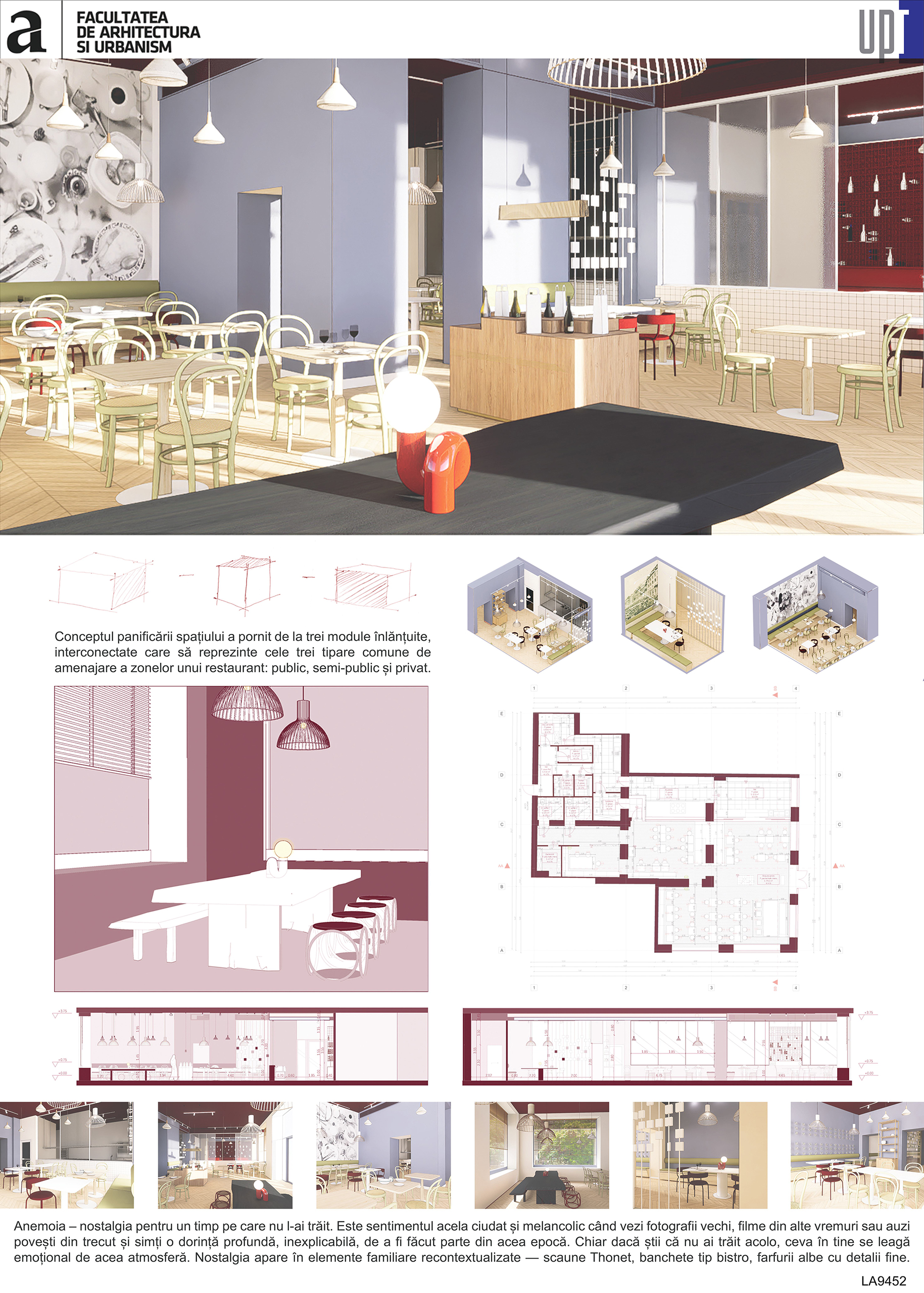
Located in the historic main district of Timișoara, the chosen space for refunctionalization is situated on the ground floor of a building first attested in a 1929 postcard. However, the exact moment of its construction cannot be precisely identified, as the boulevard itself took shape following the demolition of the old fortifications and the urban planning strategies implemented at the end of the 19th century. The building already appears on the 1893 masterplan designed by Ybl Lajos and Kovács Aladár (information sourced from the historical–urban study of the Cetate district conducted by Lecturer Dr. Architect Bâldea Maja and Associate Professor Dr. Architect Gabriela Domokoș-Pascu).
Starting from the relatively fragile and undated history of the space, a common thread was identified—a subtle emotional fiber called nostalgia—which became the guiding theme of the design and its stylistic influences. By exploring concepts related to emotional consumption, dining rituals across cultures, and contemporary marketing strategies, the term anemoia emerged, most often associated with places, sounds, or flavors. According to recent marketing studies, invoking nostalgia in the selling process generates feelings of calm and relaxation in the consumer, increasing the desire to engage with or consume the targeted product. Yet nostalgia, studies show, often transcends the consumer’s own lived experience. This emotion is referred to as anemoia, defined in The Dictionary of Obscure Sorrows by John Koenig as “nostalgia for a time you never lived.”
The proposed interior concept is built around this emotion—anemoia—interweaving visual and symbolic references from various eras and cultural contexts. The technique of temporal collage was employed in the selection of furniture, merging stylistic influences from different periods to create an atmosphere that feels both timeless and familiar. Rich textures, warm color palettes, and decorative details subtly evoke fabricated yet believable memories—a world that feels known, even if never actually experienced.
Here, every object, color, and texture contributes to an emotional narrative, inviting the visitor not only to consume, but to feel. The space becomes a symbolic extension of the idea of home—an inner refuge where time seems to pause. In a society marked by a fast pace and emotional fragmentation, the project proposes a return to essentials: connection, stillness, and the genuine joy of sharing a meal.
In this context, the association with the name “dor” came naturally. It is one of the most emotionally charged and culturally significant words in the Romanian language—endemic and without a direct equivalent in other languages or dialects. Rather than functioning as a simple noun, it represents a cultural concept. In meaning, “dor” lies at the intersection of absence, nostalgia, and affection, its semantics extending beyond everyday language.
Likewise, the designed restaurant aims to dwell, at a soulful level, within the intersection of these three powerful feelings, embodying a symbolic expression of emotional depth and a profound affective relationship with the past, with what is missing, and with one’s identity. With warmth, intimacy, and familiarity at its core, the space is envisioned as a place of reunion and rediscovery—with tastes, with memories, and with loved ones.
Student: Voina Vanessa
Coordinating Professor: Conf. Dr. Arch. Cristina Povian
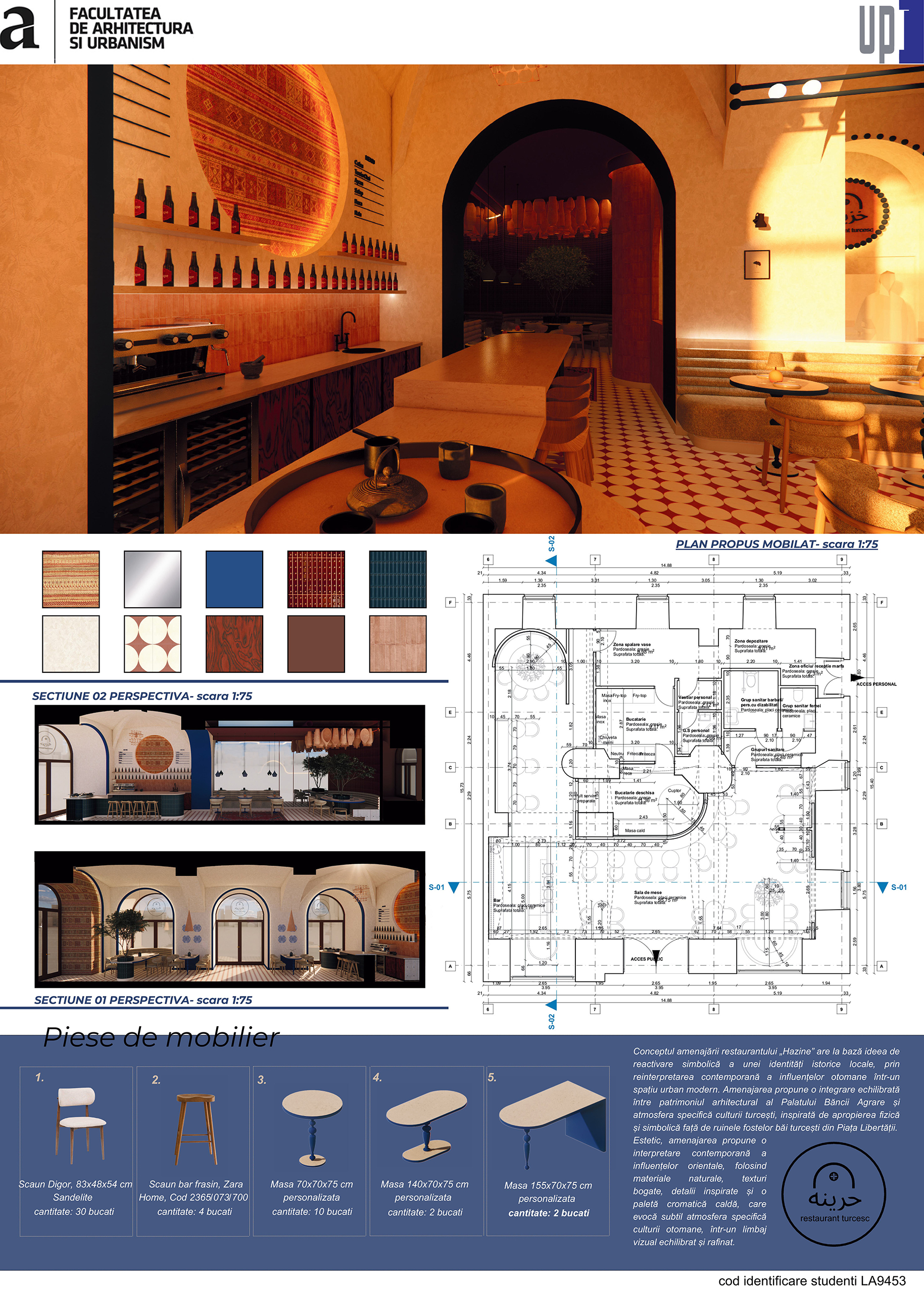
This bachelor thesis proposes the development of a Turkish restaurant, called Hazine, in the historical center of Timișoara. The space chosen for the intervention is located on the ground floor of the Palace of the Agrarian Bank, a building with architectural and historical value, located in Libertății Square. Starting from the location of the space in an area with a strong historical charge, in the immediate vicinity of the ruins of the Turkish baths, the project proposes the symbolic reactivation of a historical layer often ignored, but essential in shaping the urban identity of Timișoara.
At the same time, a real need was identified among the local public for a public eating place with a Turkish specificity, offering not only gastronomic services but also a coherent cultural experience. The objective of the research was formulated as an attempt to integrate these historical values into a contemporary space for the general public, while responding to current HoReCa standards.
The central hypothesis assumes that a space with architectural and symbolic value can gain a new contemporary function while preserving its identity—provided it is approached through a carefully developed design concept that is closely tied to the historical context and specific character of the place. The resulting project proposes a balanced and coherent solution, both aesthetically and functionally. Natural and durable materials were used, adapted to the demands of a public space, while the visual elements were selected to subtly evoke Ottoman influences without replicating historic styles.
In conclusion, the project succeeds in highlighting the historic character of the site through a carefully constructed contemporary design, adapted to the current needs of the users and harmonized with the architectural and cultural specificity of the area.
2025 | DIPLOMA | YEAR VI
The completion of studies at the Faculty of Architecture and Urbanism within Universitatea Politehnica Timișoara is achieved through a diploma examination structured into two complementary components, theoretical and applied in nature.
Part I consists of the defense of a theoretical dissertation and a preliminary research study (pre-diploma), which establishes the conceptual foundation of the final project. The dissertation is developed within one of three academic units:
Complex Architecture
Heritage Development and Reuse
Urban Planning
Part II involves the public defense of the diploma project, presented through written and graphic documentation demonstrating the candidate’s ability to integrate and apply theoretical knowledge in the coherent resolution of an architectural or urban issue.
The topic may be selected from those proposed within the thematic unit or formulated by the candidate in consultation with the academic supervisor.
The final assessment considers the rigor of the research process, theoretical grounding, conceptual coherence, interdisciplinary dimension, and the overall architectural quality of the proposed solution.
For the full texts please click on the pages of the brochure below.


Complex Architecture
Student: Lac Alexandra
Coordinating Professor: S.l. Dr. Arch. Daniela Negrișanu
The proposed concept illustrates the impact of architecture in the context of memory loss, highlighting its ability to mediate the disconnection between perception and meaning. These aspects analyze the shaping of identity through anamnesis, stimulated by architectural experiences and evoked reminiscences, as well as the mechanisms of perception, which involve the use of the senses for a deep exploration of architecture. The center, beyond being a treatment space, becomes an active factor in the therapeutic process, which, although it will not solve the issue of cognitive decline, will optimize the patients’ quality of life through the built environment’s capacity to generate interactions that reflect the essence of their identity.
Student: Lușcă Maria Claudia
Coordinating Professor: Arch. Adam Romi
The architectural language is shaped by the psychological profile and needs of a person who has experienced trauma, drawing on the principles of healing architecture. Trauma fragments the mind into “before” and “after” episodes, often dominated by fear and pain. In this context, architecture becomes a therapeutic support in the healing process, addressing behavioral, physical, emotional, and cognitive impacts. Healing architecture leverages the power of the built environment to influence psychological well-being. For domestic violence victims, spaces must promote safety, calm, and identity restoration. Environmental factors—light, natural materials, colors, and spatial organization—directly affect stress levels and the recovery process. Beyond visual perception, the multisensory experience of space (texture, smell, sound, shadow) fosters a sense of belonging. Thus, the building becomes more than a shelter—it becomes a space of healing and hope.
Students: Găleșanu Eduard, Hotea Timotei, Pașca Georgiana
Coordinating Professor: Conf. Dr. Arch. Cristian Blidariu
MEKA – Museum of Ecological Knowledge and Awareness transforms the Mecatim industrial platform in Timișoara into a mixed ensemble: plastic recycling factory, research institute, and museum dedicated to the material plastic.
Addressing the post-industrial waste crisis, the project redefines the ruin as active public infrastructure. The existing metal structure is complemented by prefabricated modules made of recycled plastic and local soil, configuring a hybrid system with a reduced footprint.
The continuous flow—collection, extrusion, 3D printing, exhibition—becomes an open didactic stage for the public. Intermediate spaces, a circular walkway, and vegetated courtyards filtered by translucent façades mediate the relationship between technological process and city, cultivating community engagement. Plastic, simultaneously raw material and architectural expression, is revalorized through architecture, with recycling becoming a founding cultural act.
Student: Maxim Silvia-Elena
Coordinating Professor: S.l. Dr. Arch. Claudiu Toma
At the edge of Timișoara, in the Fratelia neighborhood, time seems to have forgotten to move forward. The small houses, with gabled roofs and walls made of solid brick or adobe, tell stories of simplicity, calm, and community. On these quiet streets, life flows slowly: people chatting at their gates, benches that listen to thoughts, windows that open toward the world. The Brick Bond project was born from the desire to preserve this identity and transform it into a foundation for the future. Inspired by the habits and daily gestures of the locals, the project reinterprets the street as a protected indoor space — a playground for children and a space of reconnection for the community. Here, details become symbols: a bench, a window, a door — all reimagined in the spirit of a quiet, shared life. The rotated volume is built on the footprint of the former cultural center, as a gesture of respect for the past and an act of reviving collective memory. Made of perforated metal, it expresses the community’s delicacy, transparency, and sensitivity. Surrounding it, a brick wall embraces it — like a protective shell that binds the new to the old. Brick Bond is about connections — between people, between past and present, between tradition and future. It is a gesture of reconnecting with local memory, an invitation to play, to dialogue, and to come together.
Heritage Development and Reuse
Student: Avram Casian Alexandru
Coordinating Professor: Conf. Dr. Arch. Gabriela Domokos-Pașcu
The mosaic complex in Fabric consists of the Neolog synagogue, the prayer house, and the former Israelite care center for the elderly. Over time, the surrounding area has been altered by the appearance of industrial sites, office buildings, medical offices, and multiple private parking lots. Within the project of converting the mosaic complex into a research center with a museum program and the cross-border headquarters of The Art Nouveau European Route, the reconnection of the 3 buildings was carried out and their correlation with the nearby public space, as well as with the 2 courtyards of the mosaic complex. At the conceptual level of the arrangement, the aim was to extend Parcul Regina Maria beyond the fence line, in fact reclaiming an area called Vorpark which was integrated into the park until the end of the 19th century, until it was parceled and built upon. To ensure the physical connection between the 3 buildings, a glass-structured pavilion was inserted, around which a drainage channel was placed. At the functional level, the synagogue accommodates musical and theater performances, conferences, as well as temporary exhibitions within the complex. The prayer house accommodates permanent exhibitions, a conference or presentation room, and a space dedicated to interactive activities with the community. The 2 aforementioned buildings have public functions, while the Coșariu house is a research center (semi-private).
Student: Petrica Anca Ștefania
Coordinating Professor: S.l. Dr. Arch. Maja Bâldea
The project addresses the noble ensemble of Petala Castle in the village of Clopodia, Timiș County, focusing on the revitalization of the castle, its annexes, and the dendrological park. The region has a rich history and has been inhabited by various ethnic groups who have shaped the area and its characteristics to this day. Revitalizing the ensemble has the potential to attract tourism to the area, strengthen the inhabitants’ sense of place, and serve as a catalyst for similar initiatives across the Banat region. The proposal includes multiple stages of development, ranging from the addition of a traditional restaurant to on-site accommodation. These new interventions are carefully integrated into the landscape and create a dialogue with the existing buildings.
Urban Planning
Student: Costică Bogdan Andrei
Coordinating Professor: Conf. Dr. Arch. Marius Găman
The project proposes a strategic intervention in the area of the former Disciplinary Battalion in Caracal, aiming to regenerate a neglected urban periphery affected by social, economic, and infrastructural challenges. The city faces issues such as rural migration, rising housing costs, poor transport infrastructure, and limited access to essential services and green spaces. The project introduces an urban expansion model based on food urbanism and co-housing, promoting urban agriculture as a tool for food self-sufficiency, economic resilience, and community revitalization. Various urban agriculture typologies are integrated (educational gardens, therapeutic spaces, greenhouses, orchards, etc.) managed by private producers, cooperatives, youth, or volunteers, depending on context. In terms of housing, the proposal includes four main typologies: collective and semi-collective units in the central area, row houses at the northern edge as a transition, individual homes near productive zones in the south, and commercial-service areas at the entrance. Each typology supports diverse social needs and fosters active, cohesive communities.
Student: Olar-Nicola Dragoș
Coordinating Professor: Conf. Dr. Arch. Marius Găman
The project focuses on transforming a key block in the Freidorf area of Timișoara into a model of sustainable urban development. It applies theoretical concepts such as New Urbanism, Urban Densification, and Acupuncture to address the challenges faced by the neighborhood, including urban fragmentation and inadequate infrastructure. The proposed interventions aim to improve connectivity, diversify land use, and enhance the neighborhood’s identity. Key aspects include the construction of new educational and medical facilities, of public spaces that encourage social interaction, and the development of a pedestrian-friendly street network. The project also emphasizes the importance of increasing residential density without compromising the quality of life. By introducing new green spaces and optimizing the area’s infrastructure, the project seeks to revitalize Freidorf, making it a vibrant and self-sufficient community. Overall, this kind of urban development not only addresses the immediate needs of the community but also serves as a potential model for the development of other areas in Timișoara. The anticipated result is a more cohesive and sustainable urban environment that enhances the quality of life.
Student: Restivan Francesca Tiziana
Coordinating Professor: Conf. Dr. Arch. Mirela Szitar-Sârbu
The project proposes the transformation of the former TEBA industrial site into a vibrant urban complex with mixed functions adapted to the current needs of the city of Arad. Located on the banks of the Mureș River, close to the city center, the site benefits from a strategic position but is marked by the degradation typical of abandoned industrial areas. The intervention aims to valorize the existing industrial heritage through sustainable functional conversions, complemented by new residential buildings, commercial spaces, cultural, educational, and social facilities. Public spaces play a key role in shaping the ensemble, with urban squares, community gardens, themed playgrounds, and a riverside promenade being proposed. By integrating sustainable mobility principles and reconnecting the site to the urban fabric, the project seeks to create a dynamic urban hub that supports social cohesion, functional diversity, and the preservation of the site’s memory within a contemporary urban framework.
2024 | DIPLOMA | YEAR III
The completion of the three-year program requires the development of a comprehensive interior design project, covering all stages of the design process. Both the site and the function are chosen by the student, provided that the relevance and opportunity of the proposed intervention are clearly justified.
The main objective is to define a strong spatial identity, shaped both by the qualities of the selected context and by the specific characteristics of the proposed function. Throughout the phased development of the project, theoretical and technical approaches are pursued in order to formulate spatial and formal solutions that enhance the chosen space.
This process represents a valuable exercise in preparation for professional practice, addressing adaptive reuse, the creation of an aesthetic aligned with the proposed concept, the coordination of constructive elements (finishes, furnishings, installations), the resolution of execution details for custom-designed furniture, cost anticipation, and overall budget management.
Project Development Phases
Phase I involves understanding existing conditions and defining the requirements of the proposed theme. This includes studying comparable examples of similar scale and function, as well as analyzing the site’s specific characteristics, qualities, dysfunctions, and atmosphere.
Phase II focuses on developing a general intervention concept, generating two preliminary design proposals, and further detailing one selected option.
Phase III consists of producing the technical project documentation, detailing the solution developed in the previous phase at a technical design level.
Phase IV represents the execution detailing stage. The final phase includes preparing detailed drawings for at least three key design elements (such as custom furniture pieces or constructive details), finalizing finishes and materials, and documenting them within the written report, cost estimate, and material palette.
For the full texts please click on the pages of the brochure below.
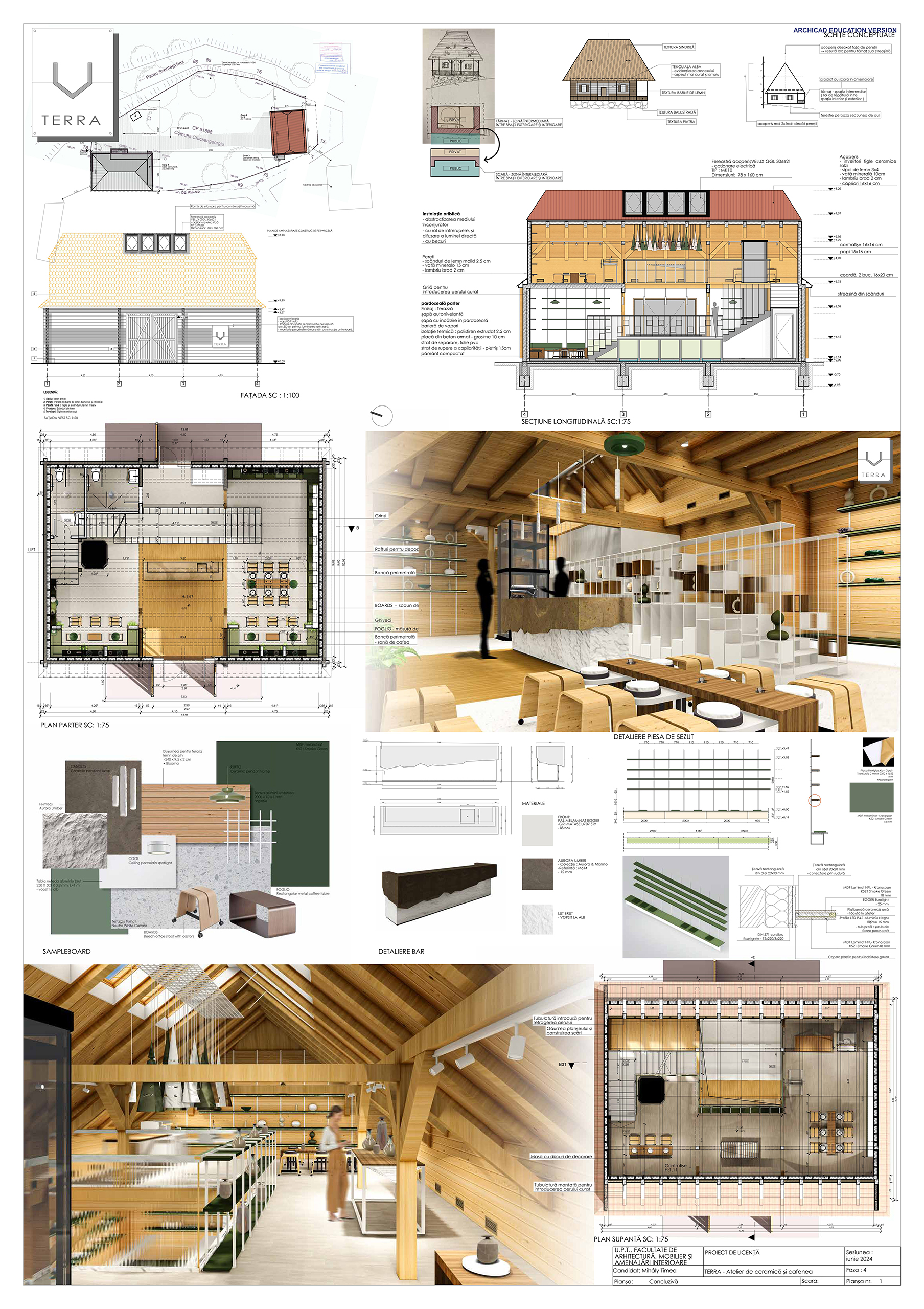
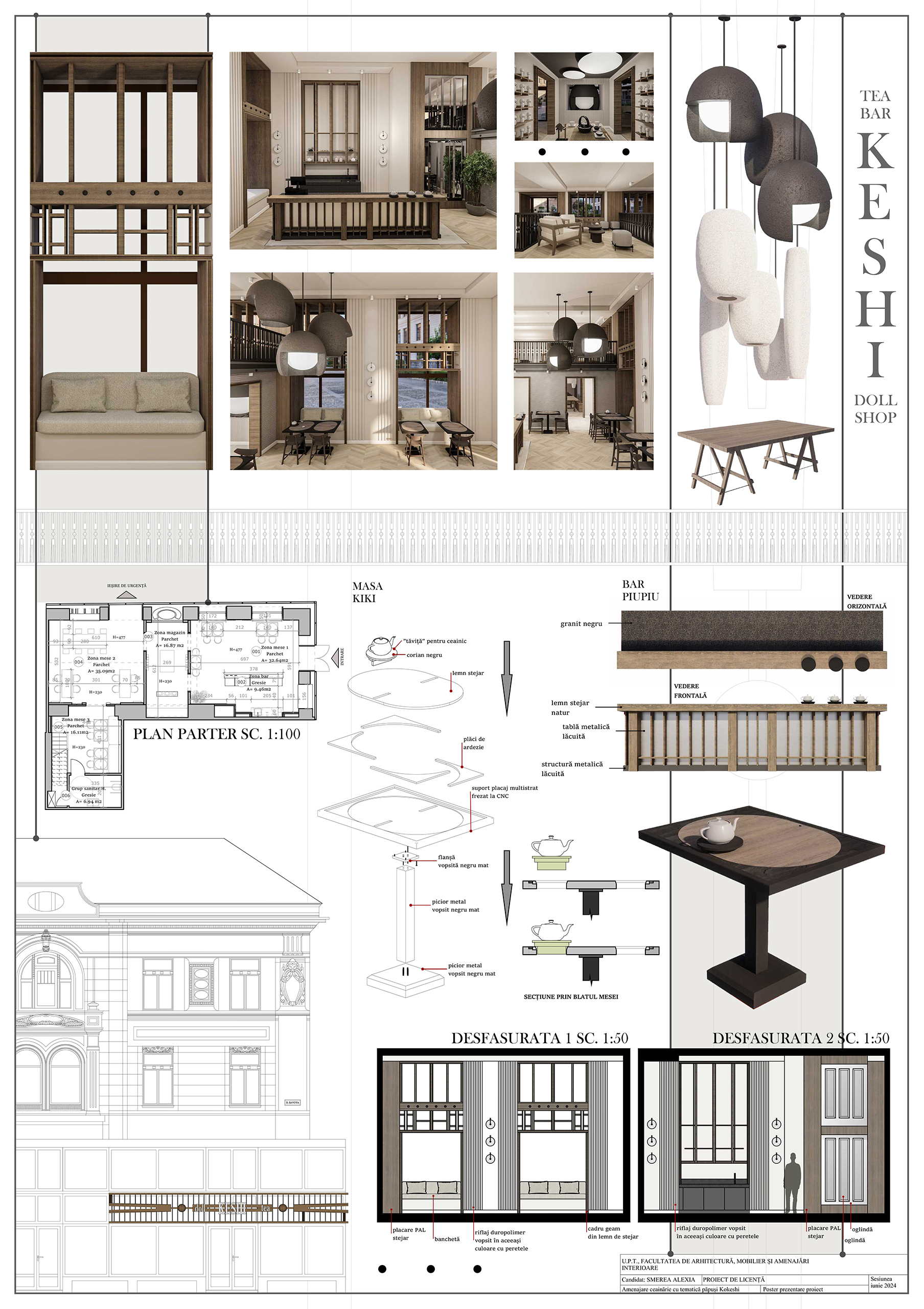
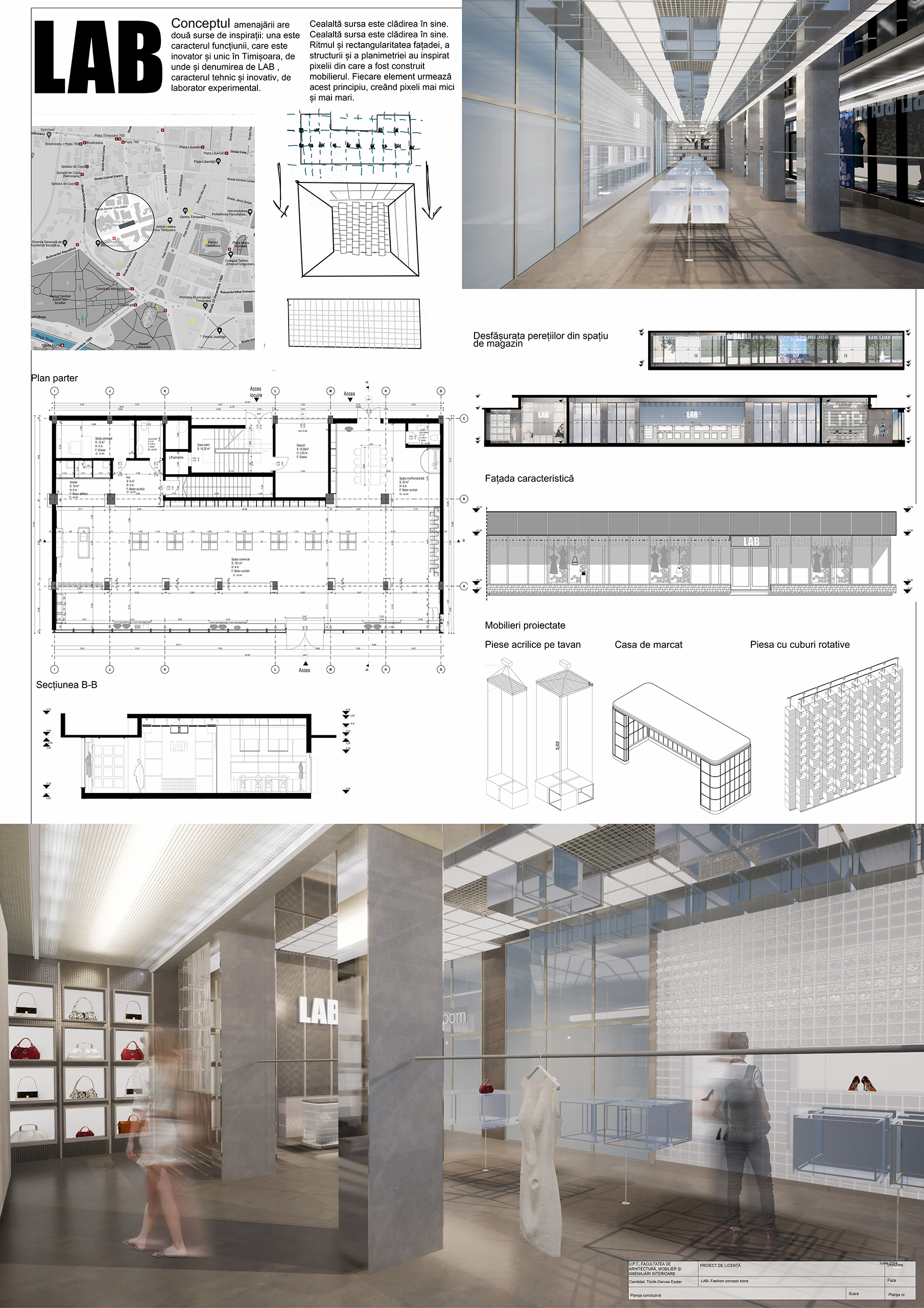
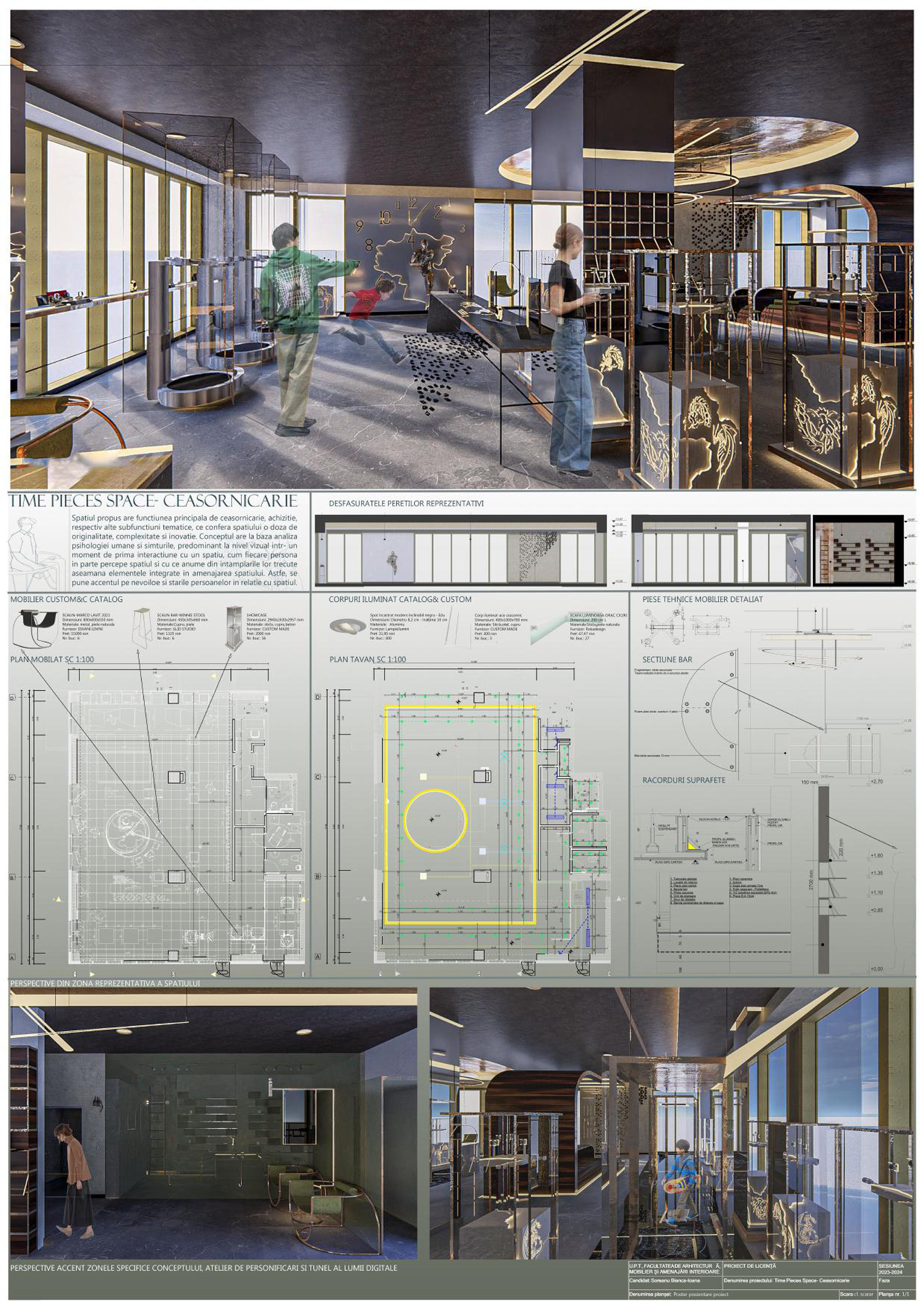
Diploma Projects
Student: Bârle Maria-Francesca-Simina
Coordinating Professor: S.l. Dr. Arch. Maja Bâldea
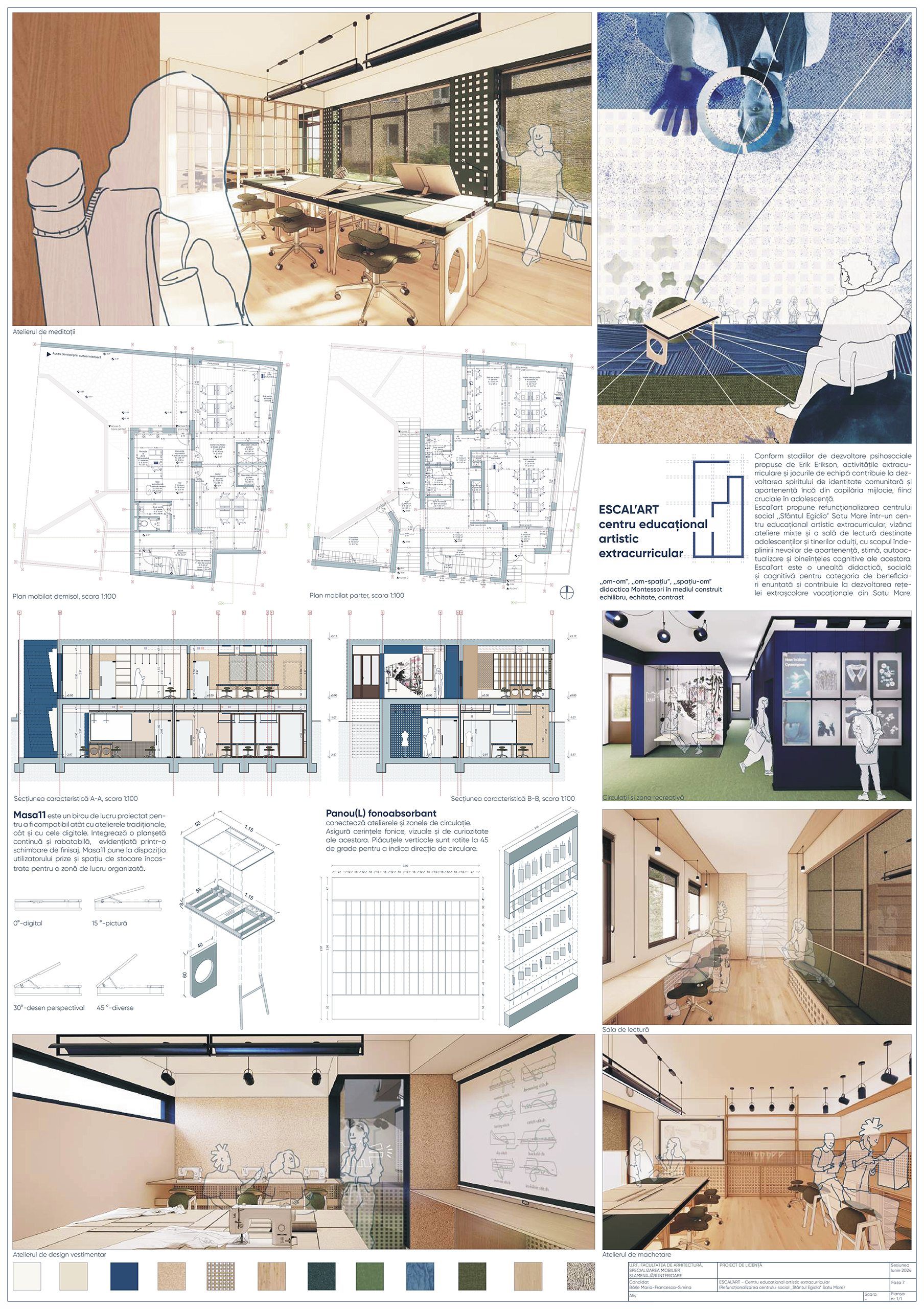
According to the stages of psychosocial development proposed by Erik Erikson (Childhood and Society, W. W. Norton & Co., Chicago, 1950), extracurricular activities and team-based games contribute to the development of community identity and a sense of belonging as early as middle childhood and become particularly crucial during adolescence. The recent volunteer activity carried out at the social centre “Saint Egidio” in Satu Mare, together with the theoretical framework mentioned above, generated the core hypothesis of the Escal’art project:
What is the role and position of vocational extracurricular activities in adolescents’ daily schedules in terms of their social and cognitive development?
How would adolescents and young people in Satu Mare benefit from expanding the local extracurricular network with a centre that offers guided training in contemporary vocational skills, which are often pursued individually due to limited or difficult access to assisted instruction?
In what ways could Montessori pedagogy innovate the vocational education process for adolescents, and what attributes position it advantageously compared to other methodologies?
Escal’art therefore proposes the adaptive reuse of the “Saint Egidio” Social Centre in Satu Mare into an extracurricular arts education centre. The project introduces mixed workshops, including tutoring in architecture and interior design, graphic design, fashion design, model making, as well as a study room for teenagers and young adults. The aim is to address their needs for belonging, esteem, and self-actualization.
From the perspective of the human–environment–space relationship, the impact of the Escal’art centre lies in its objective to function as a didactic, social, and cognitive instrument for its target users, while also contributing to the development of the local vocational extracurricular network in Satu Mare by increasing its visibility and relevance.
The theoretical foundation directly informs the design aesthetics, reflecting a continuous interplay between intrinsic and extrinsic perception and interaction. The project materializes Montessori principles and the triple relationship “person–person,” “person–space,” and “space–person.” The design seeks to generate sensorially balanced environments in accordance with the functional and ergonomic requirements of each activity. Personalization and stylistic coherence balance the standards outlined above and foster a sense of belonging within a group that shares similar values, reinforcing the anthropocentric character of the project.
To establish an authentic connection with the intended users and beneficiaries, they were directly involved in the conceptualization of the interior design through a feedback questionnaire. This process provided essential insights into their relationship with the extracurricular activities in which they participate, their preferred didactic approaches, and the importance of the environment in cognitive processes and overall well-being.
In conclusion, Escal’art represents a case study that emphasizes both the influence of space on the conduct of educational activities and the human capacity to shape the surrounding atmosphere. At the same time, it supports the development of the local extracurricular education system in Satu Mare through a Montessori-based methodology adapted to adolescents’ needs, fostering socio-cultural advancement within the community and strengthening the bonds of trust between learners and educators.
Student: Cuciula Lucia-Maria
Coordinating Professor: S.l. Dr. Arch. Otilia Tudoran
This project originated from the idea of creating a contemporary optometric practice to complement the central area of Timișoara. Over time, the concept evolved into OKIO—a multifunctional space that extends beyond the conventional notion of a clinic.
In addition to providing specialized optometric services, OKIO operates as a retail space offering a curated selection of renowned eyewear brands, including both prescription frames and sunglasses. The centre also incorporates an on-site workshop staffed by qualified professionals who assist clients in selecting frames suited to their facial features.
Beyond standard services, OKIO integrates customization options such as engraving and 3D printing of frames. Furthermore, the space offers a unique experiential component: the photographic capture of clients’ irises, transformed into personalized artistic prints, creating memorable and individualized keepsakes.
Given the range of services and the central urban location, the spatial concept was envisioned as modern and refined. This intention is reflected in the material palette—marble, metal, colored mirror surfaces—and in the inclusion of sculptural design objects that evoke the atmosphere of a gallery or museum rather than a conventional retail environment.
The interior is conceived as a visual composition that engages the human eye. Circulation is organized along a clearly defined route structured around a central focal element. The fluidity of movement is emphasized through rounded corners and continuous spatial transitions, guiding visitors intuitively throughout the space.
Situated in the heart of Timișoara and defined by a fully glazed façade, the storefront was designed to capture the attention of passersby. The display features oversized eye installations aligned along the window, generating curiosity while offering only partial visual access to the interior. The eyewear display area remains visible from the street, while the remainder of the space is deliberately concealed, enhancing intrigue and reinforcing the conceptual narrative.
Students: Tímea Mihály
Coordinating Professor: Specialist in Furniture and Interior Design Carmen Elena Săndescu
Integration within the built environment remains an ongoing subject of debate in architectural discourse and represents a fundamental aspect of the design process. While it is essential to preserve the character and atmosphere of a place, it is neither possible nor appropriate to replicate historical elements directly. Instead, meaningful integration can be achieved through the study of proportions, the abstraction of local symbols, textures and ornaments, the simplification of forms, and the use of related or locally sourced materials. Given the specific configuration of the surrounding context, this project seeks to reinterpret these principles in a contemporary and abstracted manner.
The building was conceived as a communal hub intended to host the social activities of the village. Its generous and flexible interior spaces are designed to accommodate a variety of functions, supported by adaptable furniture systems. The village regularly organizes creative activities for both younger and older generations, and the building provides an appropriate spatial framework for such events. However, as these activities are not permanent, the building was designed to ensure functional and economic sustainability. For this reason, it incorporates a ceramics workshop and a café area, both intended to operate on a continuous basis.
Conceptually, the interior design draws upon the proportions and rhythms characteristic of local architecture. The composition features simple geometric volumes and emphasizes the use of locally specific textured materials. The architectural language reflects adaptation to geographical conditions—high-pitched roofs, extended eaves, and a porch mediating between interior and exterior spaces. In this context, human habitation maintains a constant relationship with the natural surroundings: walls do not isolate inhabitants from their environment but rather offer protection while preserving connection. The proposed design seeks to reinterpret and embody this architectural ethos in a contemporary expression.
Student: Smerea Alexia
Coordinating Professor: Conf. Dr. Arch. Camil Milincu
The theme of the Bachelor’s degree project consists of the adaptive reuse of an existing ground-floor café space, transforming it into a teahouse combined with a kokeshi doll shop.
The central concept of the interior design is union, referring to the creation of new connections rooted in childhood memories, with play serving as the primary thematic framework of the space. The proposed design merges Japanese elements with the Classicist Secession features present on the building’s façade. Japanese influences are introduced through the use of characteristic materials and colors—such as wood, cast iron, and ceramics—as well as through the adoption of clean, linear geometries. The Classicist Secession style is reinterpreted in the interior by incorporating geometric details inspired by the façade, including fluted column motifs, hemispherical forms, and oval shapes.
The kokeshi doll serves as the defining design motif of the teahouse. It is analyzed from a geometric perspective and abstracted into various spatial and decorative elements throughout the interior. Its role extends beyond aesthetic and commercial purposes, contributing to the expression of the overarching concept of union. Within this framework, the traditional tea ceremony is reimagined as a playful tea gathering—an experience that can be shared by visitors and, symbolically, by kokeshi dolls, evoking the imaginative rituals of childhood.
Student: Török-Darvas Eszter
Coordinating Professor: Conf. Dr. Arch. Diana Giurea
As part of the project, I designed a retail space dedicated to clothing and accessories. However, it is conceived not as a conventional store, but as a concept store, offering an expanded program that goes beyond retail. The space is adaptable and can function as a venue for fashion shows, product launches, and specialized workshops. It operates as a collaborative platform, bringing together multiple designers and providing an environment for emerging creatives seeking a physical location to showcase and sell their work.
The theme was approached as a laboratory. Fashion design is a dynamic and continuously evolving field, shaped by ongoing research, experimentation, and innovation. The space was therefore designed to accommodate designers working across various disciplines, including apparel, footwear, bags, and jewelry. The furniture is predominantly custom-designed, characterized by simple forms, and integrated with mechanical and electrical systems that enhance flexibility and functionality.
An important source of inspiration was the architecture of the existing building. LAB is situated in the center of Timișoara, within a structure defined by rectangular volumes, strong rhythm, and symmetry. These characteristics shape the façade, spatial layout, and overall identity of the building, and were consciously reflected in the interior design. The concept was developed “pixel by pixel,” with the entire composition structured through cubic modules. Spatial organization follows a symmetrical logic, with square-based divisions reinforcing clarity and order.
At the same time, adaptability was a key principle: most elements are modular, reconfigurable, and easily adjustable to support different types of events and exhibitions. The chromatic palette is restrained, consisting primarily of shades of white, gray, and blue-green. Material contrasts play a significant role in defining the atmosphere—glossy, reflective, and transparent surfaces such as glass bricks, matte plexiglass, mirrors, and metallic elements interact with the raw texture of exposed concrete.
Overall, the project is defined by a clean, contemporary aesthetic, combining advanced technology with the refined atmosphere of a high-end fashion concept store.
Student: Soreanu Bianca-Ioana
Coordinating Professor: Asist. Dr. Arch. Ionuț Ciprian Mătieș
In this project, I designed a multifunctional watchmaker’s workshop—a space dedicated not only to horology enthusiasts but also to fostering interaction, whether between individuals or between the individual and the built environment. The concept envisions a setting that accommodates diverse personalities and experiences, structured around distinct zones that reference past, present, and future. Vintage watch models evoke a sense of history, while contemporary elements frame the present, and a forward-looking perspective—where “the sky is the limit”—symbolizes the possibility for each visitor to construct their own universe.
The spatial organization is articulated through custom-designed furniture and thematic elements that reinforce the narrative. The atmosphere varies according to the user’s perception, oscillating between warm and cool, intimate and dynamic, yet always interactive. Particular emphasis was placed on a contemporary, digitized area incorporating cyberpunk-inspired effects, intended to intensify the human–space relationship and to reflect the diversity of activities hosted within the workshop. This approach reinterprets the traditional watchmaking function within a modern framework capable of attracting multiple generations.
The project was developed progressively, from conceptual sketches to a highly detailed representation approximating real construction. Materials, textures, colors, and finishes were carefully selected to support the overarching theme and concept. Drawing upon case studies of similar functions as well as original design explorations and modeled elements, the result is an interactive, contemporary, and distinctive environment.
At its core, the project is grounded in the exploration of the human–space relationship, the psychological effects of the built environment, and references to principles of sacred architecture found across cultures, integrating these dimensions into a cohesive and experiential interior design proposal.
Student: Henț Iulia-Alexia
Coordinating Professor: Conf. Dr. Arch. Andreea Anghel
Located in the historic Fabric district of Timișoara, within the Szekely Palace, the selected site currently functions as a facility for the preparation of confectionery and pastry products. The proposed intervention redefines the space as a showroom-warehouse dedicated to the presentation of chocolate products, incorporating a small-scale chocolate factory. The Szekely Palace is distinguished by its architectural language, characterized by a restrained plastic expression devoid of excessive ornamentation, anticipating the modernist direction that would later shape international architecture.
The conceptual inspiration for the project stems from Timișoara’s historical connection to the Kandia chocolate factory—a brand that delighted generations of chocolate enthusiasts and left a lasting mark on the city’s identity for over a century, beginning in 1890. Drawing from this legacy, the proposal envisions the creation of a small confectionery workshop in Timișoara, symbolically reopening a space for passion and creativity in the field. The long-term vision imagines locally produced chocolates and chocolate bars gaining recognition beyond Romania, potentially throughout Europe.
The interior design concept is grounded in the transformation of chocolate from its liquid to its solid state. This metamorphosis is translated spatially through the use of organic, flowing geometries rendered in solid, substantial materials—forms that appear fluid yet embody mass and permanence, metaphorically suggesting the solidification process of chocolate.
The spatial narrative unfolds as a journey that simulates the organic stages of chocolate production. The design capitalizes on this manufacturing process by gradually transitioning materials and textures—from rough to refined surfaces—mirroring the cocoa bean’s transformation from harvesting to grinding and final refinement. Architectural curves guide movement through the space, evoking the tempering and molding stages of chocolate making. In this sense, the interior itself becomes a form of packaging that must be metaphorically “unwrapped” to be fully understood.
Existing architectural elements are carefully integrated into the proposal. Decorative motifs from the façade are reinterpreted as sources of inspiration and constructive elements, including forms suggestive of chocolate shapes. Materials present on both the façade and in the interior—such as green ceramics—are incorporated into the new design. The historical context of the site is also acknowledged: the previous use of the land as a timber warehouse informs the reintroduction of wood as a key material.
Color plays a significant role in shaping the atmosphere of the space. Warm tones dominate the interior, fostering a welcoming and comfortable ambiance often associated with nature and organic textures. Subtle shades of brown and green—derived from the natural hues of cocoa beans—form the core chromatic palette, reinforcing the conceptual and sensory narrative of the project.
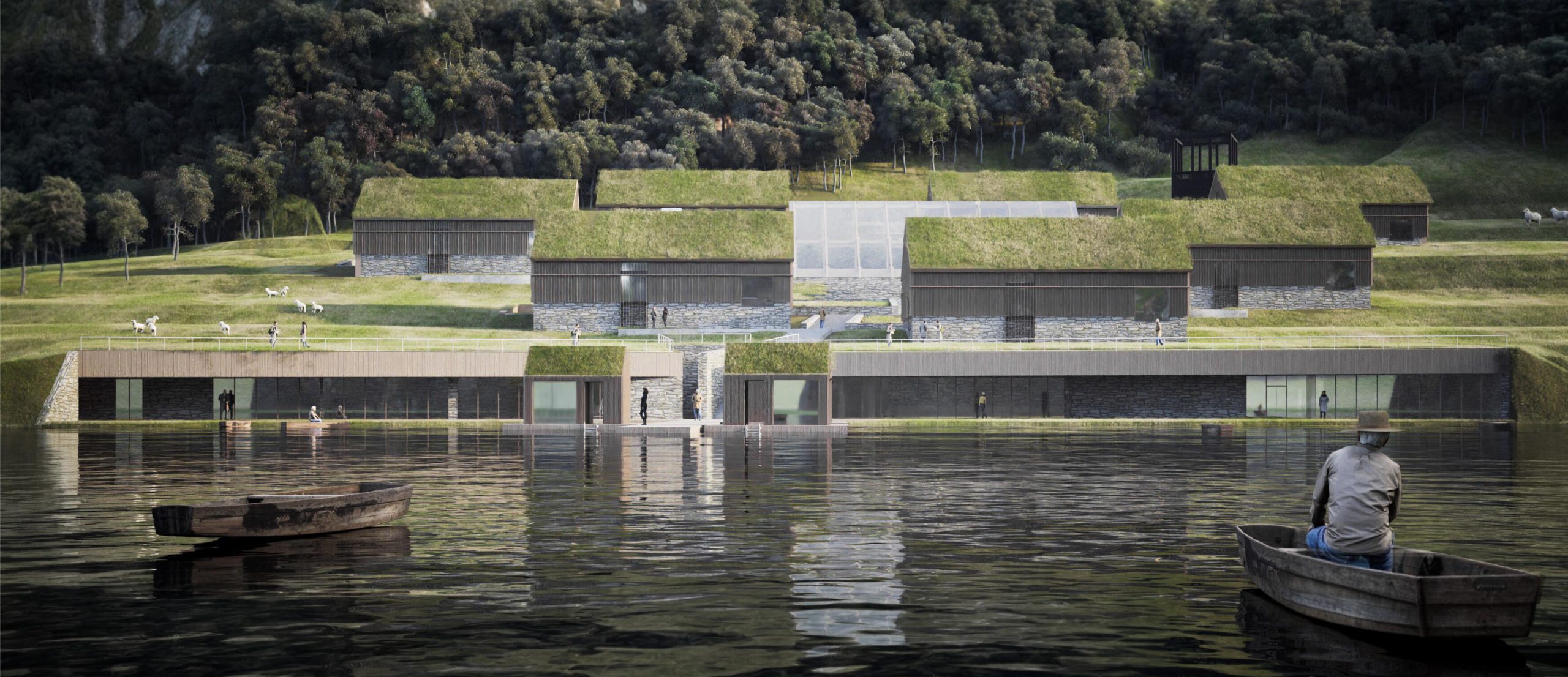
2024 | DIPLOMA | YEAR VI
The completion of studies at the Faculty of Architecture and Urbanism within Universitatea Politehnica Timișoara is achieved through a diploma examination structured into two complementary components, theoretical and applied in nature.
Part I consists of the defense of a theoretical dissertation and a preliminary research study (pre-diploma), which establishes the conceptual foundation of the final project. The dissertation is developed within one of three academic units:
Complex Architecture
Heritage Development and Reuse
Urban Planning
Part II involves the public defense of the diploma project, presented through written and graphic documentation demonstrating the candidate’s ability to integrate and apply theoretical knowledge in the coherent resolution of an architectural or urban issue.
The topic may be selected from those proposed within the thematic unit or formulated by the candidate in consultation with the academic supervisor.
The final assessment considers the rigor of the research process, theoretical grounding, conceptual coherence, interdisciplinary dimension, and the overall architectural quality of the proposed solution.
For the full texts please click on the pages of the brochure below.
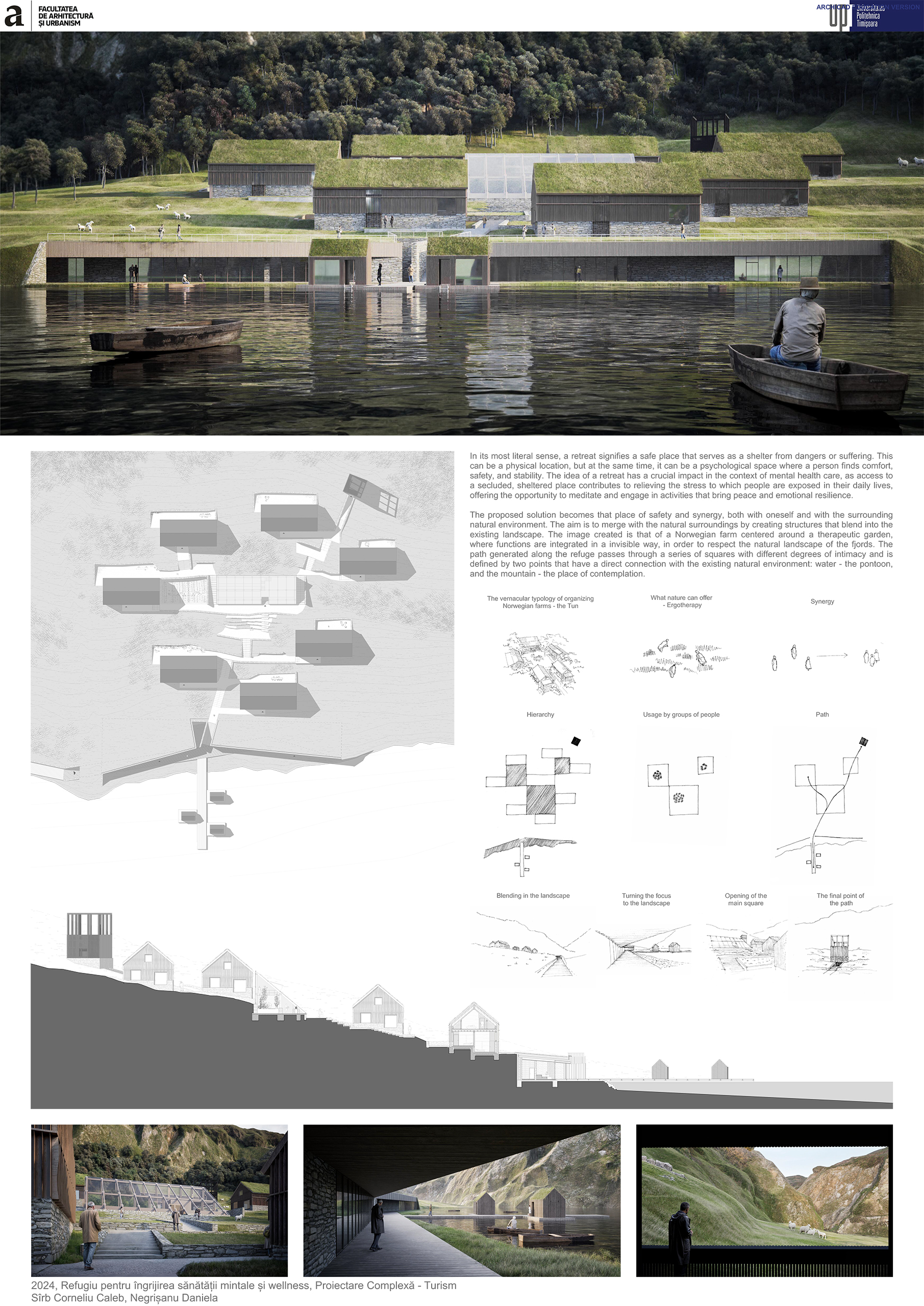
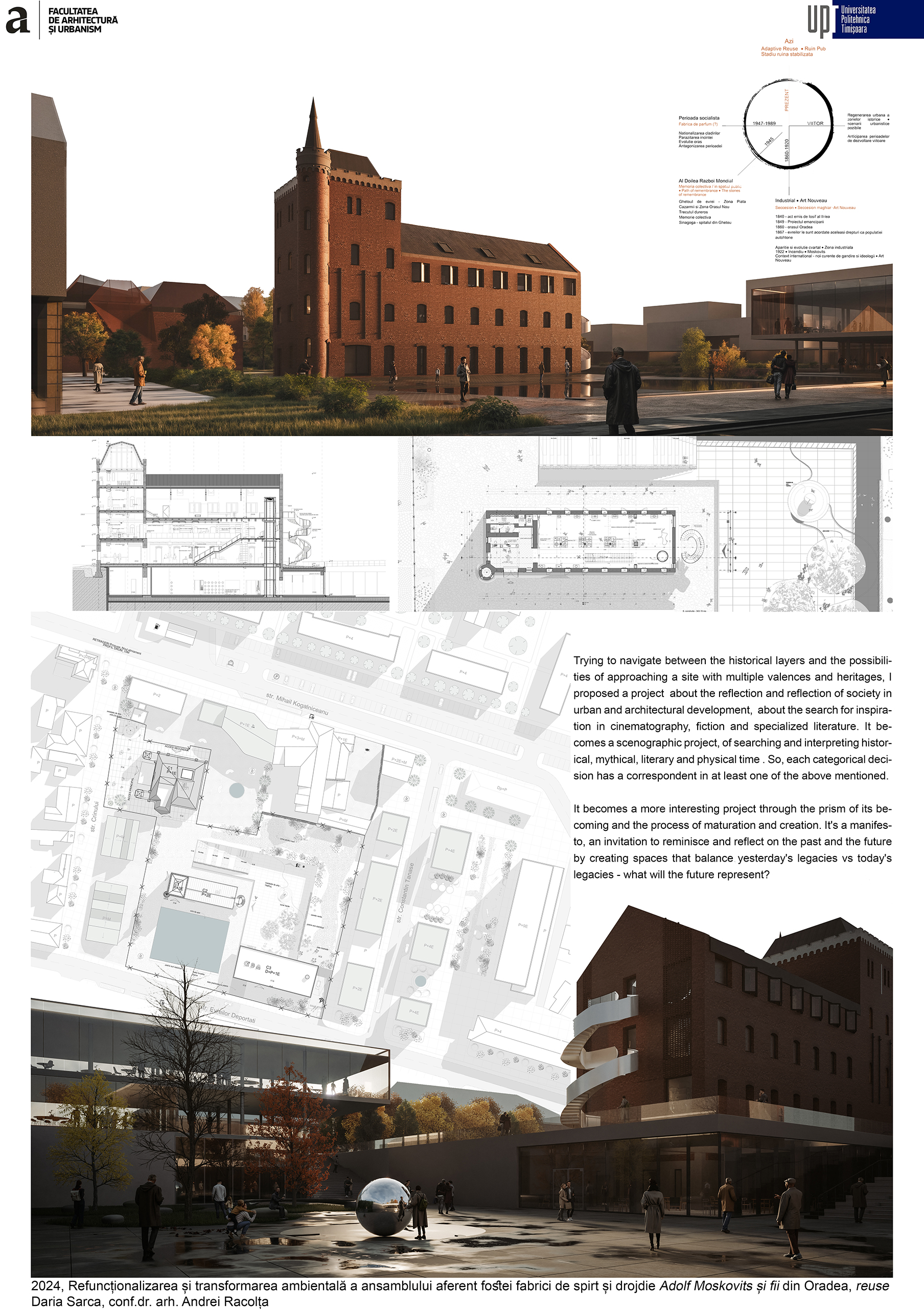
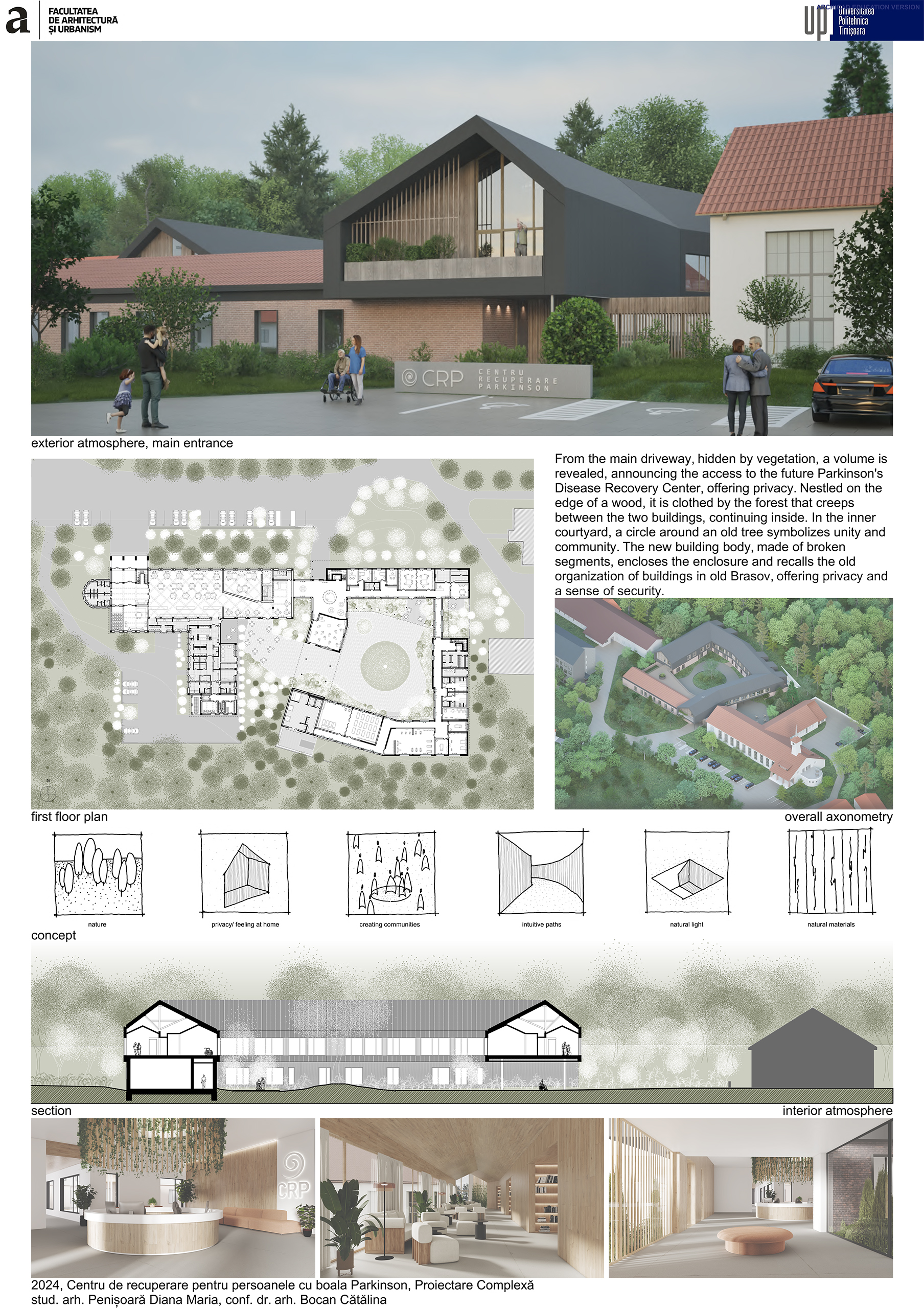
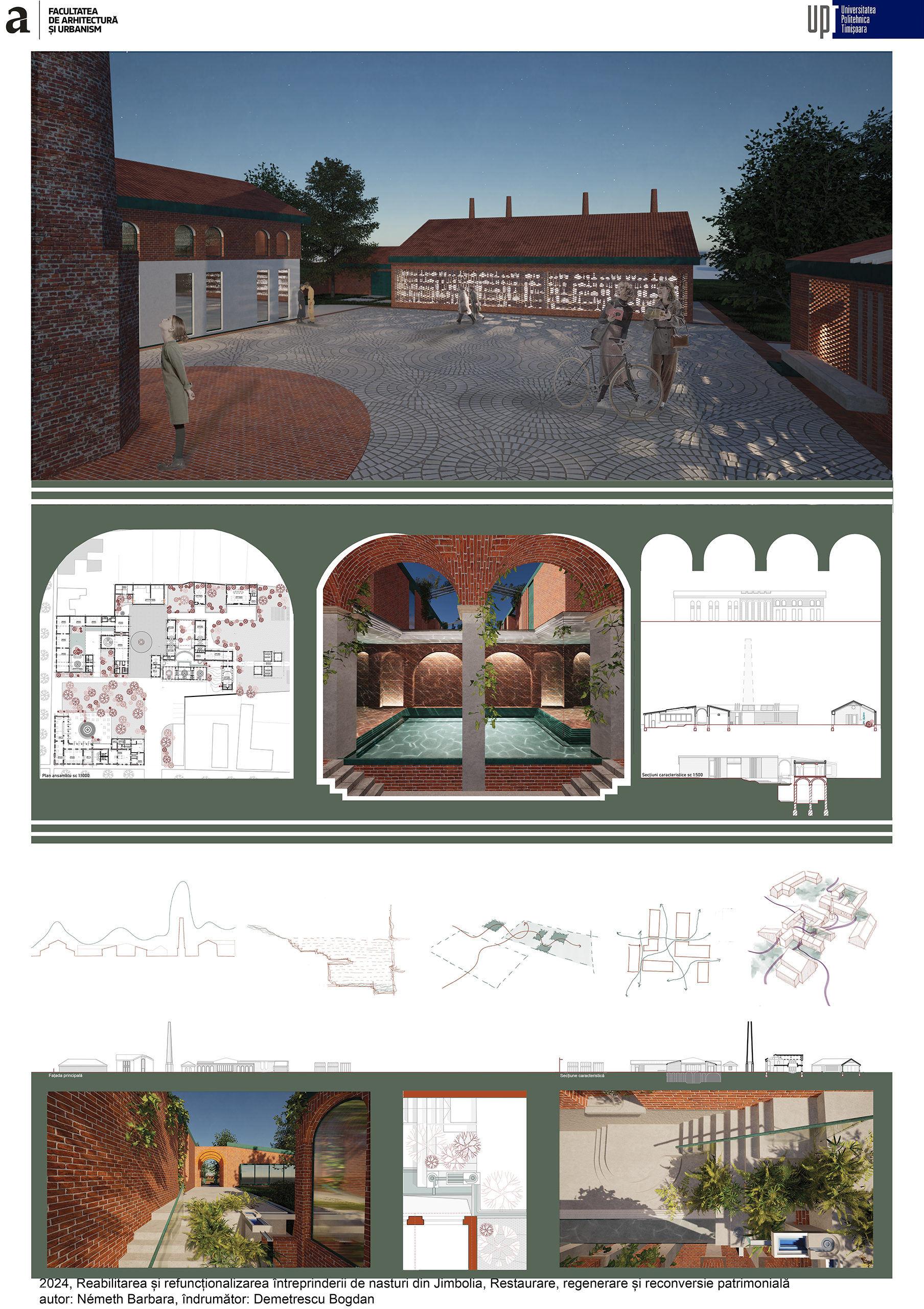
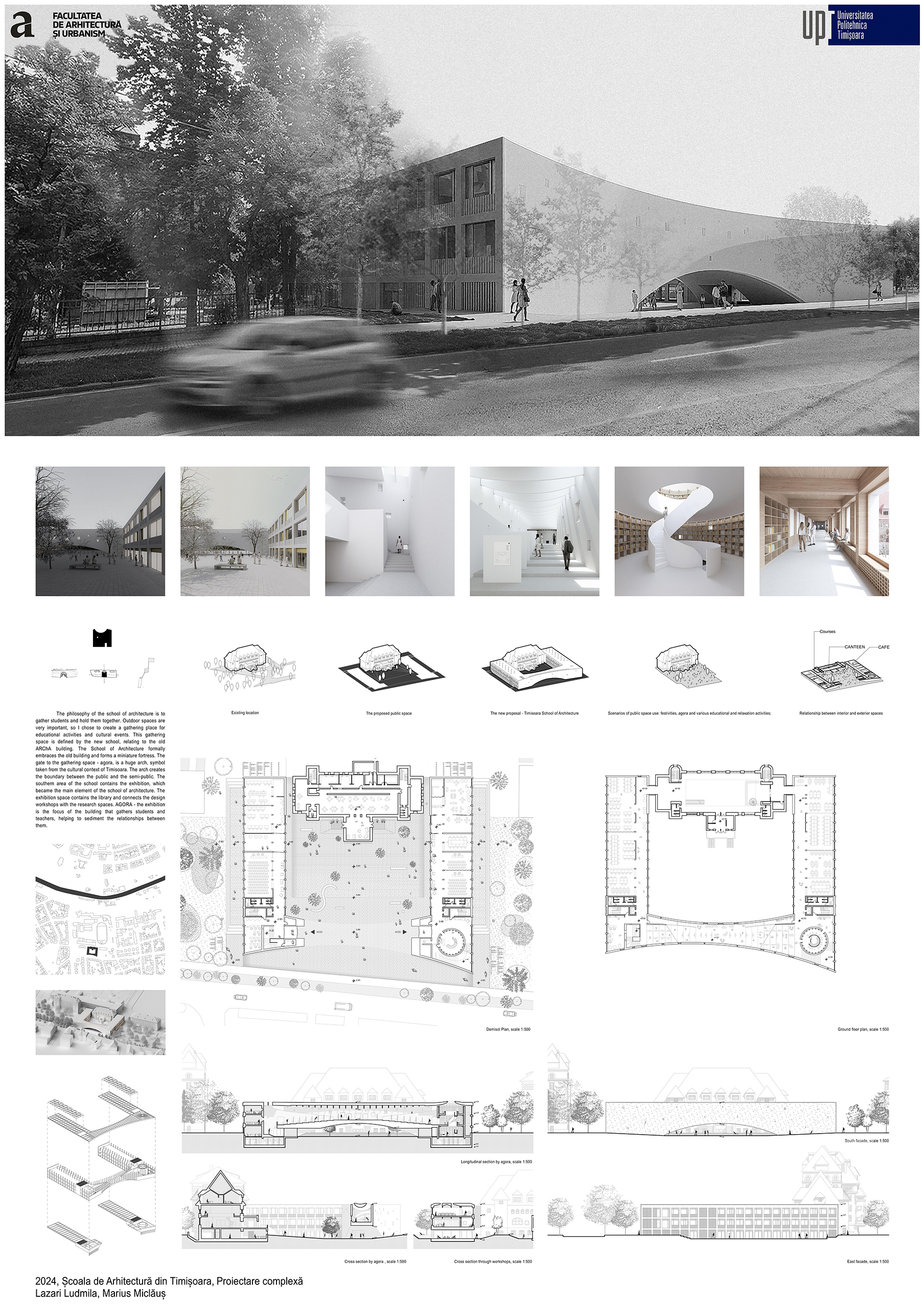
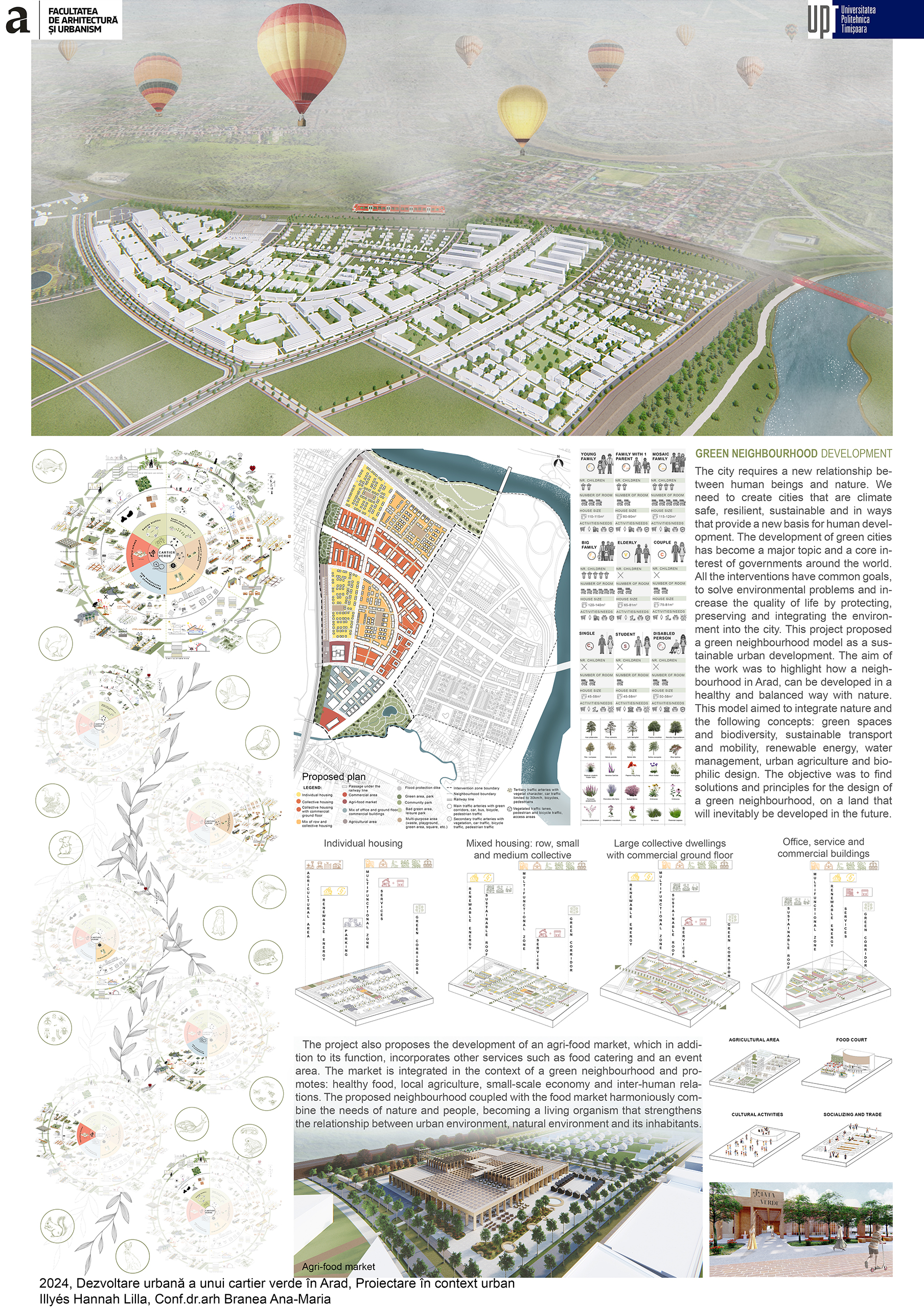
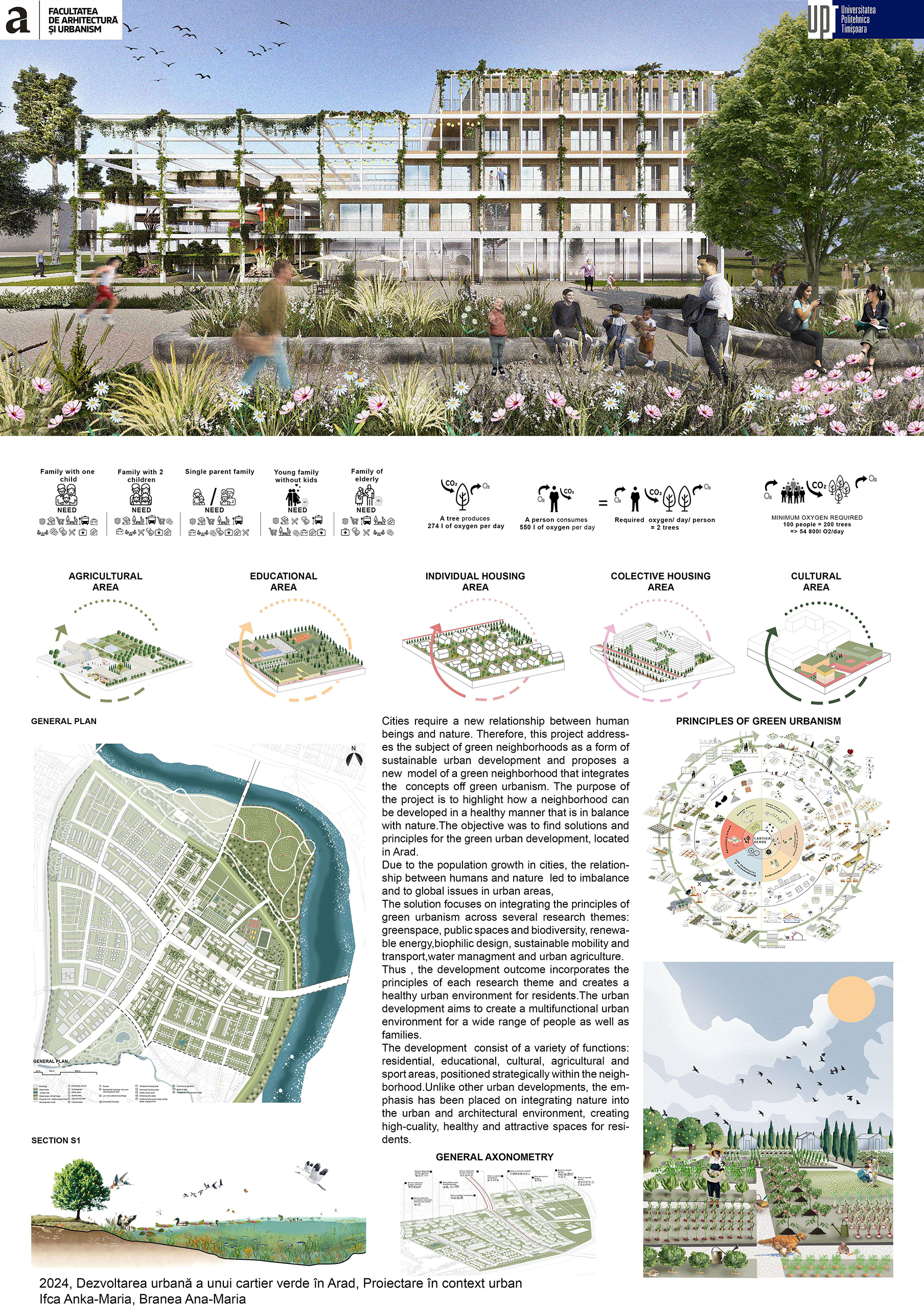
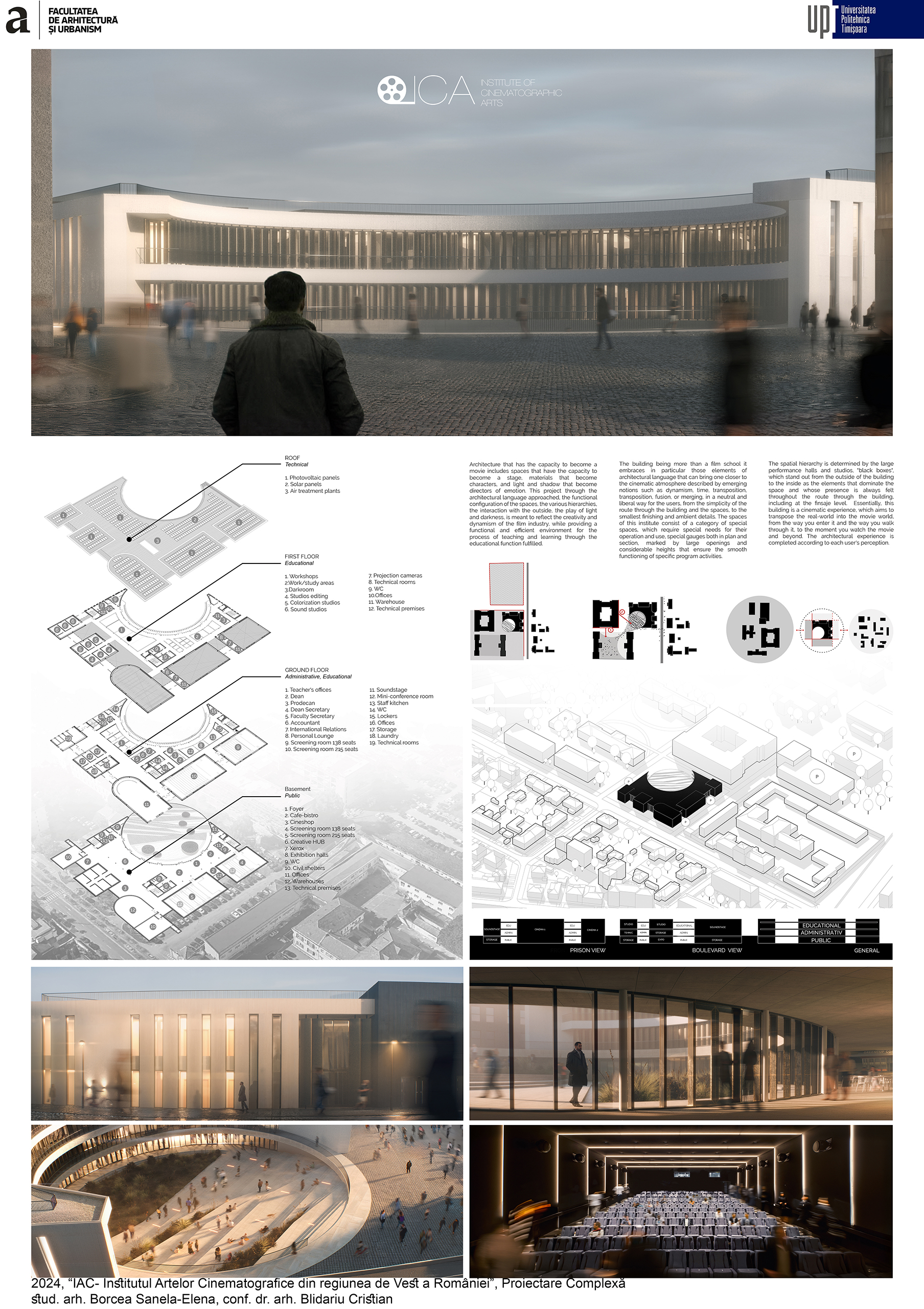
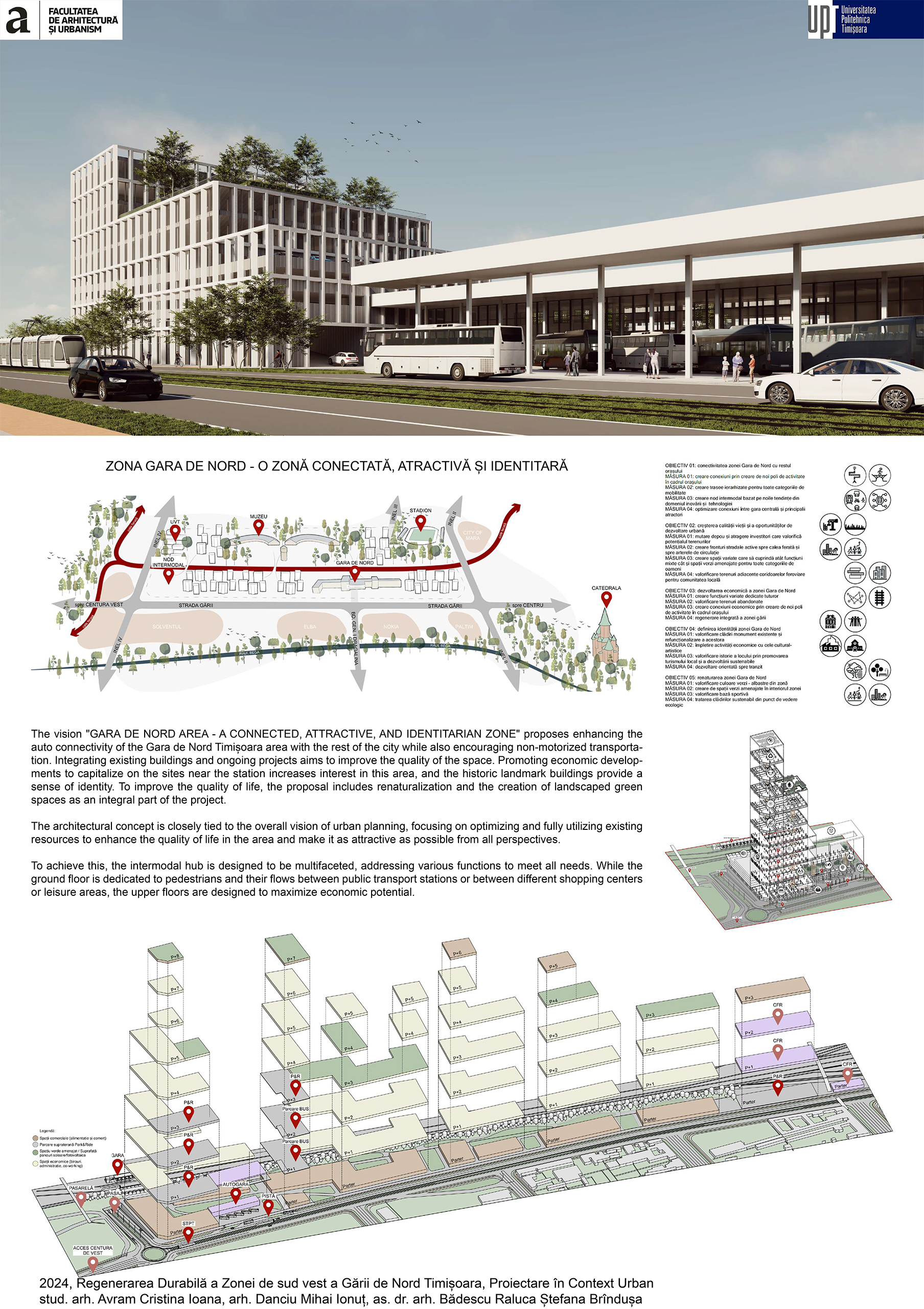
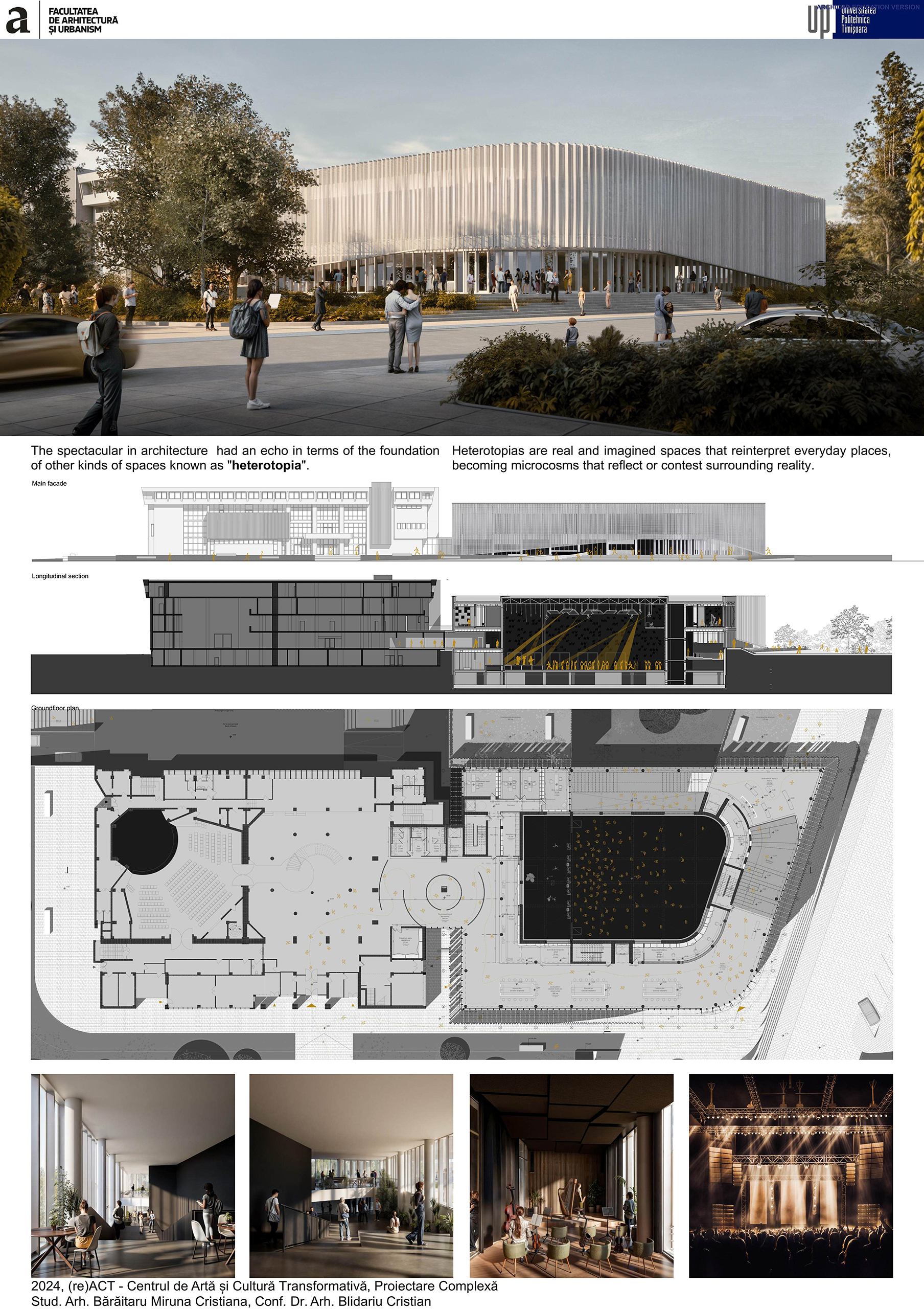
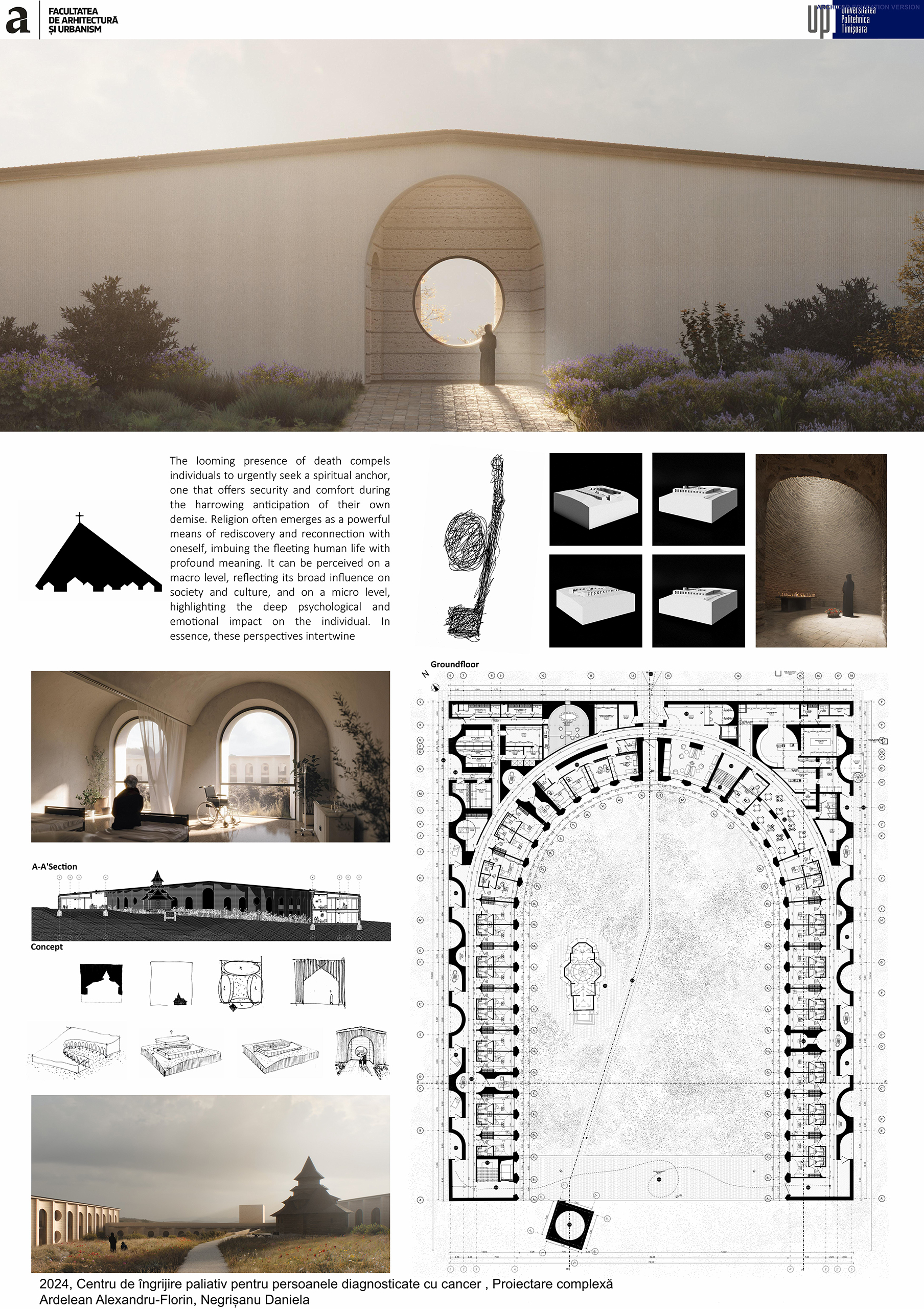
Complex Architecture
Student: Borcea Sanela
Coordinating Professor: Conf.dr.arh. Cristian Blidariu
Architecture that has the capacity to become a movie includes spaces that have the capacity to become a stage, materials that become characters, and light and shadow that become directors of emotion. This project through the architectural language approached, the functional configuration of the spaces, the various hierarchies, the interaction with the outside, the play of light and darkness, is meant to reflect the creativity and dynamism of the film industry, while providing a functional and efficient environment for the process of teaching and learning through the educational function fulfilled.
The building being more than a film school, it embraces in particular those elements of architectural language that can bring one closer to the cinematic atmosphere described by emerging notions such as dynamism, time, transposition, transposition, fusion, or merging, in a natural and liberal way for the users, from the simplicity of the route through the building and the spaces, to the smallest finishing and ambient details. The spaces of this institute consist of a category of special spaces, which require special needs for their operation and use, special gauges both in plan and section, marked by large openings and considerable heights that ensure the smooth functioning of specific program activities.
The spatial hierarchy is determined by the large performance halls and studios, “black boxes”, which stand out from the outside of the building to the inside as the elements that dominate the space and whose presence is always felt throughout the route through the building, including at the finale level. Essentially, this building is a cinematic experience, which aims to transpose the real-world into the movie world, from the way you enter it and the way you walk through it, to the moment you watch the movie and beyond. The architectural experience is completed according to each user’s perception.
Student: Lazari Ludmila
Coordinating Professor: Arh. Marius Miclăuș
The philosophy of the school of architecture is to gather students and hold them together. Outdoor spaces are very important, so I chose to create a gathering place for educational activities and cultural events. This gathering space is defined by the new school, relating to the old ARChA building. The School of Architecture formally embraces the old building and forms a miniature fortress. The gate to the gathering space – agora, is a huge arch, symbol taken from the cultural context of Timisoara. The arch creates the boundary between the public and the semi-public. The southern area of the school contains the exhibition, which became the main element of the school of architecture. The exhibition space contains the library and connects the design workshops with the research spaces. AGORA – the exhibition is the focus of the building that gathers students and teachers, helping to sediment the relationships between them.
Student: Penișoară Diana
Coordinating Professor: Conf.dr.arh. Cătălina Bocan
From the main driveway, hidden by vegetation, a volume is revealed, announcing the access to the future Parkinson’s Disease Recovery Center, offering privacy. Nestled on the edge of a wood, it is clothed by the forest that creeps between the two buildings, continuing inside. In the inner courtyard, a circle around an old tree symbolizes unity and community. The new building body, made of broken segments, encloses the enclosure and recalls the old organization of buildings in old Brasov, offering privacy and a sense of security.
Student: Sîrb Corneliu
Coordinating Professor: S.l.dr.arh Daniela Negrișanu
In its most literal sense, a retreat signifies a safe place that serves as a shelter from dangers or suffering. This can be a physical location, but at the same time, it can be a psychological space where a person finds comfort, safety, and stability. The idea of a retreat has a crucial impact in the context of mental health care, as access to a secluded, sheltered place contributes to relieving the stress to which people are exposed in their daily lives, offering the opportunity to meditate and engage in activities that bring peace and emotional resilience.
The proposed solution becomes that place of safety and synergy, both with oneself and with the surrounding natural environment. The aim is to merge with the natural surroundings by creating structures that blend into the existing landscape. The image created is that of a Norwegian farm centered around a therapeutic garden, where functions are integrated in an invisible way, in order to respect the natural landscape of the fjords. The path generated along the refuge passes through a series of squares with different degrees of intimacy and is defined by two points that have a direct connection with the existing natural environment: water – the pontoon, and the mountain – the place of contemplation.
Student: Bărăitaru Miruna
Coordinating Professor: Conf.dr.arh. Cristian Blidariu
The purpose of this paper is to bring to the fore the hypothesis through which theories can take a form as close as possible to the concrete, based on foundations that—starting from the identification of socio-cultural problems—have metamorphosed into goals and ambitions, culminating, as will emerge from this approach following the pre-diploma phase, in their transposition into an architectural response. By developing and implementing the discussions initiated within the pre-diploma framework, we arrived at the definition of a complex functional theme that explores promising directions for the development of a Transformative Art and Culture Center in Timișoara.
In order to reach the foundation of this essential result, spatial requirements were carefully considered, approached in parallel with the needs of users and the expectations of beneficiaries, as well as the technical requirements that allowed the ideas to take on a significant material form.
Finally, the sought-after spectacular framework is highlighted, considered the most appropriate and suggestive for the stated design theme, while also encouraging the imaginative spirit to extend beyond the limits of the predictable.
Student: Ardelean Alexandru
Coordinating Professor: S.l.dr.arh Daniela Negrișanu
For those nearing the moment of death, religion becomes a spiritual lever through which they find comfort and refuge. Through religion, these patients seek a reconnection with the self, which can become a generator of meaning for the transience of human existence. Thus, religion is an essential element in the healing—or at least the alleviation—of terminally ill patients. The architecture of such a center must be one of protection, born from the patients’ primary needs. Beyond resolving the functional component, architecture must be attentive to the emotions of those who experience it.
The threshold, as a spatial tool, succeeds in creating the transition between two worlds: the exterior one, of possibilities, and the interior one, of care and the feeling of home. Each room is conceived as a microcosm in which the patient can withdraw and contemplate in peace and intimacy. The relationship with nature is strong through large glazed surfaces, precisely because of the patients’ need to remain constantly connected to light, to the sun, and to vegetation—elements that have proven to be as important as medication in their treatment. This relationship is, however, controlled, offering views only toward a garden that provides psychological safety.
The route is the key to the project, with gradual transitions from public to private, and the spatial experience transforms the project into one defined by movement and progression.
In conclusion, the construction of a palliative care center becomes an act of profound humanity, where architecture is not only a physical space but also a spiritual refuge. This sanctuary of comfort reflects the impermanence of human existence and the search for deeper meaning in the face of mortality. Through the careful integration of patients’ emotional and spiritual needs, the space becomes a manifestation of care and compassion, offering protection and reconnection with the self. Thus, architecture rises to the level of a philosophy of life and death, emphasizing the importance of human connection and the bond with nature in the most vulnerable moments of existence.
Heritage Development and Reuse
Student: Németh Barbara
Coordinating Professor: Conf.dr.arh. Bogdan Demetrescu
The adaptive reuse project of the Button and Comb Factory in Jimbolia stands out through its approach, which combines respect for historical heritage with the contemporary needs of the community. A detailed study of the city’s historical evolution highlighted the importance of this structure not only as a remnant of the industrial past, but also as a potential catalyst for Jimbolia’s economic and cultural regeneration. Transforming the factory into a multifunctional center dedicated to traditional crafts successfully creates a bridge between past and present, offering new opportunities for residents.
The conversion of the factory into a hub for artisanal workshops and cultural spaces directly addresses the need to revitalize the craft traditions that once defined the local identity before industrialization. This project not only provides a space for preserving and promoting these traditions, but also stimulates local economic development by attracting tourists and supporting local craftsmen.
The proposed architectural intervention respects and enhances the historical characteristics of the site. Preserving essential elements, such as the chimney, and integrating them into the new function of the space reflects a careful balance between conservation and modernization. Through this project, the factory not only regains its importance in the urban landscape, but also becomes a symbol of regeneration and innovation.
An essential aspect of the project is the active involvement of the community in the rehabilitation process. Organizing open workshops, events, and educational programs will strengthen the sense of local belonging. Furthermore, the use of sustainable materials and the integration of modern technologies for energy efficiency ensure that the new center will be environmentally friendly and adapted to contemporary requirements.
The functional reconversion of the Button and Comb Factory in Jimbolia represents not only a physical transformation of a building, but also a revival of the community and craft spirit. By preserving historical elements and integrating them into a modern context, the project contributes to the creation of a strong local identity and the promotion of cultural sustainability. Ultimately, this initiative not only reaffirms Jimbolia as an important cultural and economic center, but also paves the way for new forms of urban development that respect and capitalize on existing heritage.
Student: Sarca Daria
Coordinating Professor: Conf.dr.arh. Andrei Racolța
Trying to navigate between the historical layers and the possibilities of approaching a site with multiple valences and heritages, I proposed a project about the reflection and reflection of society in urban and architectural development, about the search for inspiration in cinematography, fiction and specialized literature. It becomes a scenographic project, of searching and interpreting historical, mythical, literary and physical time. So, each categorical decision has a correspondent in at least one of the above mentioned.
It becomes a more interesting project through the prism of its becoming and the process of maturation and creation. It’s a manifesto, an invitation to reminisce and reflect on the past and the future by creating spaces that balance yesterday’s legacies vs today’s legacies – what will the future represent?
Urban Planning
Student: Avram Cristina
Coordinating Professors: Asist.dr.arh. Ștefana Bădescu, Arh. Mihai Danciu
The vision “GARA DE NORD AREA – A CONNECTED, ATTRACTIVE, AND IDENTITARIAN ZONE” proposes enhancing the auto connectivity of the Gara de Nord Timișoara area with the rest of the city while also encouraging non-motorized transportation. Integrating existing buildings and ongoing projects aims to improve the quality of the space. Promoting economic developments to capitalize on the sites near the station increases interest in this area, and the historic landmark buildings provide a sense of identity. To improve the quality of life, the proposal includes renaturalization and the creation of landscaped green spaces as an integral part of the project.
The architectural concept is closely tied to the overall vision of urban planning, focusing on optimizing and fully utilizing existing resources to enhance the quality of life in the area and make it as attractive as possible from all perspectives.
To achieve this, the intermodal hub is designed to be multifaceted, addressing various functions to meet all needs. While the ground floor is dedicated to pedestrians and their flows between public transport stations or between different shopping centers or leisure areas, the upper floors are designed to maximize economic potential.
Students: Ifca Anka-Maria, Illyés Hannah Lilla
Coordinating Professor: Conf.dr.arh. Ana-Maria Branea
Cities require a new relationship between human beings and nature. Therefore, this project addresses the subject of green neighborhoods as a form of sustainable urban development and proposes a new model of a green neighborhood that integrates the concepts of green urbanism. The purpose of the project is to highlight how a neighborhood can be developed in a healthy manner that is in balance with nature. The objective was to find solutions and principles for the green urban development, located in Arad.
Due to the population growth in cities, the relationship between humans and nature led to imbalance and to global issues in urban areas.
The solution focuses on integrating the principles of green urbanism across several research themes: greenspace, public spaces and biodiversity, renewable energy, design, sustainable mobility and transport, water management and urban agriculture. Thus, the development outcome incorporates the principles of each research theme and creates a healthy urban environment for residents. The urban development aims to create a multifunctional urban environment for a wide range of people as well as families.
The development consist of a variety of functions: residential, educational, cultural, agricultural and sport areas, positioned strategically within the neighborhood. Unlike other urban developments, the emphasis has been placed on integrating nature into the urban and architectural environment, creating high-quality, healthy and attractive spaces for residents.