
RRP MASTER’S DISSERTATION PROJECTS


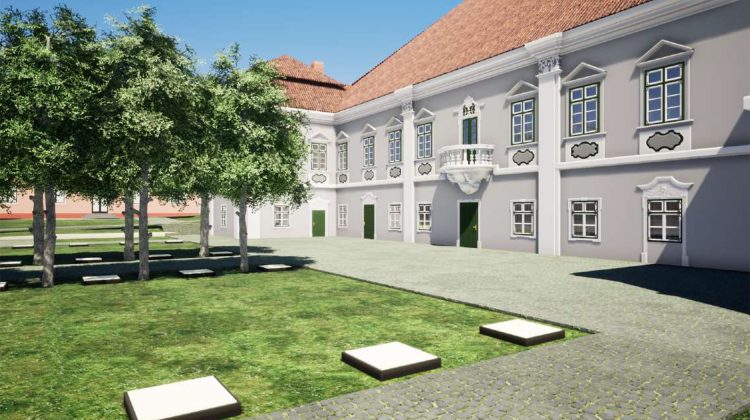

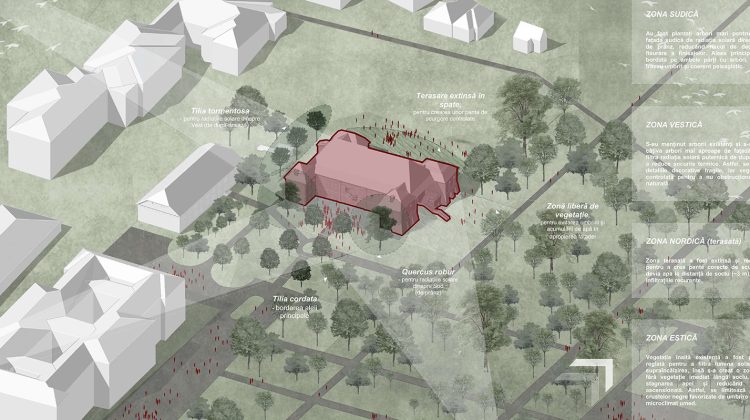
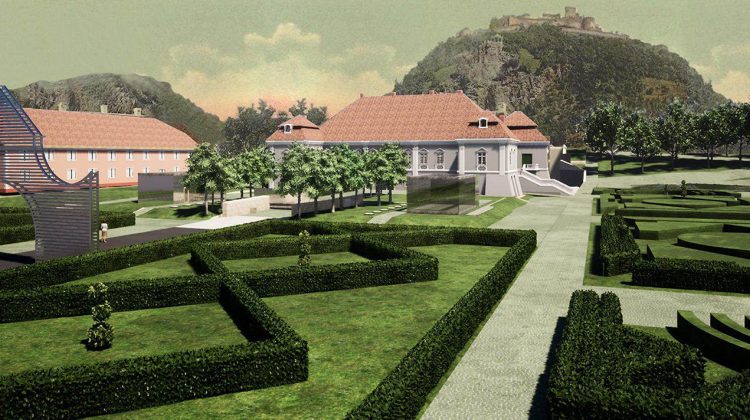
Master’s dissertations within the Heritage Restoration and Regeneration Master’s programme at the Faculty of Architecture and Urban Planning Timișoara are structured into two components:
Part I (Theoretical Component) consists of the preparation of a research dissertation developed in accordance with the specific profile and academic objectives of the Master’s programme.
Part II (Practical Component) entails the development and public presentation of a specialized project or a case study–based application, depending on the programme’s specialization, and directly correlated with the topic addressed in the research dissertation. This component is developed in alignment with the thematic framework and theoretical principles established in the research component.
The dissertation topic may be selected from the general themes proposed within the Master’s programme or may be independently proposed by the student, subject to the approval and supervision of the academic coordinator
2025
For the full texts please click on the pages of the brochure below.
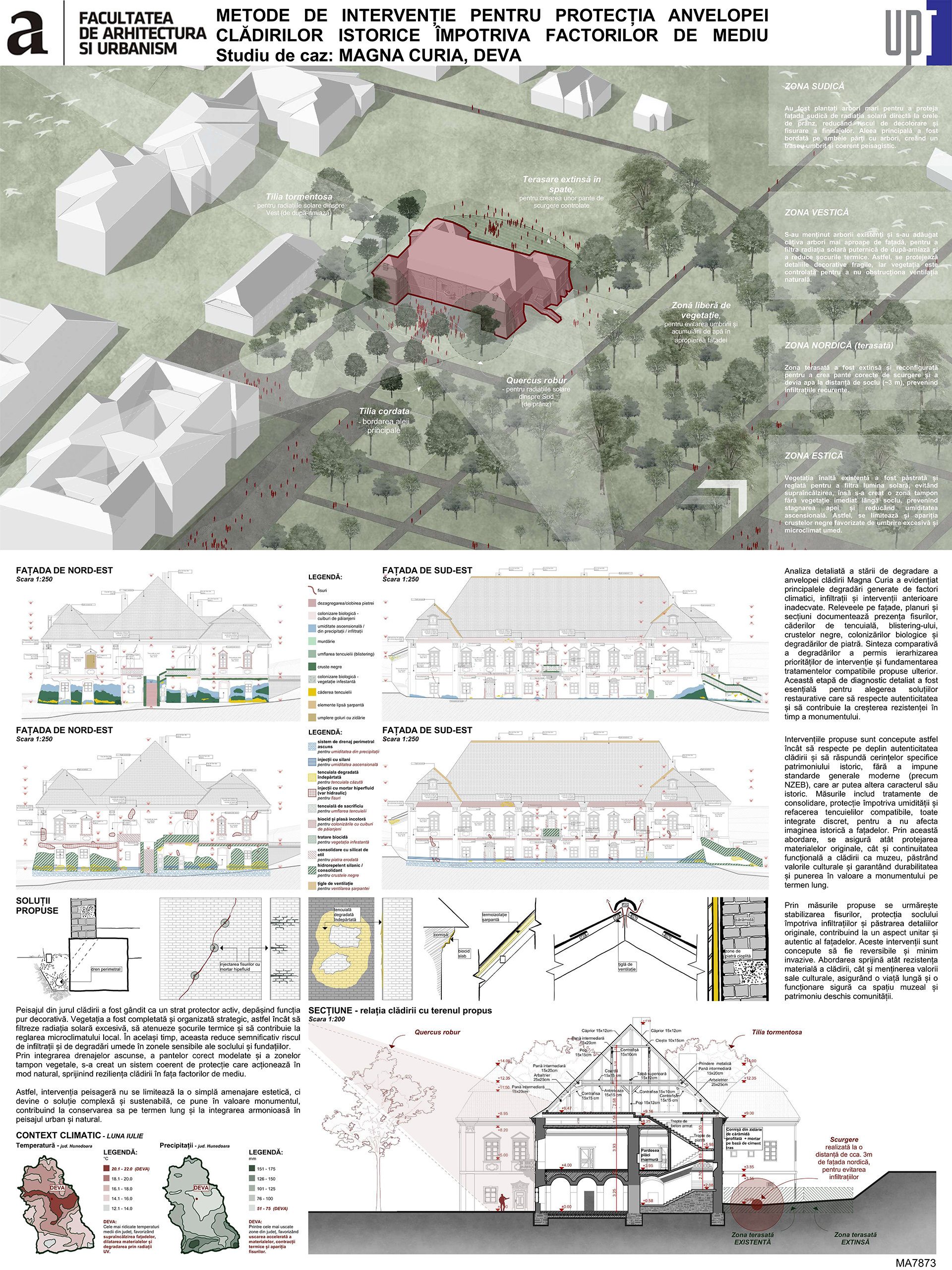
Student: Crișan Bianca
Coordinating Professor: Conf.dr.arh. Gabriela, Domokos-Pașcu
This paper aims to analyze and substantiate a coherent set of interventions for the protection, conservation, and revitalization of the historic building Magna Curia in Deva. A major monument within the architectural and cultural heritage of Transylvania, Magna Curia represents not only a testimony to stylistic and constructive evolution from the early seventeenth century to the present day, but also an identity landmark for the local community.
The research begins with a detailed analysis of the historical and architectural context, highlighting the successive stages of transformation and their influence on volumetry, spatial organization, and exterior finishes. The study further examines the complex relationship between the building and its natural environment, emphasizing the specific climatic characteristics of the Deva area and their direct impact on traditional building materials and long-term preservation.
Based on these findings, the paper formulates a series of contemporary intervention principles grounded in respect for authenticity, material compatibility, minimal intervention, and reversibility. These principles are subsequently evaluated through a comparative analysis of two relevant international case studies: Bánffy Castle and Nottingham Castle. The examination of these examples enables the identification of concrete, validated solutions implemented in comparable contexts, which may be adapted and applied to the case of Magna Curia.
The study argues that intervention on a historic monument should not be understood merely as a technical process of repairing deterioration, but rather as a complex and integrated undertaking that simultaneously safeguards heritage values, responds to contemporary functional requirements, and activates the cultural and social potential of the site. In this perspective, a long-term vision is articulated—one in which the monument does not remain a static museum object, but becomes a dynamic space, open to the community and sustainably valorized.
Through the functional integration of spaces, the reconfiguration of circulation routes, and the creation of areas dedicated to education and cultural activities, Magna Curia has the potential to become a model of good practice in the restoration of built heritage. The proposals advanced in this paper aim not only to halt processes of degradation, but also to consolidate a coherent, authentic, and architecturally valuable image within the urban fabric.
In conclusion, the research emphasizes the necessity of an interdisciplinary approach and close collaboration among specialists, local authorities, and the broader community. Only through such an integrated process can the continuity of historical and cultural values be ensured, along with their responsible transmission to future generations. The envisaged outcome is therefore not limited to technical restoration, but constitutes a comprehensive revitalization that reaffirms Magna Curia’s role as a cultural and identity landmark within the urban landscape of Deva.
Student: Dumescu Diana-Elisa
Coordinating Professor: Conf.dr.arh. Gabriela, Domokos-Pașcu
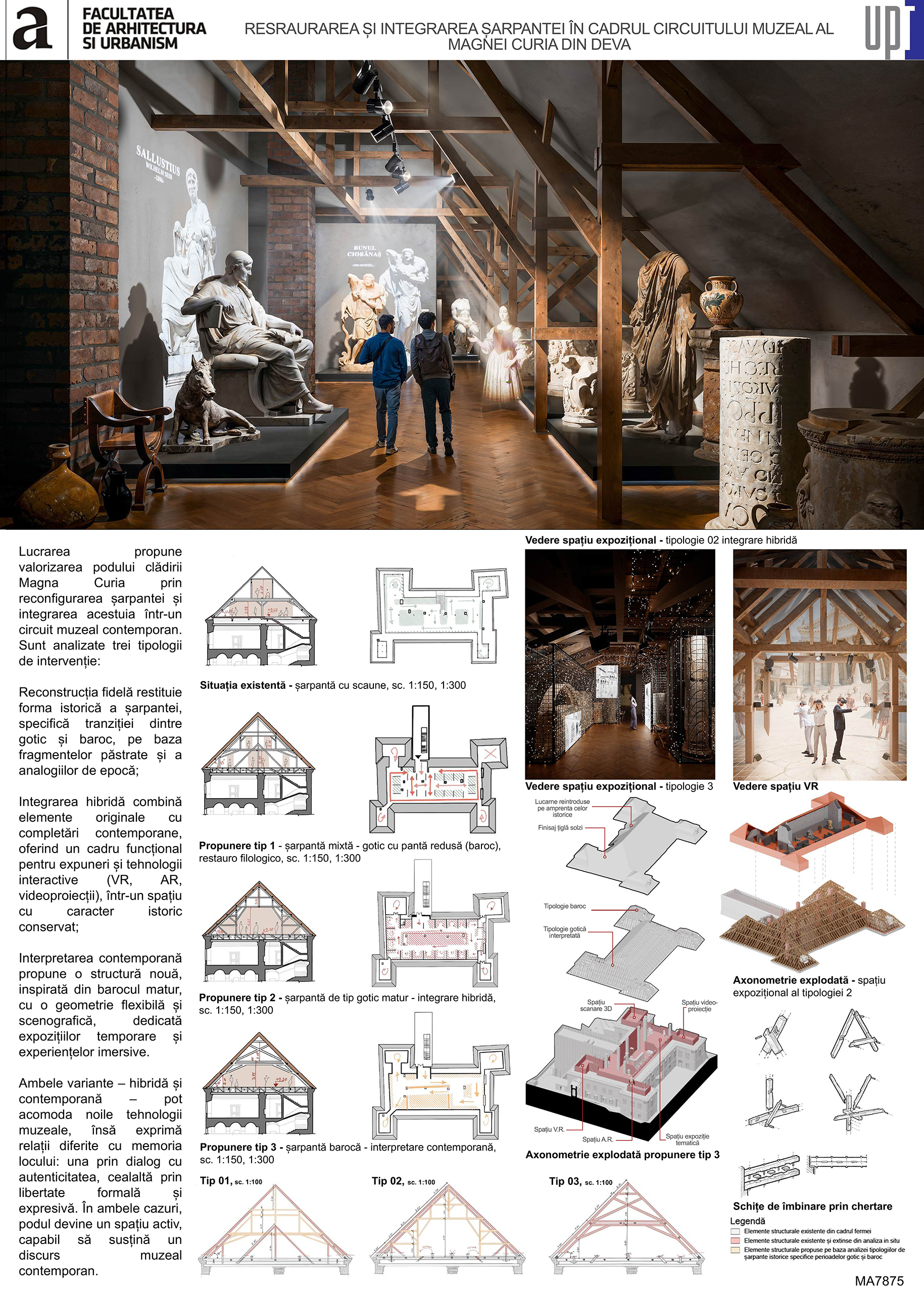
This paper proposes an applied research on the possibilities of restoration and functional reintegration of the historic roof structure of the Magna Curia building in Deva, analysing this intervention from a complex, interdisciplinary perspective that combines architectural history, critical restoration, construction technology, and contemporary museum scenography. Magna Curia, a building representative of Transylvanian architectural heritage, has lost an essential component in recent decades — its original roof structure — which has not only changed the volumetric perception of the building but also blurred its architectural identity within the urban setting in which it is located.
The work starts from the hypothesis that the reconfiguration of this structural element can be approached not only as a material reconstruction but also as a strategy for cultural reactivation, capable of transforming the attic space into an accessible, narrative area integrated into a coherent museum route. This premise is supported by a three-level research approach: historical and typological (analysis of the evolution of roof structures in Renaissance and Baroque architecture in Transylvania and Central Europe); architectural and technological (analysis of the current structure, the preserved fragments, and how the roof structure can be rebuilt or reinterpreted); and museographic (scenarios for the exhibition use of the interior space of the roof structure).
Based on these directions, three possible intervention strategies are identified and argued: faithful reconstruction (restoring the mixed typology that combines Gothic and Baroque elements, based on preserved fragments and documented analogies); hybrid integration (conservation of existing elements and completion of the structure with compatible contemporary pieces, adapted to the museum function); and contemporary interpretation (creation of a new structure, with reinterpreted Baroque inspiration, dedicated to an immersive exhibition discourse). Each typology is analysed in relation to criteria of authenticity, functionality, expressiveness, and museographic compatibility. The research is based on a complex methodology that includes historical and archival studies, in situ analysis, 3D surveys and scans, comparative case studies at European level (Olomouc, Rochechouart, Diósgyőr Castle, etc.), digital modelling, as well as current principles of restoration (critical restoration, scientific restoration) and contemporary exhibition design.
The results highlight the potential of the roof structure to become a narrative, functional, and educational space capable of supporting thematic exhibitions, immersive scenography, and multimedia installations (VR, AR, audio, holograms, digital displays), as well as curatorial content with heritage value. Restoration is not seen as a simple return to the original form but as an active gesture of re-signification, in which the past is integrated into a contemporary and accessible discourse.
The final conclusion argues that the reintegration of the roof structure can contribute decisively to strengthening the monument’s identity value, increasing Deva’s tourist appeal, and expanding the museum’s educational and cultural function. The attic is no longer a residual space but a platform for dialogue between memory and innovation, between heritage and community, and between historical forms and emerging technologies.
Students: Karpati Norbert-Adalbert
Coordinating Professor: Prof.dr.arh. Ioan Andreescu
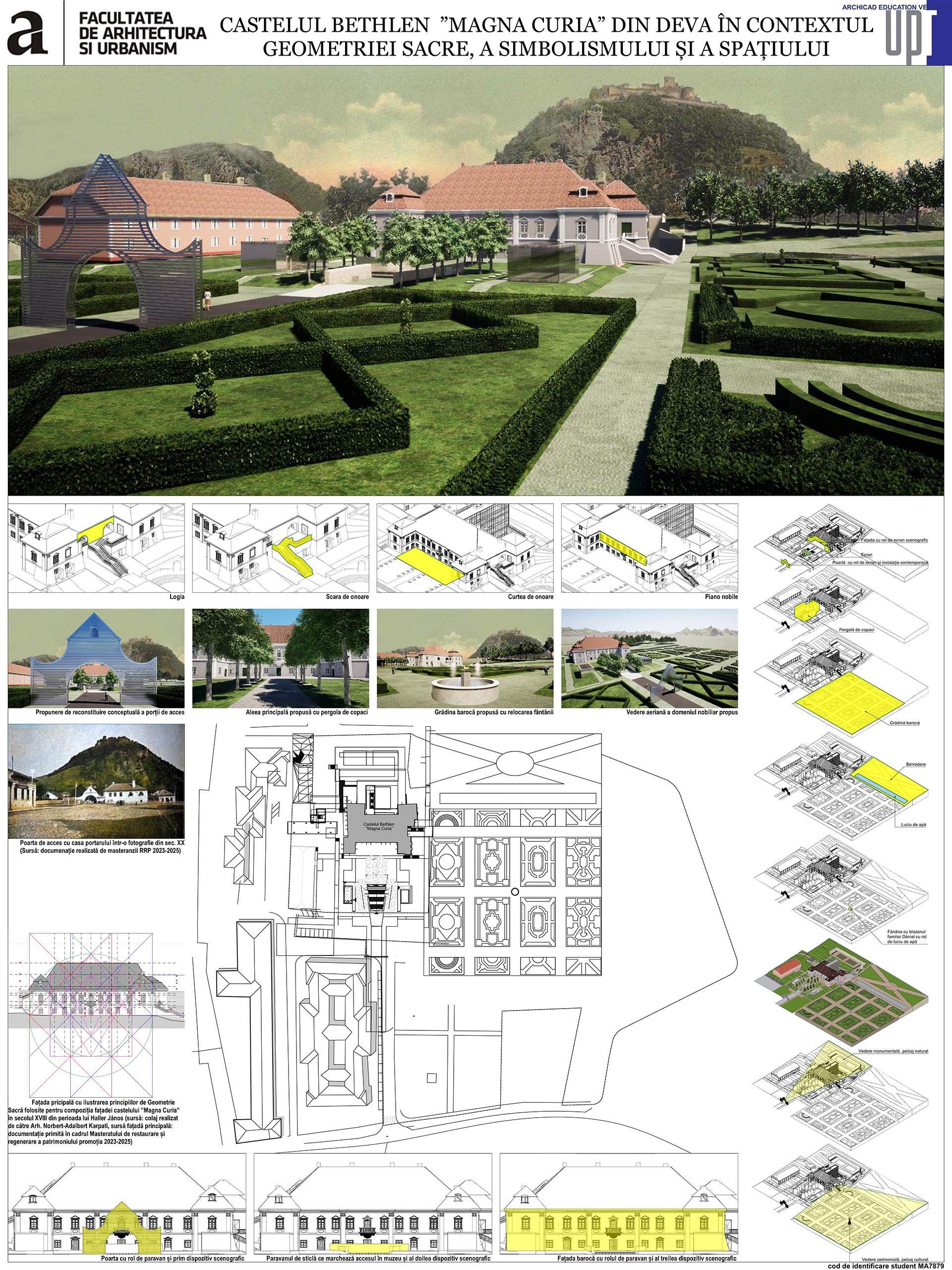
This study aimed to explore and deeply understand the Bethlen Castle — Magna Curia in Deva, analysing it within the context of sacred geometry, architectural symbolism, and built space. The research demonstrated that this historic monument is not only a product of functional requirements and architectural styles of its time, but also the result of a precise internal order influenced by philosophical, religious, and cosmological concepts.
The research highlighted that throughout history, architecture has been more than a simple aesthetic expression: it functioned as a universal language, encoded through forms, proportions, and orientations that reflected a higher order. Sacred geometry, present in Greco-Roman culture, medieval urbanism, Renaissance balance, Baroque dynamism, and even the formal tensions of modernism, offered a conceptual framework for understanding the world and humanity’s place in the cosmos. Through this framework, buildings are no longer just inhabited spaces but expressions of the relationship between material and spiritual dimensions.
In the case of Magna Curia Castle, morphological and proportional analysis revealed the presence of fundamental geometric constants — the Golden Rectangle, symmetry axes, and harmonic relationships between volumes — confirming that the design was based on ordering principles rather than random composition. The integration of these principles into contemporary restoration is essential not only for preserving formal coherence but especially for transmitting the original values of the building.
By comparing Magna Curia with international examples such as the Hôtel de la Marine in Paris or the Islamic Art Pavilion at the Louvre, the study demonstrated how sacred geometry can guide contemporary architectural interventions. In both cases, restoration involved not only physical recovery but also symbolic and sensory revaluation of space, in a careful dialogue between past and present.
The intervention methodologies proposed in this work — whether in the case of symbolic reconstruction of a lost structure or the insertion of a contemporary installation into a historical context — demonstrate the current potential of sacred geometry as a tool for contextual restoration rather than simple historicist imitation. By understanding original proportions and spatial intentions, contemporary architecture can produce sensitive interventions that do not compete with the past but respectfully continue it.
Beyond historical and architectural analysis, this work emphasizes the importance of understanding sacred geometry as a tool for cultural and anthropological interpretation. Historic constructions such as Magna Curia Castle become silent witnesses of a spiritual order, of a system of thought that conceived space not only as a support for material life but as an expression of a universal principle of harmony.
The study’s conclusions also indicate a current trend in contemporary architecture: the subtle return to archetypal forms, symmetry, and proportion, not through imitation but through reinterpretation. The contemporary insertions discussed in the paper — such as the glass roof of the Hôtel de la Marine or the “golden carpet” of the Islamic Art Pavilion at the Louvre — demonstrate that an authentic dialogue between past and present is possible without one canceling the other. In this context, Sacred Geometry is not an obstacle to innovation but a profound, adaptable, and relevant source of inspiration.
Furthermore, the research emphasizes that restoration should not be a simple exercise of material reconstruction, but rather an act of cultural and symbolic revaluation. To understand a building means to understand the system of thought that generated it — an approach that requires both historical research and conceptual and artistic sensitivity.
Thus, this research aims to contribute to the development of a contemporary vision of heritage restoration — one that integrates science, art, memory, and spirituality into a coherent, profound, and durable approach.
In conclusion, Sacred Geometry is not an outdated concept but a valuable interpretative key for heritage architecture. It provides a bridge between knowledge and emotion, between rational and symbolic, between history and the present. This study argues that authentic restoration cannot be achieved without a deep understanding of these invisible dimensions that governed the construction of historical buildings.
The final recommendation is that all heritage restoration projects — especially where historical documentation is incomplete — should include a phase of geometric and symbolic analysis. This approach not only adds scientific rigor but also reopens a dialogue with the original values of architecture: harmony, proportion, sacredness, and collective memory.
In closing, Magna Curia Castle, through its formal and historical complexity, becomes an eloquent example of architecture in which sacred geometry is more than a set of rules: it is a vision of the world. The restoration of such buildings, when guided by an understanding of proportions and symbolic meanings, gains new values — not only of conservation but also of reactivating meaning and identity.
Students: Stoleru Roberta-Andreea
Coordinating Professor: Conf.dr. arh. Ileana Kisilewics
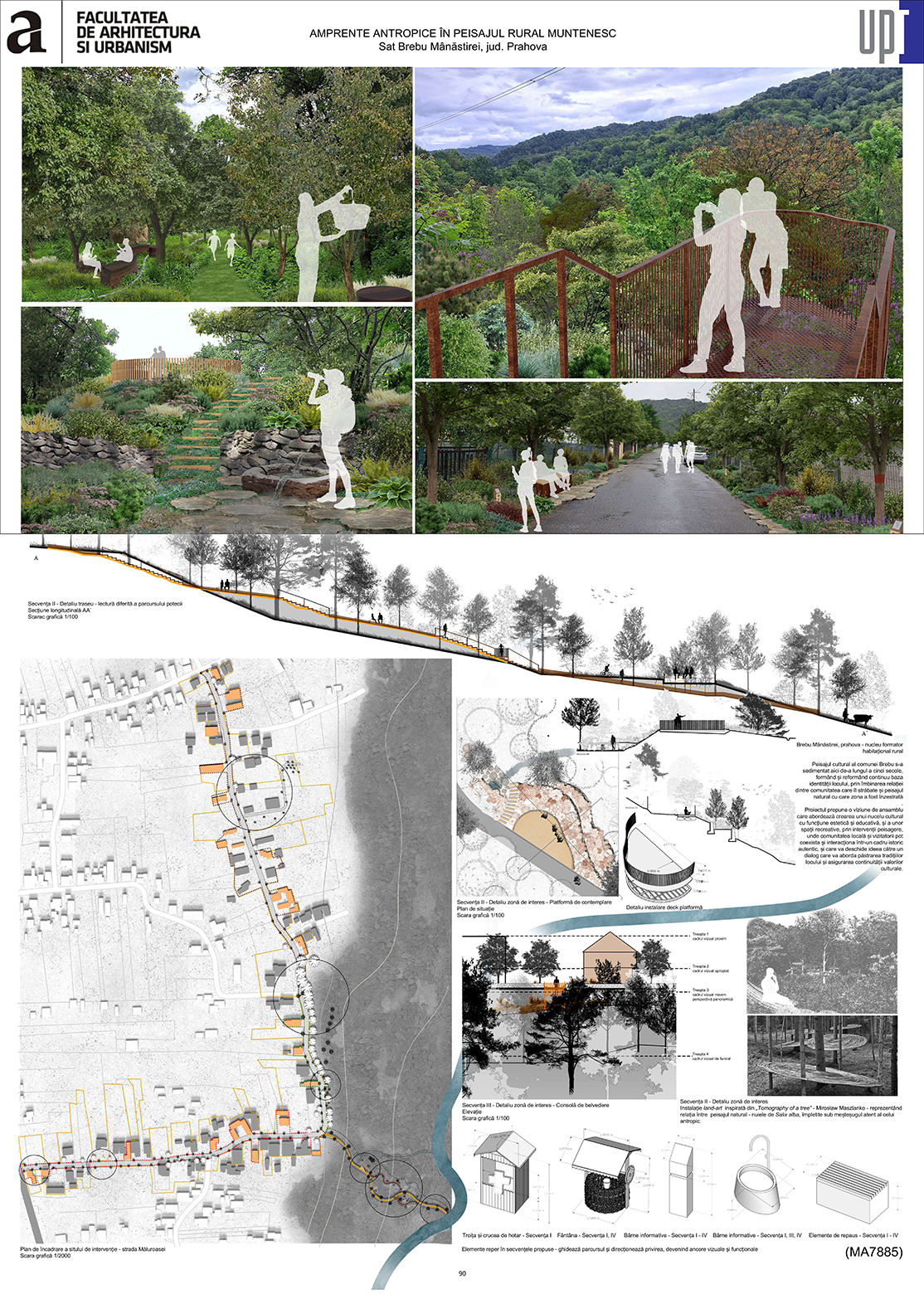
This dissertation aims to investigate and analyze the various typologies of anthropic imprints on the rural landscape of the Sub-Carpathian region of Muntenia, with the purpose of identifying intervention methods that support the valorization and conservation of these imprints.
The research methods used in this study are based on both theoretical foundations drawn from specialized literature—focusing on key concepts related to the rural landscape and its cultural dimension, heritage policies, and conservation principles—and archival documentary research, including cartographic analysis, photographic interpretation, and ethnographic studies. These methods are employed to formulate an intervention strategy for the studied site: the commune center, namely the village of Brebu Mânăstirei, Prahova.
The main objective of the dissertation is to examine the relationship between people, landscape, and heritage through the narrative lens of landscape interpretation, with a focus on human imprint within rural space. This approach provides the basis for analyzing, correlating, and implementing viable strategies for the conservation and enhancement of the studied site.
Structurally, the dissertation is divided into three parts:
Part I presents the theoretical and bibliographic foundation of the work. It includes chapters on key theoretical concepts related to the interpretation of heritage through landscape, as well as the analysis of rural cultural landscapes as a fundamental theoretical framework. This section also outlines the research methodology, introduces the tools for site intervention, and presents three comparative case studies.
Part II analyzes the context in which the proposed strategy is implemented. It begins with a macro-scale examination of the rural landscape of Brebu commune, including its historical development within the Sub-Carpathian region of Prahova, its defining characteristics, and its local specificities. This is followed by a micro-scale analysis of the studied ensemble, focusing on its morphological features and typologies of anthropic landscapes.
Part III presents the intervention strategy for the site. It includes proposals for micro-scale landscape interventions aimed at activating and enhancing the vernacular and historical elements present on the site, as well as macro-scale proposals designed to integrate the site into the existing network of tourist trails crossing the commune.
Each chapter concludes with a set of findings and recommendations, applicable both to the studied site and to other sites with similar cultural and landscape values.