
2025 | DIPLOMA | YEAR III
The completion of the three-year program requires the development of a comprehensive interior design project, covering all stages of the design process. Both the site and the function are chosen by the student, provided that the relevance and opportunity of the proposed intervention are clearly justified.
The main objective is to define a strong spatial identity, shaped both by the qualities of the selected context and by the specific characteristics of the proposed function. Throughout the phased development of the project, theoretical and technical approaches are pursued in order to formulate spatial and formal solutions that enhance the chosen space.
This process represents a valuable exercise in preparation for professional practice, addressing adaptive reuse, the creation of an aesthetic aligned with the proposed concept, the coordination of constructive elements (finishes, furnishings, installations), the resolution of execution details for custom-designed furniture, cost anticipation, and overall budget management.
Project Development Phases
Phase I involves understanding existing conditions and defining the requirements of the proposed theme. This includes studying comparable examples of similar scale and function, as well as analyzing the site’s specific characteristics, qualities, dysfunctions, and atmosphere.
Phase II focuses on developing a general intervention concept, generating two preliminary design proposals, and further detailing one selected option.
Phase III consists of producing the technical project documentation, detailing the solution developed in the previous phase at a technical design level.
Phase IV represents the execution detailing stage. The final phase includes preparing detailed drawings for at least three key design elements (such as custom furniture pieces or constructive details), finalizing finishes and materials, and documenting them within the written report, cost estimate, and material palette.
For the full texts please click on the pages of the brochure below.
Diploma Projects
Student: Boglárka Bálint
Coordinating Professor: Conf. Dr. Arch. Diana Giurea
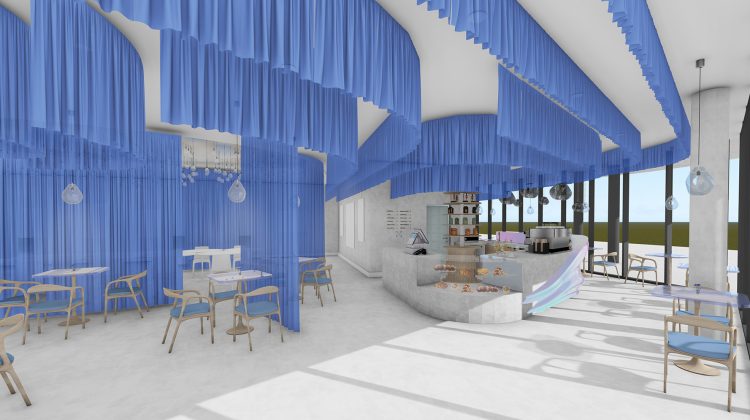
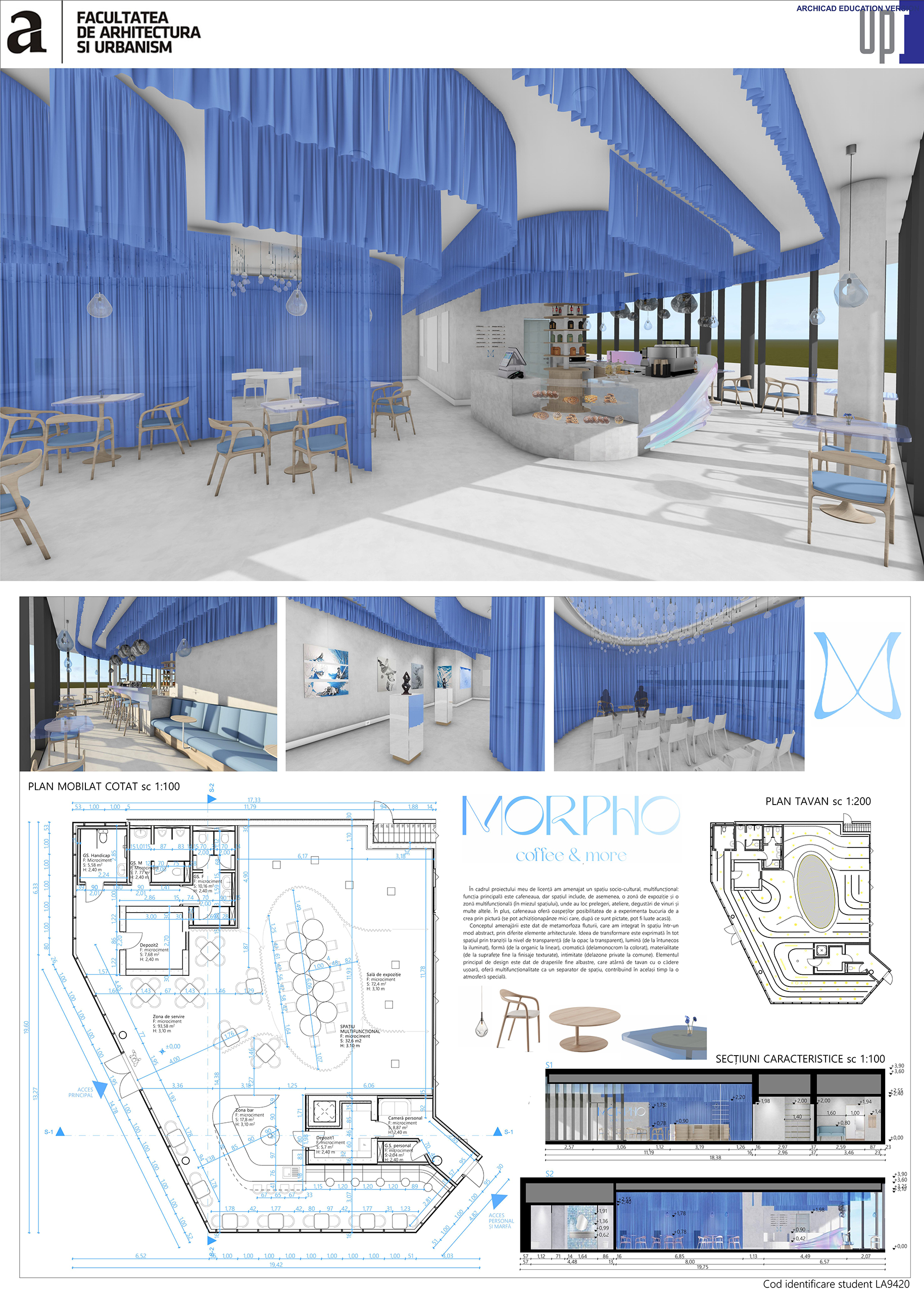
As part of my bachelor’s degree project, I created a unique space with a distinctive design that engages all the senses and offers a culinary experience for those who enter: a specialty coffee shop with an art gallery, designed in the ISHO Pavilion in Timișoara.
This café offers more than just refreshments and relaxation; it contributes to the personal and cultural development of individuals. In addition to admiring the artworks, guests have the opportunity to experience the joy of creating through painting (small canvases can be purchased and, once painted, taken home).
The design concept is inspired by the metamorphosis of the butterfly, which I integrated into the space in an abstract way through various architectural elements. The idea of transformation is expressed throughout the space through transitions in transparency (from opaque to transparent), light (from dark to illuminated), form (from organic to linear), color (from monochrome to vibrant), materiality (from smooth surfaces to textured finishes), and intimacy (from private to communal areas).
The main design element consists of fine blue curtains hanging lightly from the ceiling, providing multifunctionality as space dividers while also contributing to a special atmosphere.
This study includes the preliminary research necessary for the proper implementation of the project, the verification of the hypothesis—can a multifunctional space be created based on the concept of metamorphosis?—as well as a complete description of the design solution, and the list of materials and objects used.
In conclusion, I successfully designed a socio-cultural and artistic center within the ISHO Pavilion building, which hosts numerous events and features a permanent gallery. Through the resolution of the concept, the café offers a sensory experience, engaging sight, hearing, touch, smell, and taste. MORPHO Coffee & More supports emerging artists and promotes artistic practice, thereby enhancing the appreciation of art within the community.
Student: Bodan Bianca Ioana
Coordinating Professor: S.l. Dr. Arch. Otilia Tudoran
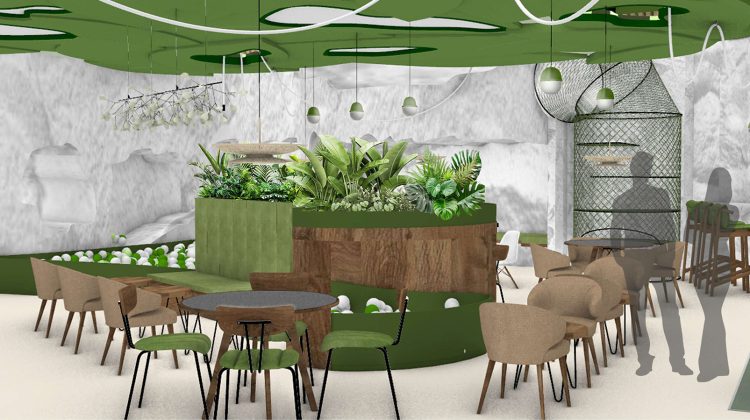
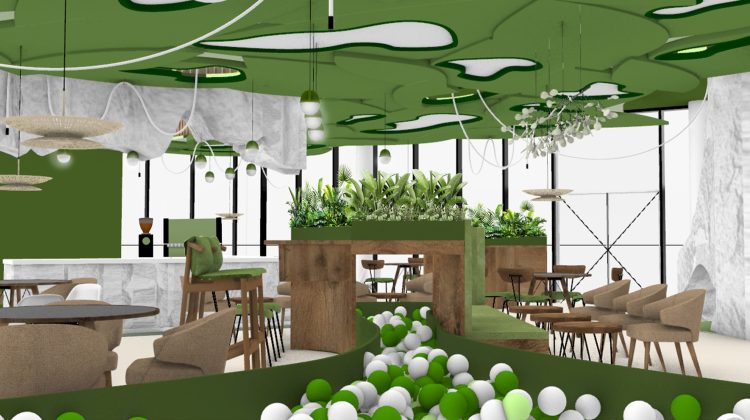
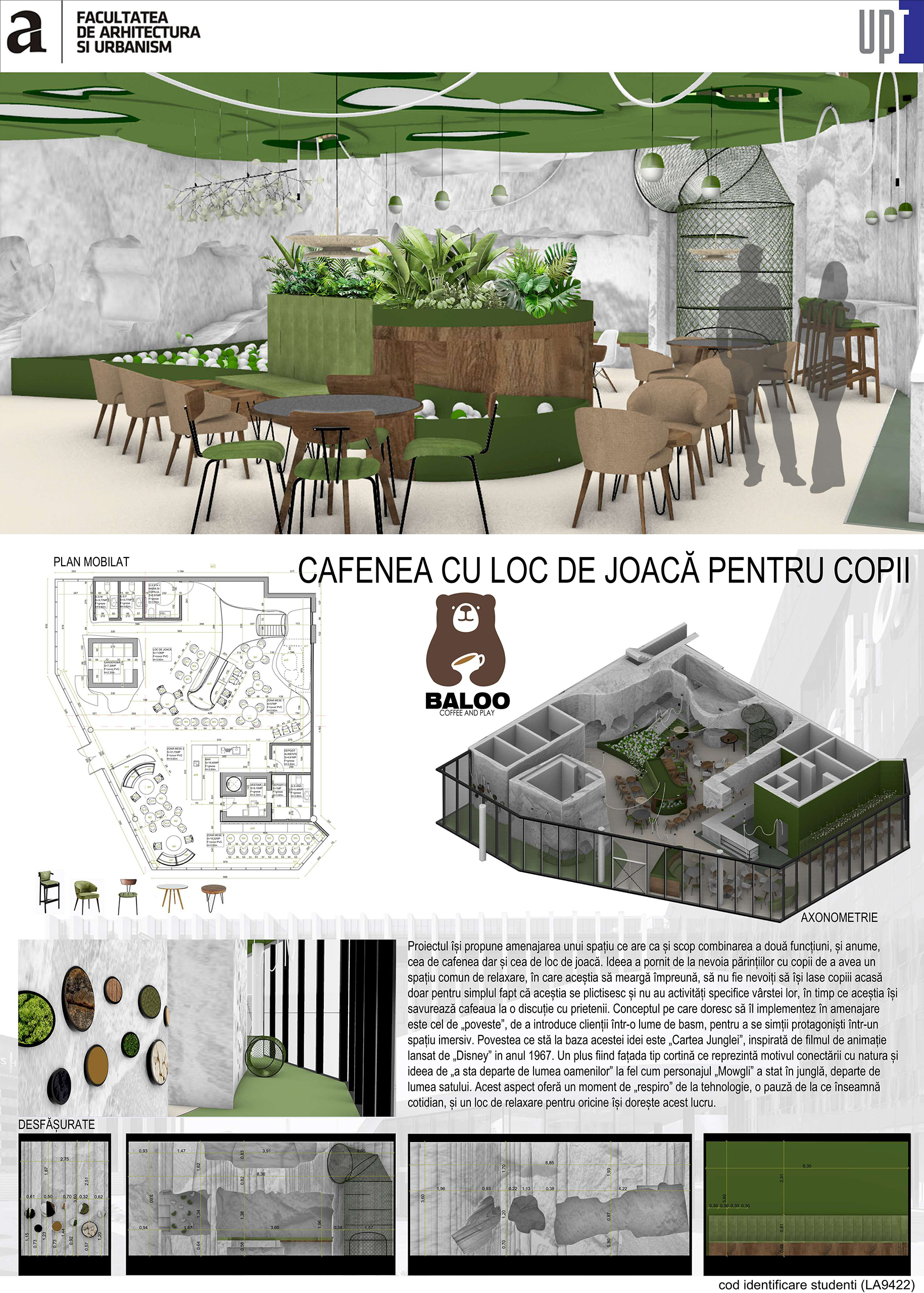
The chosen space will be designed taking into account the architectural program of which it will be part, more precisely it will combine two architectural programs, namely the café, but also the playground. The space will serve all people, regardless of age, and it will also be easily accessible, being located on the ground floor.
The idea of a cafe with a playground started from the need of families with children to have a common meeting place, where their children can have interactive activities, playgrounds, while parents enjoy their coffee, the little ones end up not getting bored on an outing with adults.
The game is also introduced into the world of adults, where they can also enjoy an unforgettable experience. Every adult was once a child, and this helps to combine their needs and the possibility of starting from a common point for both categories, namely the story, which is also the concept behind the cafe’s layout, a story known to both children and adults. The chosen story is “The Jungle Book”. This story correlates with the chosen space, through nature, with the help of the showcase and the exterior of the building area. Bringing the “jungle” into the heart of the ISHO residential complex represents a respite from technology in a pleasant and modern ambiance. The motif of the showcase represents the idea of staying away from the “human world”, just as the main character of the story, Mowgli, stayed in the jungle with the animals, and away from the village population. The beneficiaries have an “exit” from the city world, in a relaxing space, with activities that will take them out of their daily routine.
Students: Gligor Denisa
Coordinating Professor: Conf. Dr. Arch. Andreea Anghel
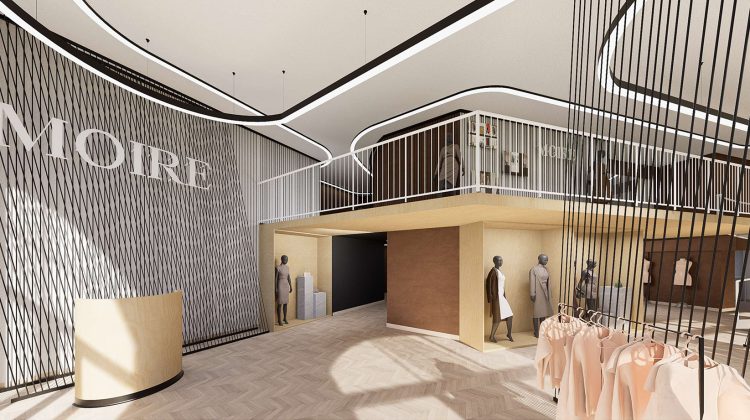
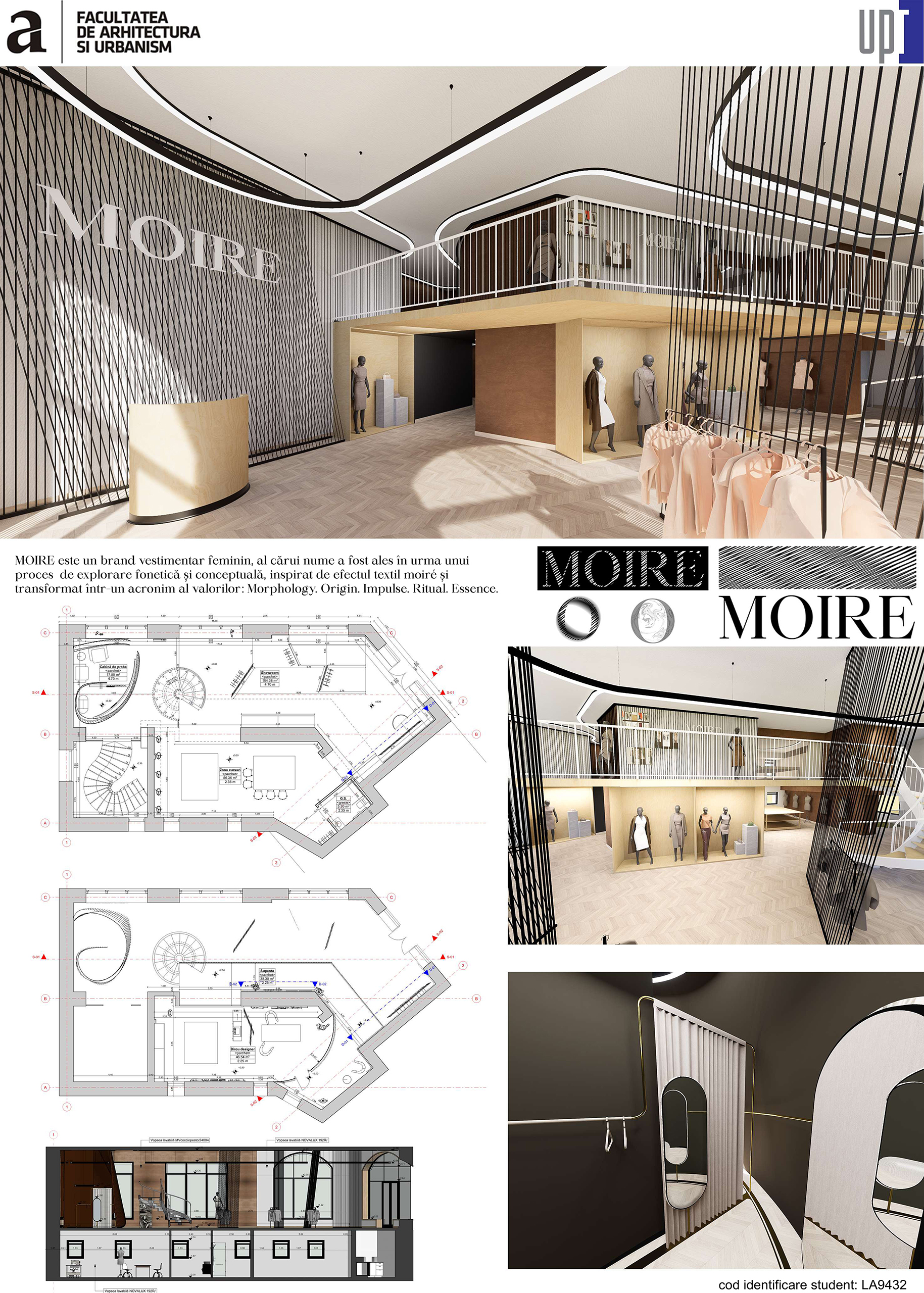
This project presents the design proposal for a womenswear showroom with an area dedicated to sewing workshops, located within an existing space on the ground floor of a historic building in the center of Timișoara: Palatul Bănățean, Piața Sf. Gheorghe no. 2. The intervention aims to enhance the relationship between interior design and brand identity through a unified visual language inspired by the process of garment production.
The space has a total surface of 595.99 sqm, distributed across three levels—basement, ground floor, and a partial mezzanine—and occupies part of the building’s basement and ground floor. Currently functioning as a political headquarters, the project proposes its refunctionalization into a womenswear showroom.
The working hypothesis starts from the premise that, in the context of a fashion showroom, interior design can serve as a direct extension of brand identity, actively contributing to visual communication and to shaping a coherent user experience.
The design concept is inspired by the transformation process of garment patterns, exploring the transition from two-dimensional surfaces to three-dimensional volumes. This principle is spatially translated through the use of ruled surfaces made of tensioned cables, evoking both the structure of woven fabrics and the fluid dynamics of material in garment construction. The interior aims to balance rigidity and flexibility, generating an atmosphere aligned with the brand’s values.
The visual identity of the brand “MOIRE” reflects the same idea of rhythm and layering, inspired by the visual effect created through superposition. The name selection and logo development express, both visually and symbolically, the essence of the project and contribute to integrating the interior design into a coherent spatial–brand communication system.
The project was developed based on the analysis of the existing historically valuable space, currently affected by provisional interventions, and on the need to adapt it to a commercial function. The functional layout is organized into public, semi-public, and private areas according to activities and user categories, while the design concept is implemented through reversible materials and constructive elements compatible with the building’s heritage status. The choice of furnishings, materials, and overall spatial scenography supports the brand identity and proposes a coherent experience that balances functionality and expressiveness.
Student: Hadar Amanda Vivienn
Coordinating Professor: Asist. Dr. Arch. Brîndușa Havași
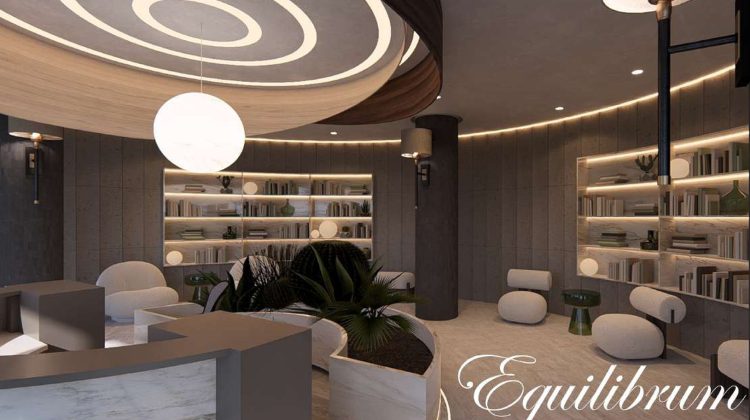
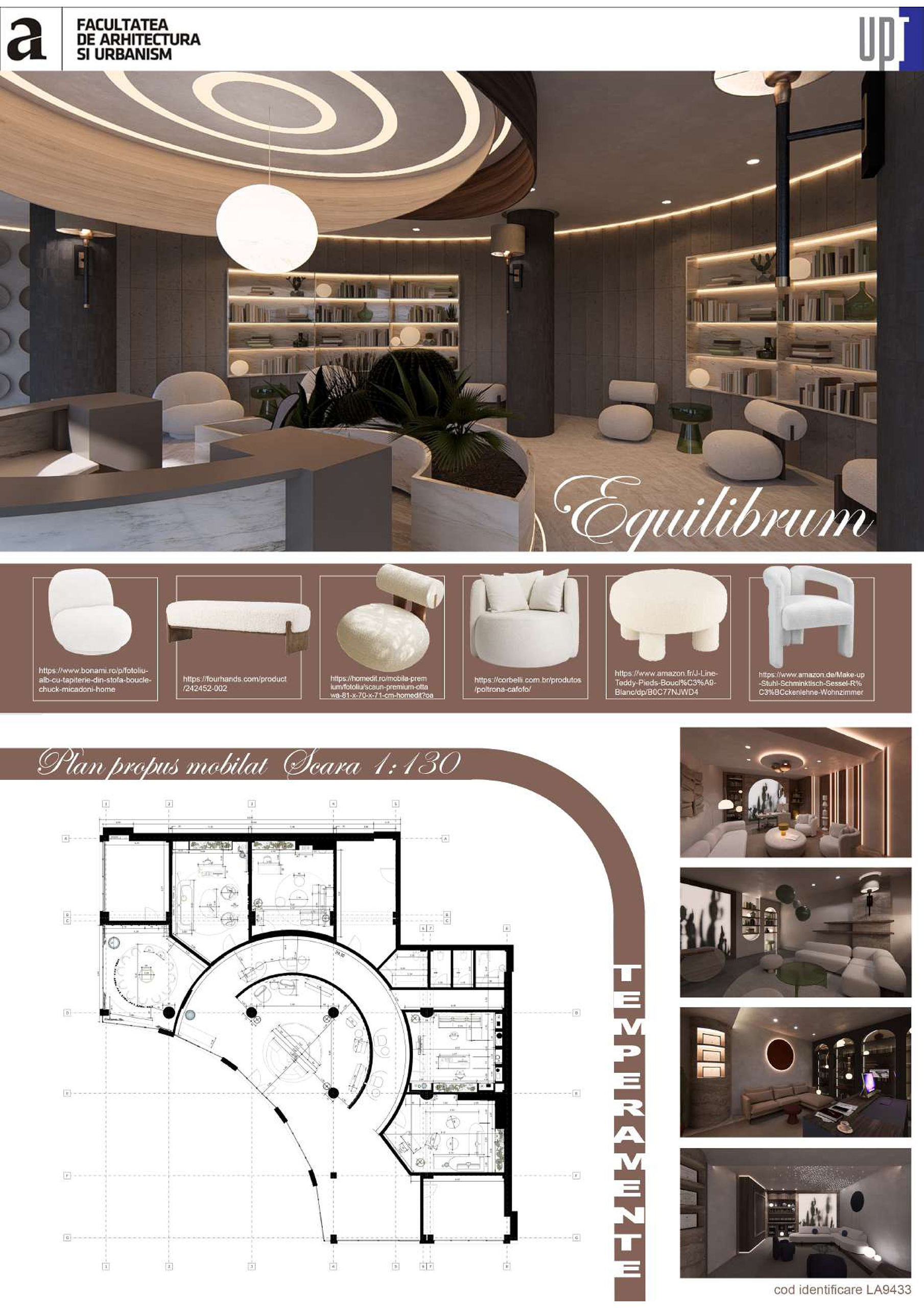
This bachelor’s thesis proposes the design of a psychotherapy center based on the concept of balance between body and mind, achieved through a calm, minimalist, and harmonious atmosphere. The chosen intervention space is defined by a semicircular storefront and imposing, obstructive structural elements, such as columns, which have been integrated into a contemporary interior concept inspired by nature and the aesthetics of simple lines.
Starting from the real need of urban residents to enhance their emotional well-being in environments tailored to their personal needs, the project proposes a spatial organization that merges functionality with aesthetics. The access area—the reception with a semicircular library—acts as a neutral transitional space, offering a first impression of the concept of balance. It can be described as a “central node” from which the four temperaments and relaxation areas branch out.
The thesis explores how interior space influences the psychotherapeutic process, aiming to adapt therapy rooms to the four temperament types: choleric, sanguine, phlegmatic, and melancholic. The proposed psychotherapy center, titled Equilibrum, is conceived as a unified and aesthetically coherent space, with subtle variations that evoke different moods and sensations suited to each temperament.
The methodology includes theoretical documentation on temperament psychology and interior design principles, as well as applied research based on surveys and questionnaires conducted personally with close contacts (friends, family members, colleagues), tracking their preferences according to temperament profiles. Additionally, a functional analysis was carried out on three similar spaces identified online and on a real psychotherapy center in Târgu Mureș — Del Alma. Conversations with psychotherapist Daniel Popescu, one of the city’s most renowned specialists, helped shape a professional perspective on the relationship between space and the therapeutic process. To complement the research, the book Surrounded by Idiots by Thomas Erikson was studied, offering a clear and detailed analysis of the four temperament types.
The proposed outcome is an innovative interior design that integrates psychology and design into a unified, minimalist, and modern concept. Through the use of a neutral color palette, similar textures, and curved forms, the space conveys a calm and welcoming ambiance, inspired by spa-like environments. At the same time, each therapy room is subtly differentiated through details that evoke the dominant traits of the corresponding temperament: control and professionalism for choleric; optimism and energy for sanguine; calm and stability for phlegmatic; and depth and introspection for melancholic.
The thesis emphasizes the importance of personalizing space according to the psychological characteristics of its users, demonstrating that a thoughtful design approach can support the therapeutic act and contribute to the individual’s sense of balance.
In conclusion, the project offers an innovative therapeutic space that enhances the existing architecture through a carefully crafted design, adapted to current needs and oriented toward balance and harmony.
Student: Truică Daiana-Cristina
Coordinating Professor: S.l. Dr. Arch. Alexandra Keller
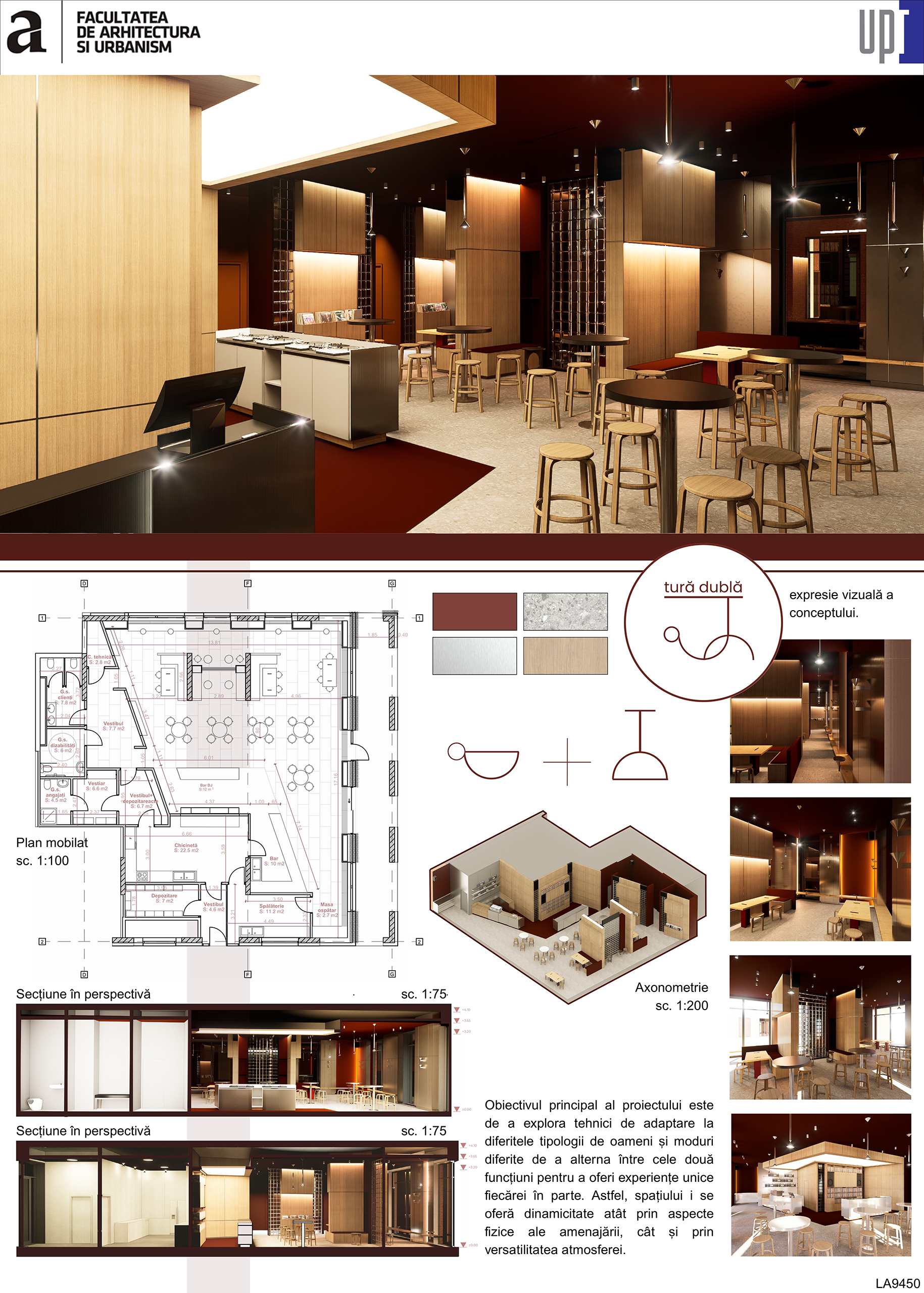
Located in a former industrial area, the Paltim complex was built on the site of the old Hat Factory, from which it also takes its name. In recent years, this area has undergone significant development in terms of urban infrastructure, shifting from its industrial past towards a residential future, becoming a point of interest in a constantly evolving city. This, a place that once lacked social activity is being transformed into one that brings together various types of people duet o the diversity of its current functions: Nokia, the North Train Station, the residential complexes „Paltim”, „City of Mara”, „Monarch”,the second building of the University of Medicine Timișoara, the Bega river shore, and others.
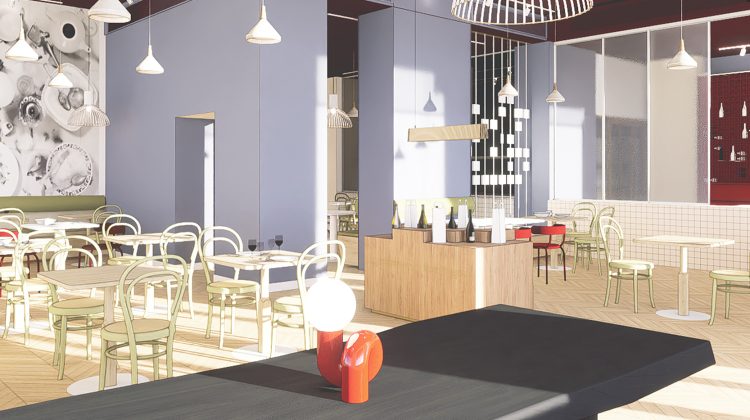
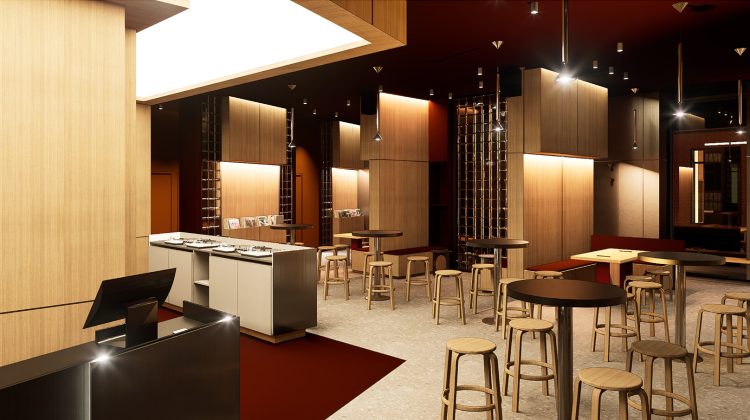
My bachelor project aims to design a space with a dual function, an urban café during the day and a music bar in the evening. The concept of „Tură Dublă” („Double Shift”) is meant to suggest both the two distinct functions of the space and the idea of work shifts, making a subtle reference to the site’s industrial past. The main objective of the project is to explore ways of adapting to various types of people and to alternate between the two functions in order to offer unique experiences for each. Thus, in the process of designing this space, I considered a multitude of aspects to ensure the environment is as inclusive as possible, taking into account the different needs of a diverse audience and identifying methods to transform the daytime space into a nighttime one, allowing them to be perceived differently and have their own identity. Some of these elements include natural and artificial lighting, furniture, directional flow, contrast of materials, contrast of materials, all contributing to the creation of a flexible, captivating space.
Regarding the „listening bar” function, increasingly present in major urban centers, it is a current trend embodied by venues that promote listening and reconnection with music in a social context. This trend dates back to the 1920s, originating in Japan, where it emerged through spaces where people could gather together to drink and listen to music [1]. Given the absence of such a function in the city, I considered this conxept to be a suitable match for the location, duet o the diverse, multigenerational public.
Student: Vincze Erika-Antonela
Coordinating Professor: Spec. Mob. & Interior Design Carmen Săndescu
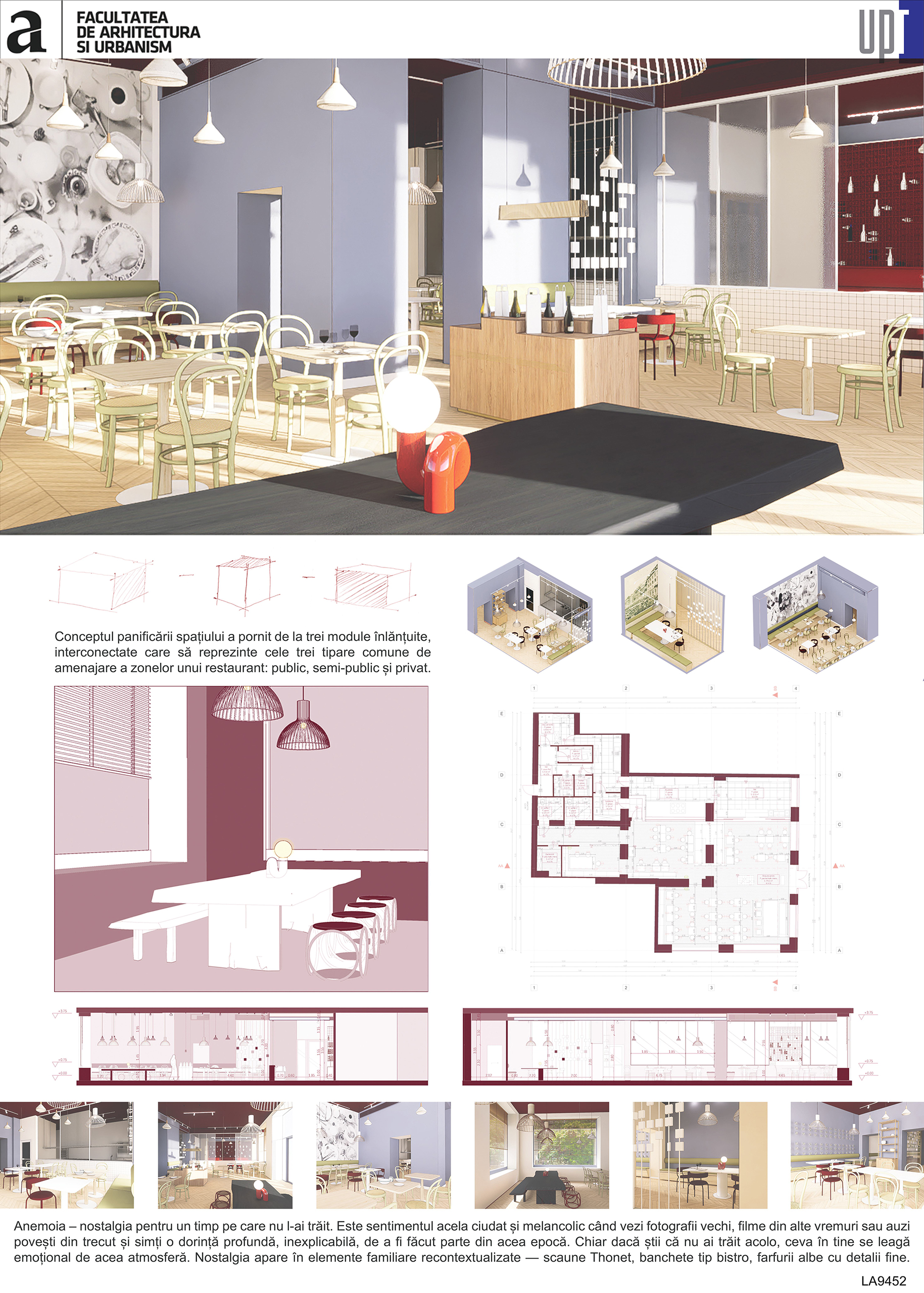
Located in the historic main district of Timișoara, the chosen space for refunctionalization is situated on the ground floor of a building first attested in a 1929 postcard. However, the exact moment of its construction cannot be precisely identified, as the boulevard itself took shape following the demolition of the old fortifications and the urban planning strategies implemented at the end of the 19th century. The building already appears on the 1893 masterplan designed by Ybl Lajos and Kovács Aladár (information sourced from the historical–urban study of the Cetate district conducted by Lecturer Dr. Architect Bâldea Maja and Associate Professor Dr. Architect Gabriela Domokoș-Pascu).
Starting from the relatively fragile and undated history of the space, a common thread was identified—a subtle emotional fiber called nostalgia—which became the guiding theme of the design and its stylistic influences. By exploring concepts related to emotional consumption, dining rituals across cultures, and contemporary marketing strategies, the term anemoia emerged, most often associated with places, sounds, or flavors. According to recent marketing studies, invoking nostalgia in the selling process generates feelings of calm and relaxation in the consumer, increasing the desire to engage with or consume the targeted product. Yet nostalgia, studies show, often transcends the consumer’s own lived experience. This emotion is referred to as anemoia, defined in The Dictionary of Obscure Sorrows by John Koenig as “nostalgia for a time you never lived.”
The proposed interior concept is built around this emotion—anemoia—interweaving visual and symbolic references from various eras and cultural contexts. The technique of temporal collage was employed in the selection of furniture, merging stylistic influences from different periods to create an atmosphere that feels both timeless and familiar. Rich textures, warm color palettes, and decorative details subtly evoke fabricated yet believable memories—a world that feels known, even if never actually experienced.
Here, every object, color, and texture contributes to an emotional narrative, inviting the visitor not only to consume, but to feel. The space becomes a symbolic extension of the idea of home—an inner refuge where time seems to pause. In a society marked by a fast pace and emotional fragmentation, the project proposes a return to essentials: connection, stillness, and the genuine joy of sharing a meal.
In this context, the association with the name “dor” came naturally. It is one of the most emotionally charged and culturally significant words in the Romanian language—endemic and without a direct equivalent in other languages or dialects. Rather than functioning as a simple noun, it represents a cultural concept. In meaning, “dor” lies at the intersection of absence, nostalgia, and affection, its semantics extending beyond everyday language.
Likewise, the designed restaurant aims to dwell, at a soulful level, within the intersection of these three powerful feelings, embodying a symbolic expression of emotional depth and a profound affective relationship with the past, with what is missing, and with one’s identity. With warmth, intimacy, and familiarity at its core, the space is envisioned as a place of reunion and rediscovery—with tastes, with memories, and with loved ones.
Student: Voina Vanessa
Coordinating Professor: Conf. Dr. Arch. Cristina Povian
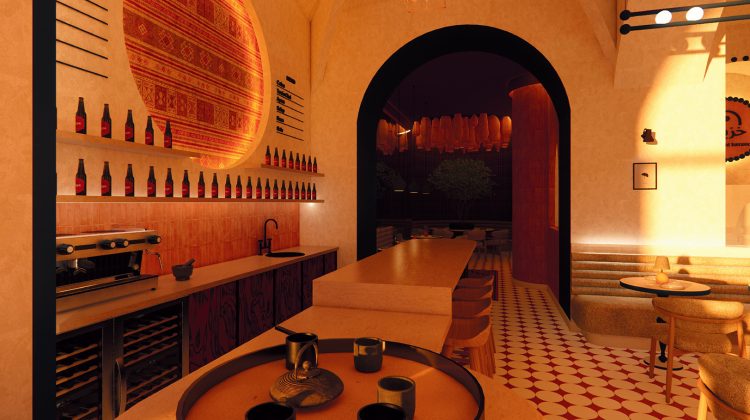
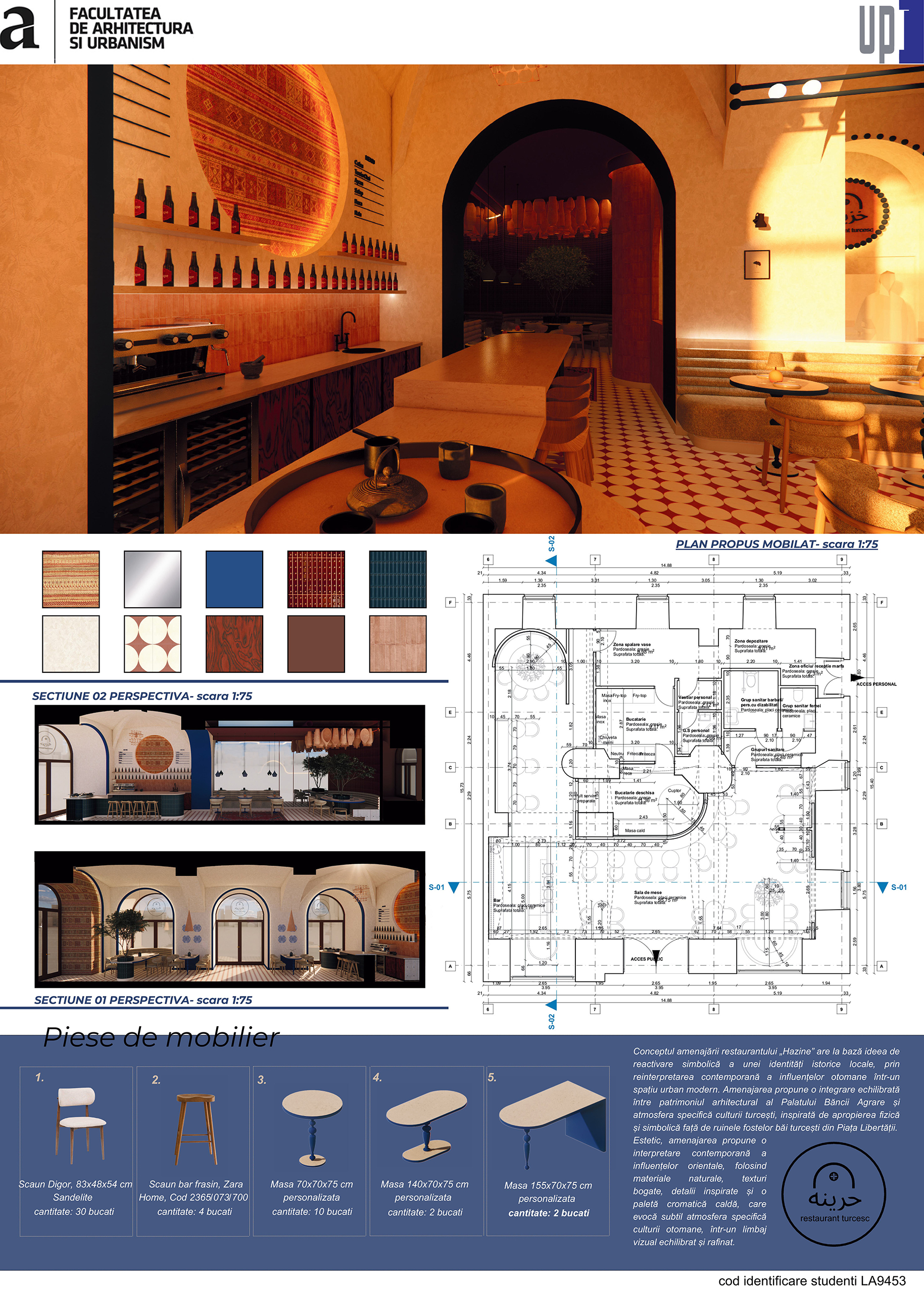
This bachelor thesis proposes the development of a Turkish restaurant, called Hazine, in the historical center of Timișoara. The space chosen for the intervention is located on the ground floor of the Palace of the Agrarian Bank, a building with architectural and historical value, located in Libertății Square. Starting from the location of the space in an area with a strong historical charge, in the immediate vicinity of the ruins of the Turkish baths, the project proposes the symbolic reactivation of a historical layer often ignored, but essential in shaping the urban identity of Timișoara.
At the same time, a real need was identified among the local public for a public eating place with a Turkish specificity, offering not only gastronomic services but also a coherent cultural experience. The objective of the research was formulated as an attempt to integrate these historical values into a contemporary space for the general public, while responding to current HoReCa standards.
The central hypothesis assumes that a space with architectural and symbolic value can gain a new contemporary function while preserving its identity—provided it is approached through a carefully developed design concept that is closely tied to the historical context and specific character of the place. The resulting project proposes a balanced and coherent solution, both aesthetically and functionally. Natural and durable materials were used, adapted to the demands of a public space, while the visual elements were selected to subtly evoke Ottoman influences without replicating historic styles.
In conclusion, the project succeeds in highlighting the historic character of the site through a carefully constructed contemporary design, adapted to the current needs of the users and harmonized with the architectural and cultural specificity of the area.
Furniture and Interior Design – YEAR III
| Generation 2025 | Diploma Thesis Development | 2024-2025 |