
TMTN MASTER’S DISSERTATION PROJECTS
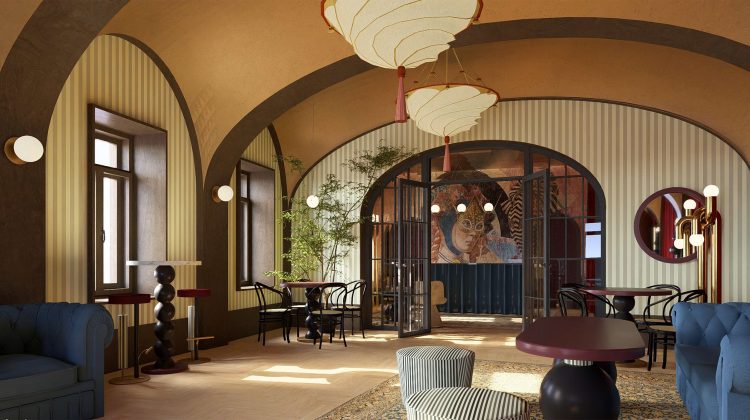
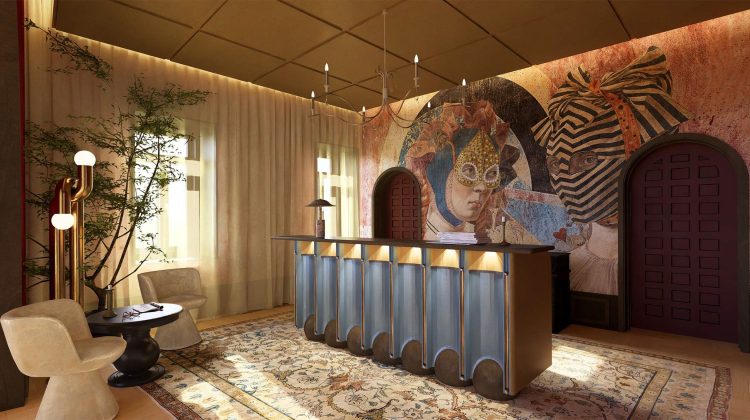
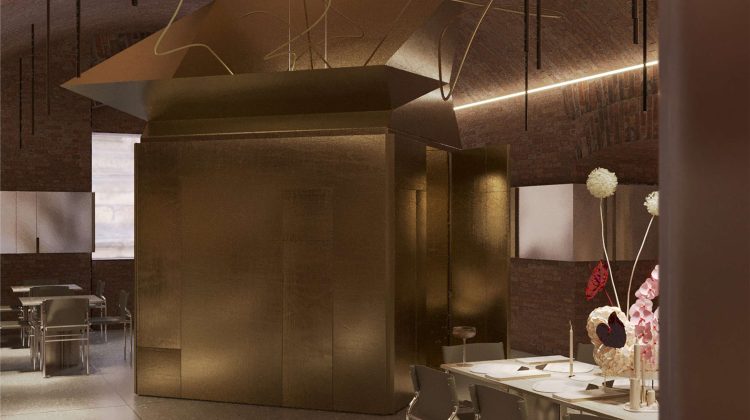
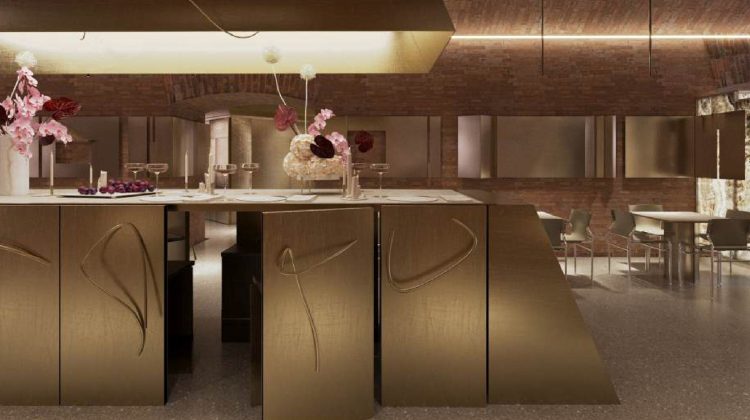
Master’s dissertations within the Trends, Materials and New Technologies in Interior Architecture Master’s programme at the Faculty of Architecture and Urban Planning Timișoara are structured into three stages:
- development of the foundation study (prediploma) in order to document the theoretical work and the methodological foundation of the practical work (master’s diploma project)
- development of a theoretical work based on the research memorandum (foundation study)
- development of the master’s diploma project in the specialization “interior architecture”.
The choice of the dissertation topic – from the fields of: interior architecture, furniture or object design, interior restoration, materials, specific technologies – will be made in such a way that the study of the subject will help to substantiate the theoretical work and develop the diploma project. Although the subject will be related to a broad issue and will have a broad vision, the approach focuses on applied research, clearly highlighting how the diploma project integrates the studied topics.
2026
For the full texts please click on the pages of the brochure below.
Student: Bârle Maria-Francesa-Simina
Coordinating Professor: Ș.l. dr. arh. Maja Bâldea
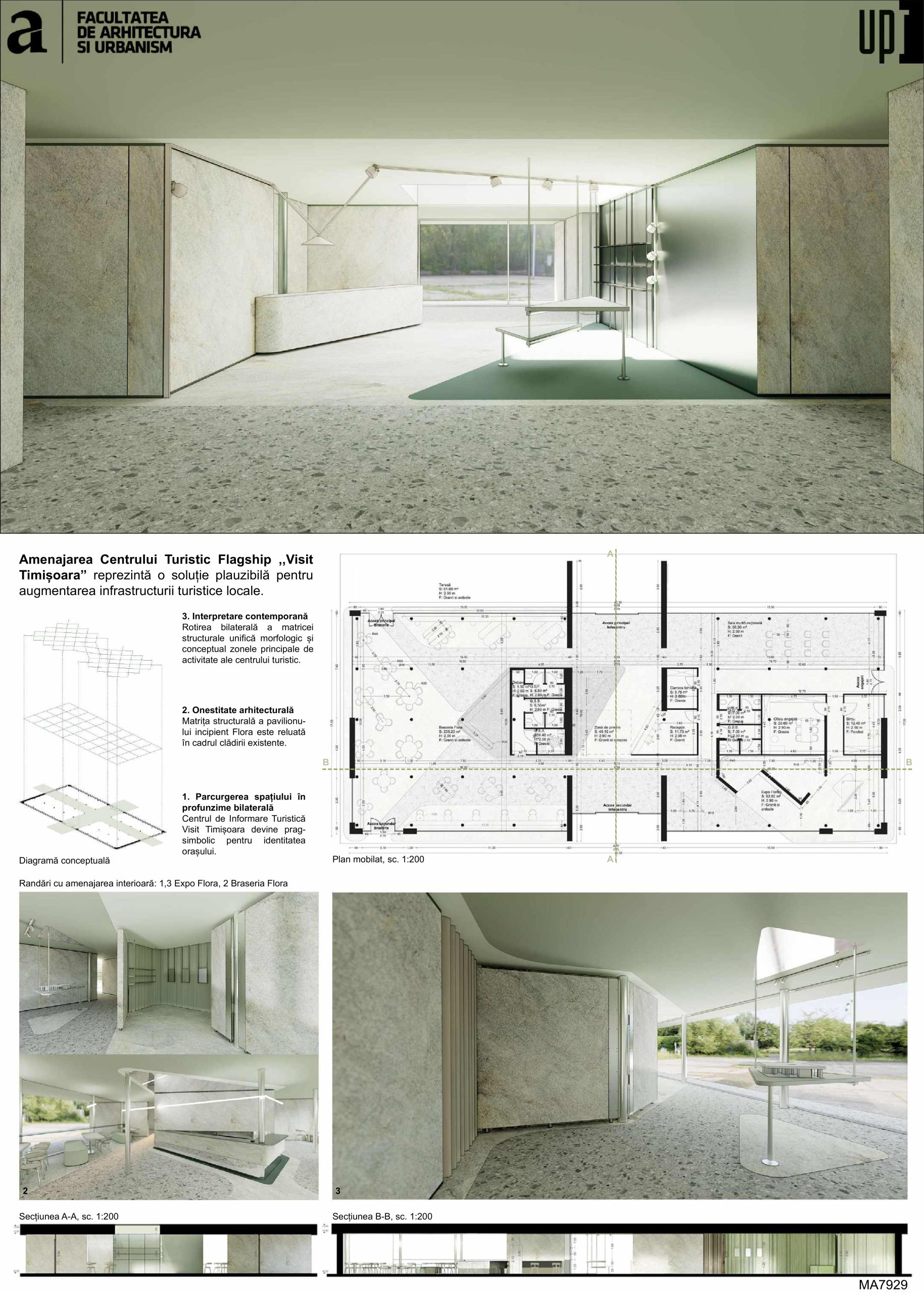
This paper investigates the evolution and architectural operating modes, both general and specific, of flagship stores within the domain of public services. Although the flagship model has been adopted for over 30 years by recognizable names in the service industry, it remains almost exclusively associated with the luxury retail sector. This correlation is limited, considering the full applicability potential of this architectural program.
The primary aim of the current study is to identify the architectural operating principles of flagship stores, including spatial configuration, morphological and aesthetic language, and furnishing typologies. This includes both the general characteristics universally applicable in the retail sector and those specific to the non-retail segment, particularly in the provision of public services, tourism, and entertainment. The scientific investigation traces the gradual adoption of this model by non-retail sectors and the progressive adaptation of the design and supporting characteristics of the pilot facility. This observation supports the hypothesis that flagship locations constitute an autonomous architectural program, with segmented features contingent upon their sector of applicability.
In order to achieve this objective, the research develops five major goals: (1) defining the program and outlining the general characteristics of a commercial flagship store; (2) analyzing the symbiotic relationship between a flagship and its satellite locations; (3) examining the gradual democratization of the flagship program and its integration into public service infrastructure; (4) conducting a case study based on three relevant non-retail flagship locations; and (5) articulating the specific architectural operating methods of public service flagships as derived from the case study.
The scientific paper employs a qualitative methodology, utilizing an analysis of relevant literature alongside best-practice examples selected for the case study.
In conclusion, the study outlines the evolution of the flagship model, highlighting its adoption by diverse non-retail fields such as public services, entertainment, and tourism. This transition entails emerging specificities in architectural manifestation that differ significantly from the general characteristics of commercial-sector flagships. The research contributes to the enrichment of the existing literature by identifying six defining particularities of non-retail flagship locations, thereby updating the theoretical framework of the program to fully reflect its contemporary architectural manifestations.
Student: Gomez Bolivar Cristhian
Coordinating Professor: Conf. dr. arh. Andreea Anghel
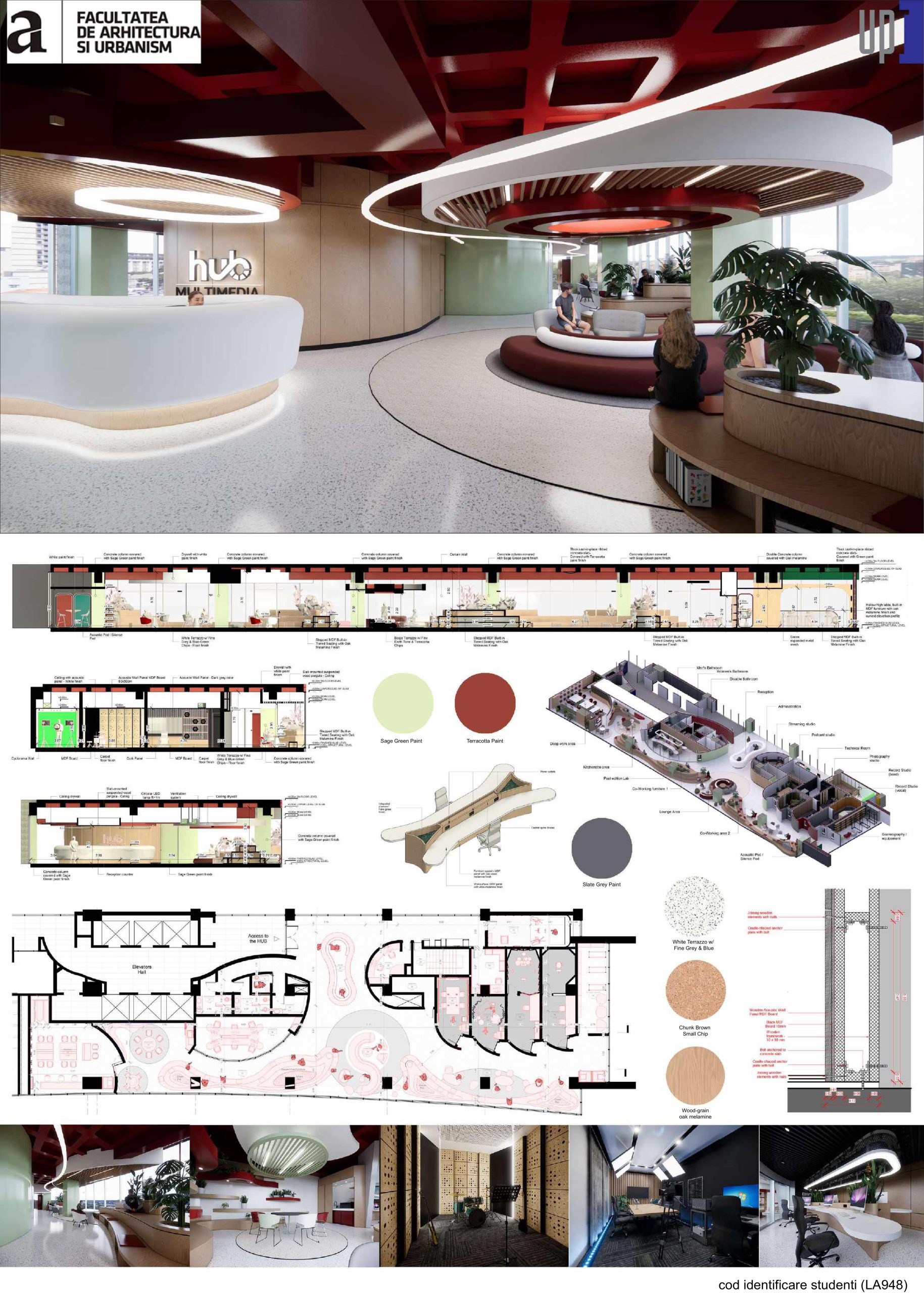
The creative process is influenced by the physical environment, directly affecting cognitive performance and productivity. In today’s economy, there has been a shift from traditional employment toward individual entrepreneurship; however, audiovisual professionals require high-end technical infrastructure to produce professional-quality content. Although Caracas provides public facilities, their technical limitations often force users to rent private studios, whose costs remain inaccessible to a significant portion of the population. This social barrier highlights the need to improve access to professional technological resources as a means of supporting creative and professional development.
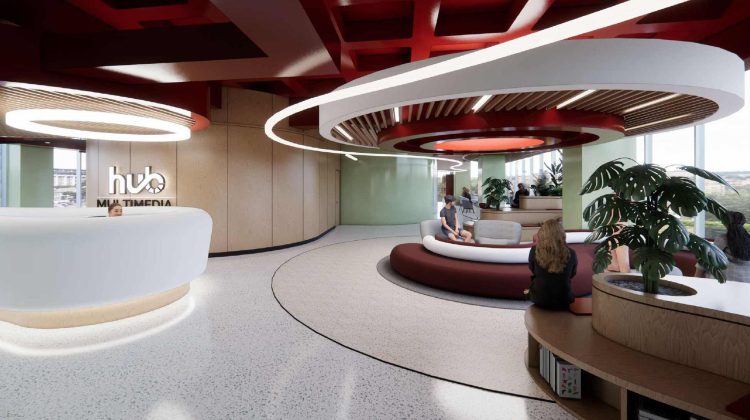
To address this issue, the adaptation of an existing office area within the Galipan Business Center in Caracas is proposed as a Multimedia Production Hub. The site was specifically selected for its potential to provide the security and stable essential services required within the local context. The proposal seeks to contribute to the democratization of professional production tools by providing independent podcasters, music producers, and digital artists with access to multifunctional facilities equipped with the necessary resources for editing, production, and recording.
An important consideration at this stage is the recognition that interior design has the potential to positively or negatively influence users’ creative output. Therefore, the proposed facility is conceived as an environment that supports and enriches the ideation process through a series of interior design strategies informed by research in environmental psychology. These strategies aim to create an atmosphere adapted to the different stages and requirements of the creative process. To achieve these objectives, a qualitative methodology was adopted, based on the examination of theories of environmental perception and the comparative analysis of interior architecture projects that successfully employ innovative strategies for creative stimulation. The research focuses on three key aspects: spatiality, materiality, and perception. Subsequently, the cross-referencing of these findings enables the formulation of practical design principles for the proposed hub.
The final outcome consists of a facility designed for audiovisual creators, focused on enhancing productivity and technical excellence by providing users with access to a high-performance professional environment. The research findings further contribute to the development of a design guide for interior spaces that can serve as a reference for similar applications in future projects
Students: Hent Iulia Alexia
Coordinating Professor: Conf. dr. arh. Andrei Racolța
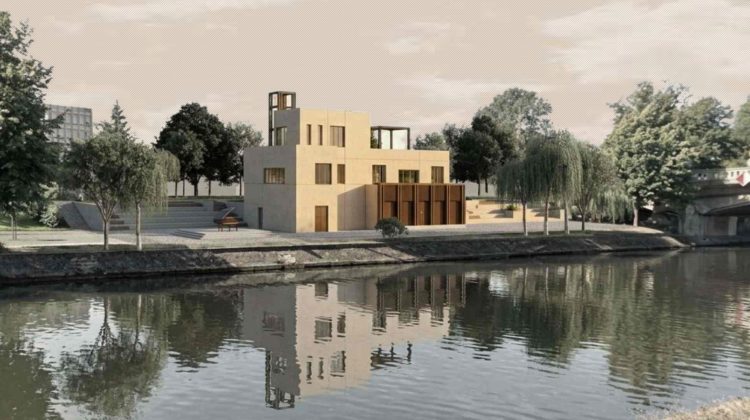
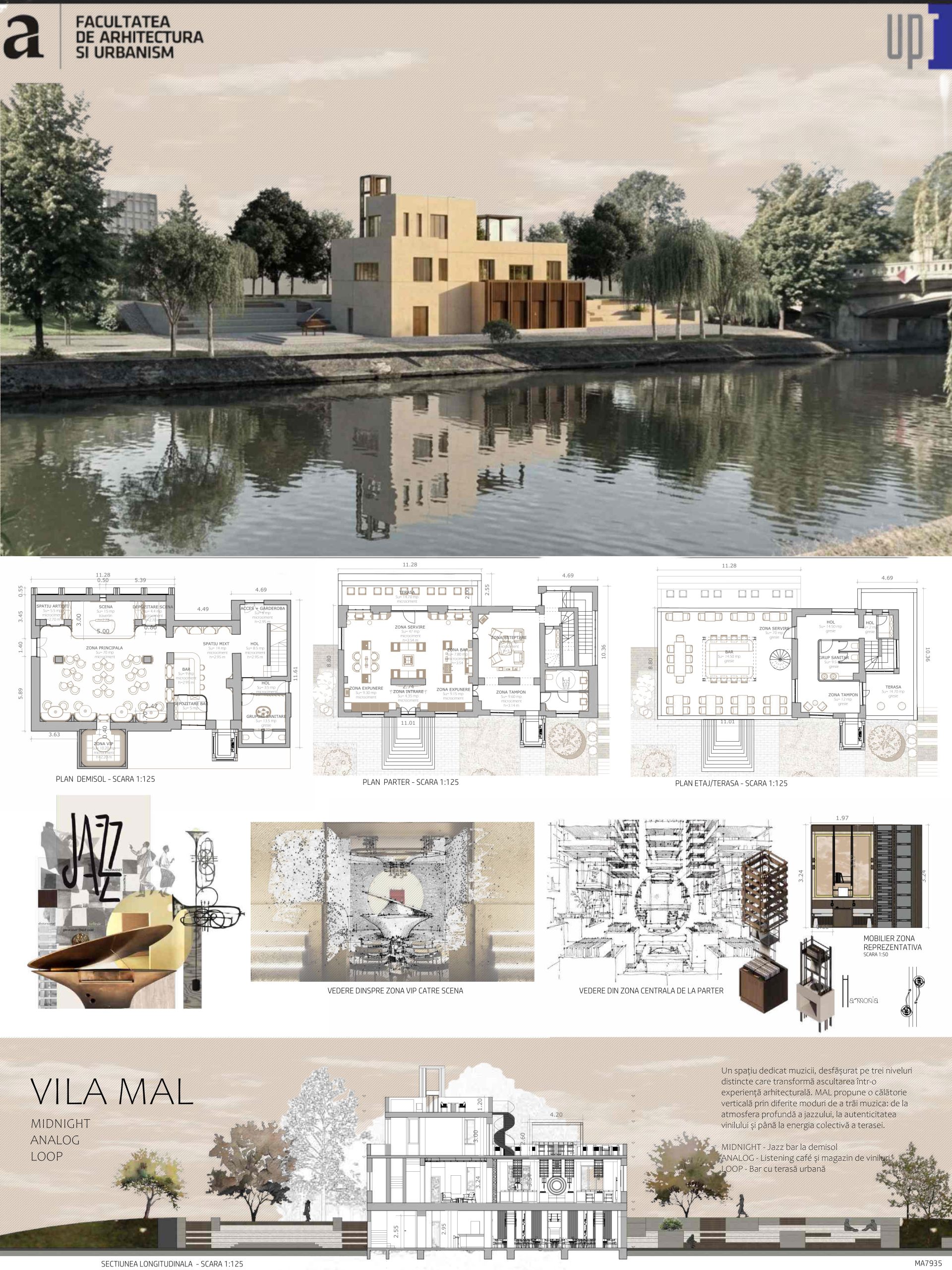
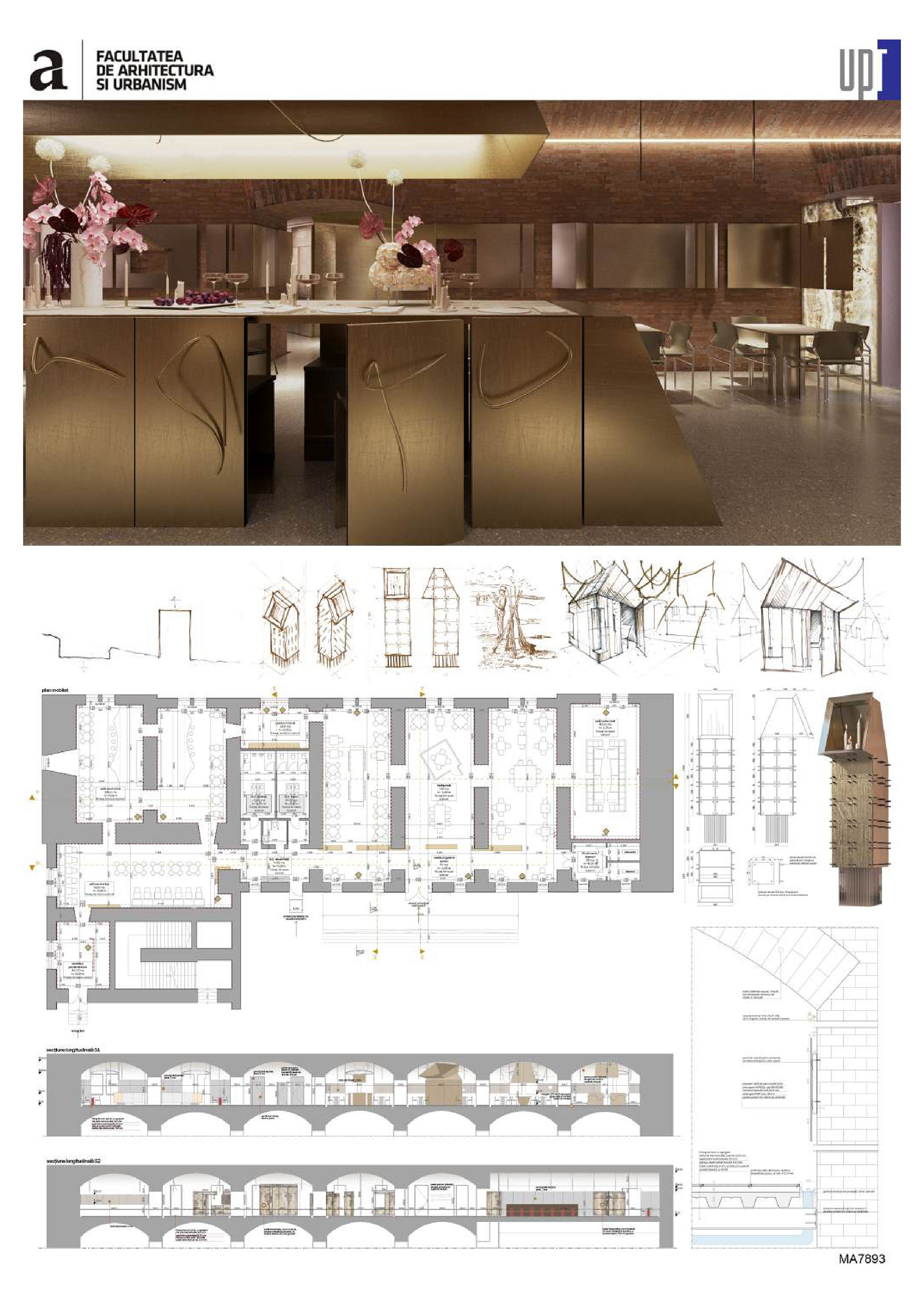
This study proposes a transdisciplinary approach to investigating the relationship between music, architecture, and interior design through the reinterpretation of an existing building within a contemporary context. The research addresses the adaptive reuse of architecturally valuable spaces, examining how they can be transformed to accommodate contemporary cultural functions that respond to evolving forms of cultural consumption and social interaction. In this regard, the project explores the potential of Vila Mal in Timișoara to become an active cultural space, with jazz music serving as a conceptual generator.
The study focuses not only on the functional transformation of the space but also on the reinterpretation of its identity through the integration of principles derived from jazz music, such as rhythm, improvisation, and dynamics. These principles are explored as conceptual design tools capable of generating new forms of spatial organization and architectural experience. In this context, interior design is understood as a medium for translating musical structures into a visual and spatial language.
At the same time, the research investigates how contemporary cultural spaces, such as listening bars and music cafés, are redefining the traditional typology of the jazz bar by adapting it to current user needs. Through the analysis of these transformations, emerging directions in the design of music-oriented spaces are identified, in which auditory experience, atmosphere, and social interaction become central elements.
The theoretical framework is supported by concepts such as the interior–exterior relationship, the theory of genius loci, and the notion of the third place, which contribute to understanding space as a complex system integrated within its urban and social context. Through this approach, the study emphasizes the capacity of interior architecture to generate sensitive and context-responsive interventions that reinforce the specificity of place and foster connections between the built environment and its users.
The research does not aim to establish a universal model of intervention, but rather to highlight a flexible approach that responds to the context and particularities of each space. The complexity of the adaptive reuse process and the diversity of factors involved underline the difficulty of generalizing solutions while simultaneously opening new perspectives on the potential of existing spaces to be reinterpreted, revitalized, and revalorized within a contemporary context.
Students: Ungurean Ozana-Roberta
Coordinating Professor: Conf.dr.arh. Camil Milincu
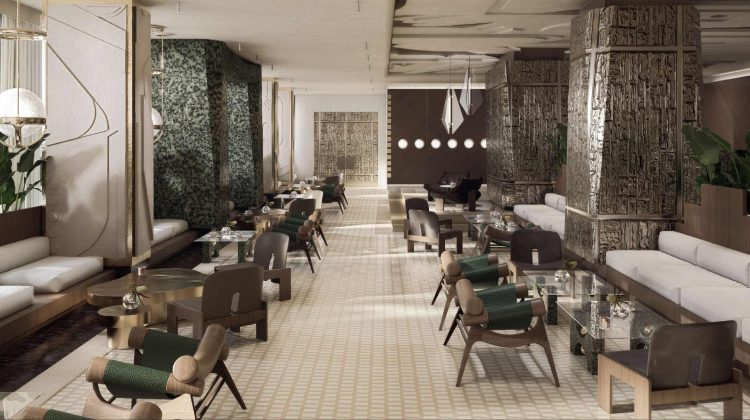
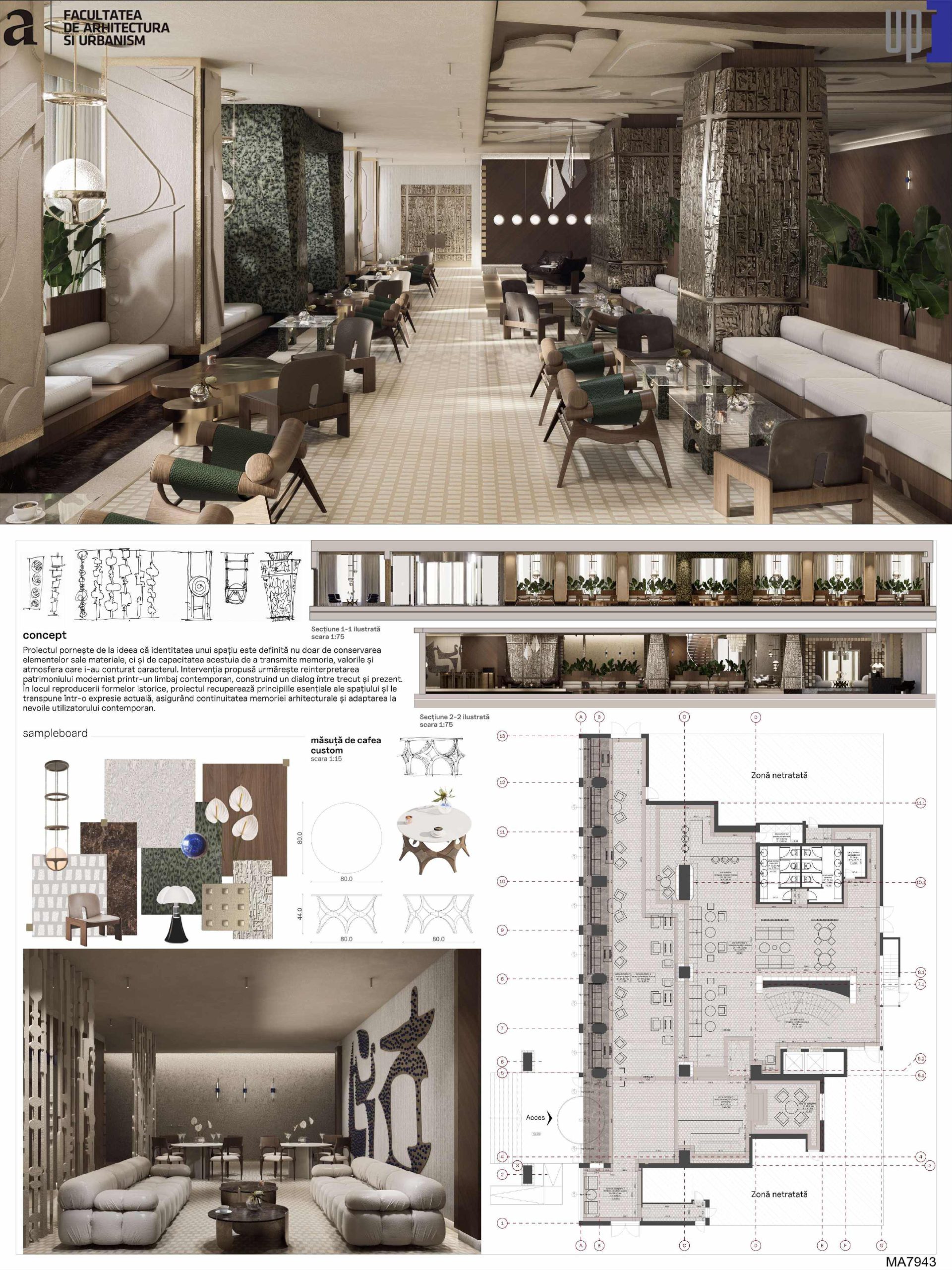
This paper investigates the contemporary hotel lobby as an architectural palimpsest, analyzing the relationship between the original modernist design layer and the successive interventions that have contributed to the transformation of its spatial identity. The research aims to highlight how the loss of initial coherence affects user perception, the quality of spatial experience, and the space’s ability to communicate a clear identity.
The study employs a qualitative methodology that integrates a historical analysis of the space’s evolution, a comparative study of relevant contemporary examples, and an evaluation of the relationship between the physical elements of the current interior and those of the original design. Within this framework, the concept of the palimpsest is employed both as a theoretical tool and as a design strategy, allowing the space to be interpreted as a layered structure in which different temporal phases coexist and interact.
The analysis demonstrates that interventions lacking conceptual continuity have led to a dilution of spatial identity and an incoherent perceptual experience. In contrast, contemporary examples highlight the importance of an integrated approach in which materials, lighting, spatial organization, and atmosphere contribute to the creation of a coherent and unified experience.
The outcome of the research is the formulation of an intervention strategy that does not seek to replicate the original state, but rather to reinterpret it through a dialogue between past and present. The proposed interior design intervention establishes this dialogue while addressing both current functional requirements and the need to restore and reinforce the space’s architectural and spatial identity.
2025
For the full texts please click on the pages of the brochure below.
Student: Bokor Henrietta
Coordinating Professor: Arh. Dr. Ing. Mihai Muțiu
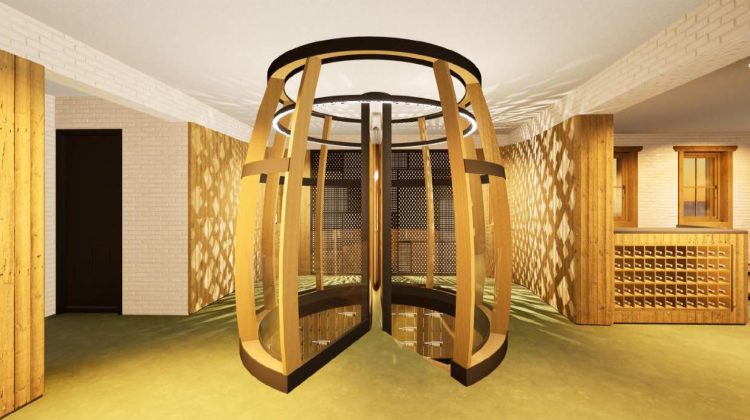
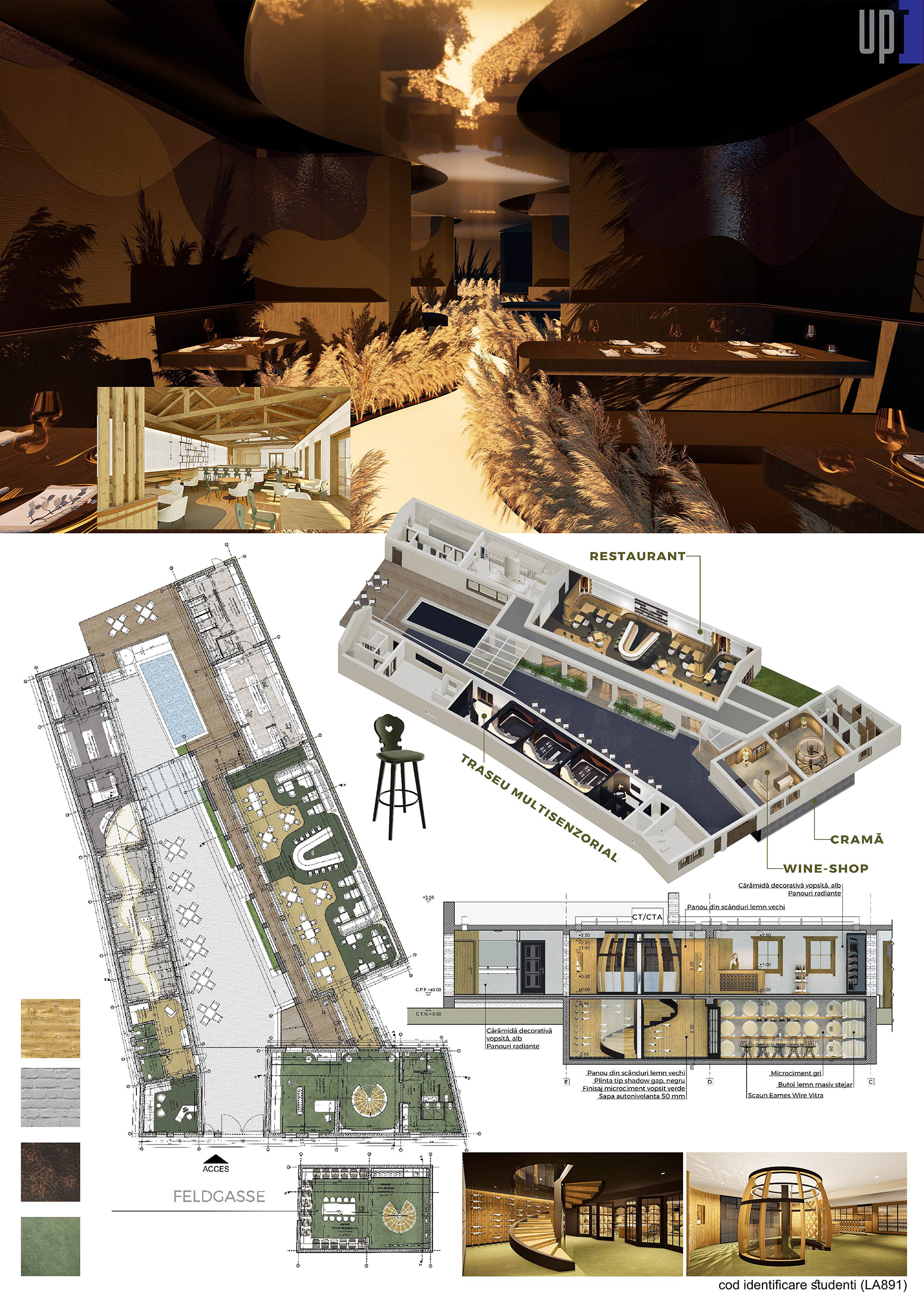
This paper explores the potential of multisensory interior design as a means of reconnecting with nature and with the values of authentic rural life. The project proposes the interior design of a restaurant and a wine cellar located in the Burgenland region of Austria — an area characterized by strong winemaking traditions and significant historical and cultural value — making it an ideal context for creating an experience that integrates local traditions with sustainable approaches and contemporary design trends.
The main objective of the project is to create a space where guests not only enjoy local gastronomy but also engage in a holistic and immersive experience that stimulates all the senses — from taste and smell to touch, hearing, and sight. Each space is conceived as part of a narrative spatial sequence — a “village within a village” — where atmosphere, materiality, and light contribute to a sense of well-being, calm, and belonging.
This sensory journey is carefully designed to reflect the essence of the place, the rhythm of nature, and the cultural identity of the region. From the soft morning light filtering through the tall windows of the restaurant to the gentle coolness of the wine cellar, each area becomes a setting for rediscovering simplicity and serenity. The proposed interior interventions aim not to disrupt but to enhance the authenticity of the rural context, transforming each visit into an emotional encounter with space and community.
The research investigates the impact of interior design elements on user experience, drawing on theories of multisensory aesthetics, environmental psychology, and sustainability. The methodology includes case studies, direct observations, and interviews, which collectively inform the design process in a coherent and applied manner.
The project respects the vernacular character of the existing architecture and reinterprets it through subtle interventions that incorporate natural local materials, ecological solutions, and contemporary ambient design strategies. More than a design exercise, this thesis represents a reflection on the capacity of spatial environments to generate authentic emotions, foster connection, and support inner balance.
Student: Ciobanu Robert Paul
Coordinating Professor: Ș.l. dr. arh. Maja Bâldea
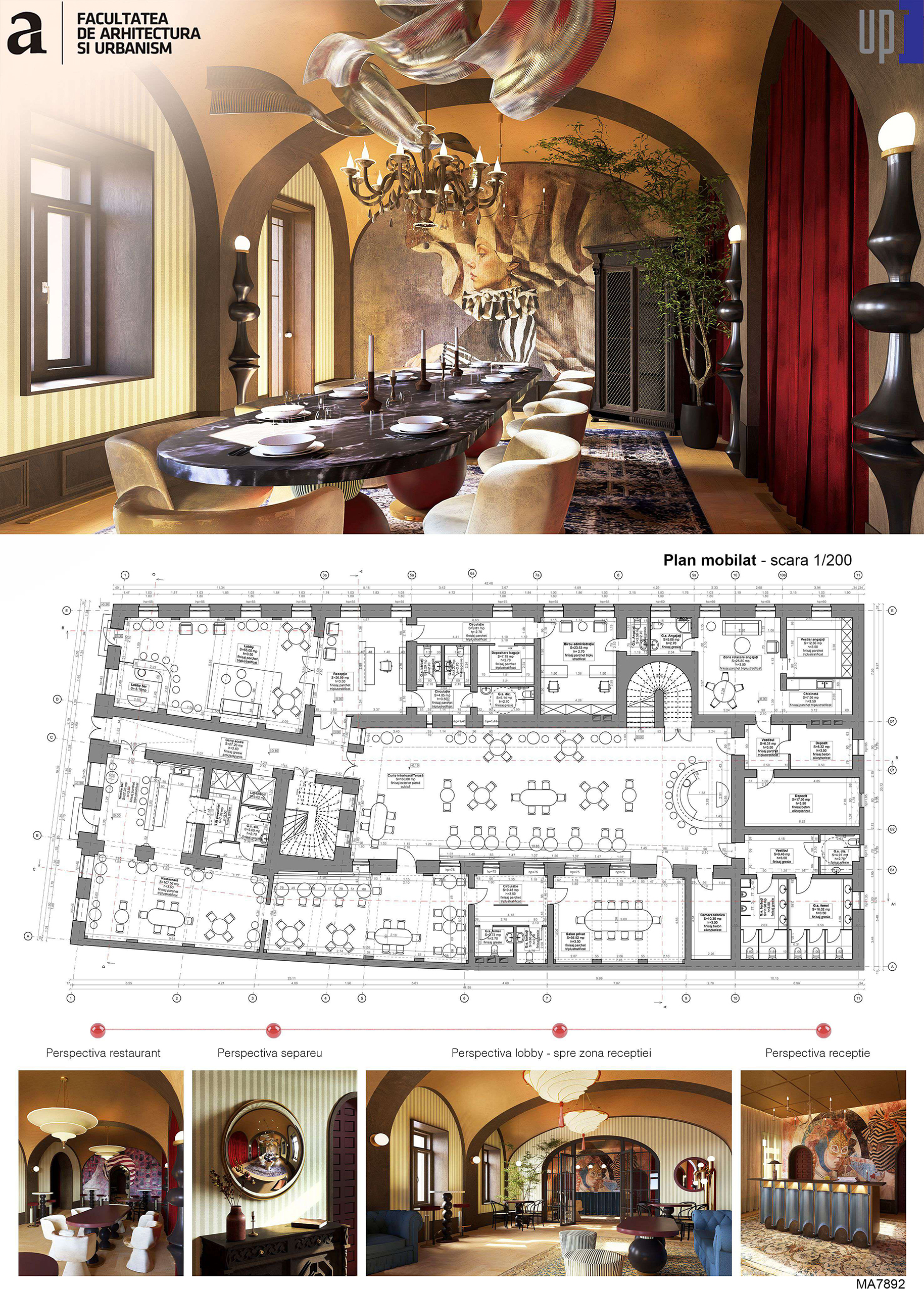
This paper presents the challenge of a transdisciplinary study that explores issues of semiotics in relation to historical architecture, ethical considerations and conduct in interventions on historical buildings, concepts and factors of sustainability, material technologies, as well as the capacity to evaluate the efficiency of such interventions compared to widely used and established typologies.
The success of the research lies in uncovering new perspectives that frame historical buildings as opportunities within the built environment, demonstrating their potential to be both efficient and revalorized. By employing diverse and economically viable architectural programs, the conversion of a historic building into new functions exemplifies the wide range of possibilities and opportunities that historical architecture can offer.
This research is intended primarily as an example of an operational approach rather than as a manual or a universally applicable system, as it requires continuous adaptation to the specific conditions and challenges presented by each historical space.
Potential issues highlighted by this research include the difficulty of developing a broadly applicable guide, as well as the risk of generalizing typologies and intervention techniques without sufficiently considering the particular context of each historical building.
Students: Sebastian Fejes-Sava
Coordinating Professor: Conf. dr. arh. Andrei Racolța
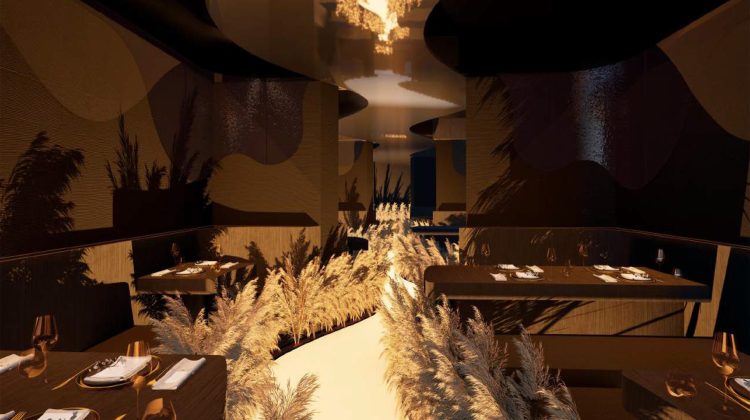
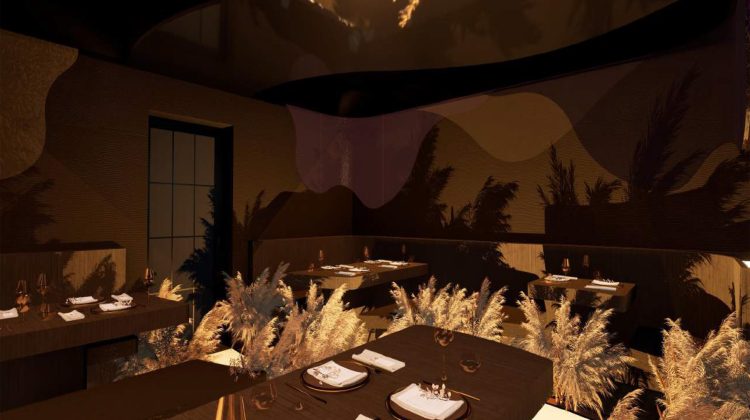
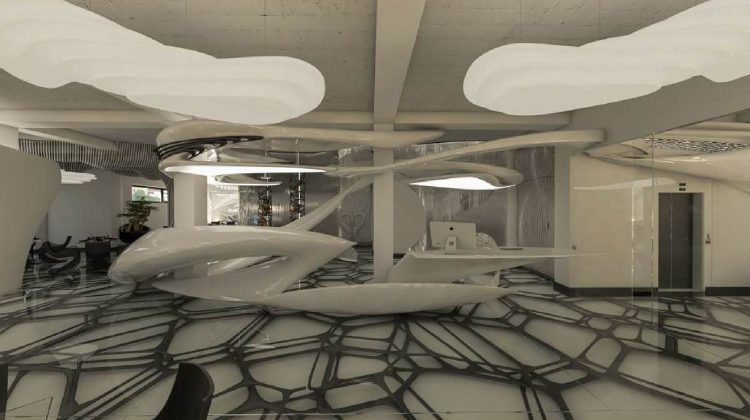
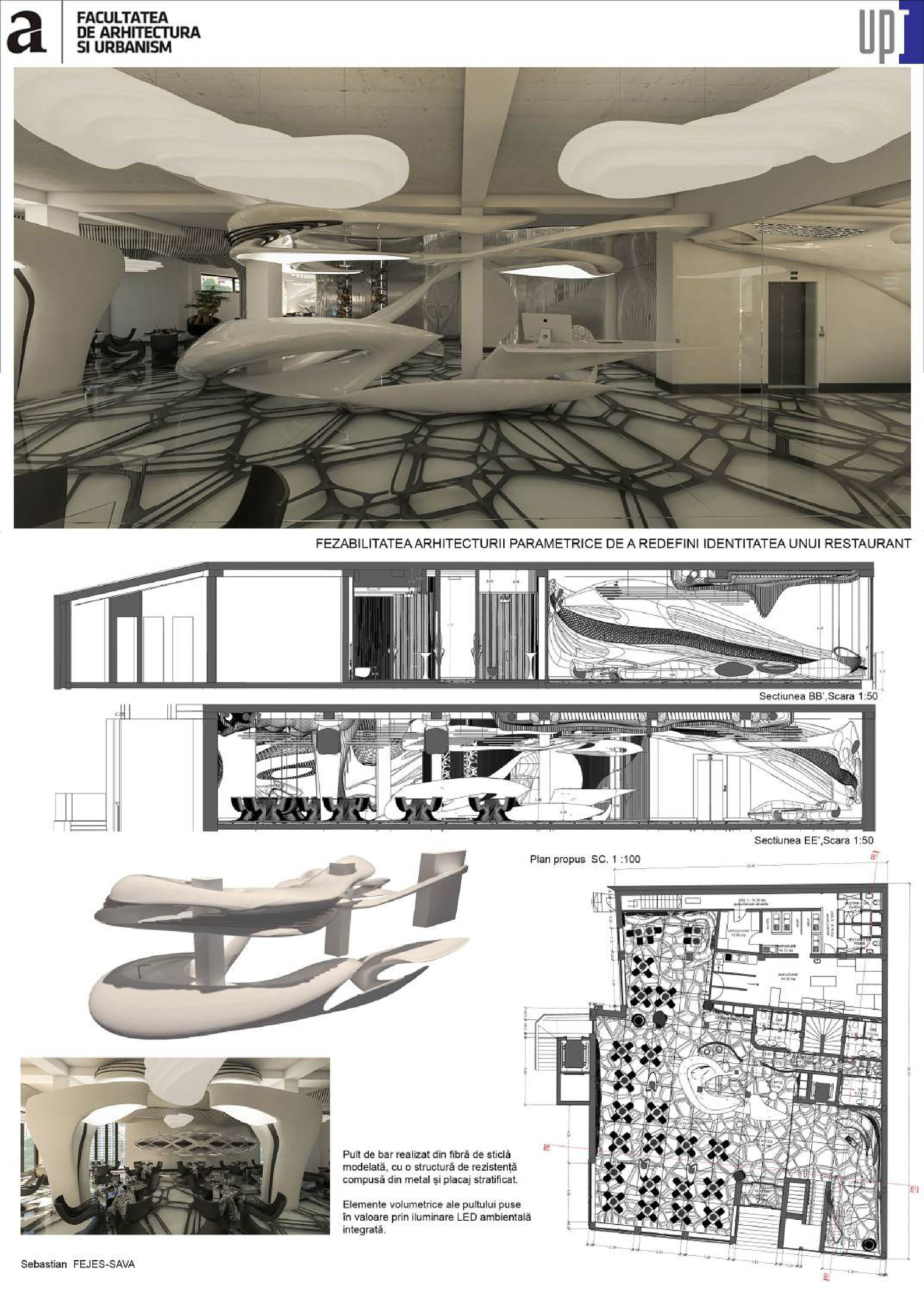
This work aims to redefine the identity of a restaurant through the integration of parametric architecture into interior design, employing modern and futuristic elements while creating a seamless connection between exterior and interior architectural expressions.
The restaurant is part of the Boca Boutique Hotel, owned by SC Hartl Ernst Imobiliare SRL. The construction of the hotel began in 2002 and was completed in 2005. Over the past decade, the building has undergone several functional transformations. The upper floors were converted from hotel rooms into office spaces, while the secluded floor was transformed from a nightclub into office space. Currently, the upper floors have returned to their original function as hotel rooms, whereas the secluded floor continues to operate as office space.
This research seeks to translate architectural visions into spatial realities by exploring the intersection of architectural technology and urbanism, while also integrating parametric design with emerging technologies. One of the most significant impacts of parametric design in architecture is its capacity to generate complex, fluid, and dynamic forms, resulting in spaces that are not only visually striking but also environmentally responsive and sustainable.
By examining the relationship between technology, architecture, and urban development, broader concepts such as sustainable cities, digital replicas, 3D printing, and artificial intelligence are brought into focus, reshaping both the perception and the conditions under which we design and construct the built environment. The integration of parametric design with emerging technologies — including artificial intelligence, 3D printing, virtual reality, and augmented reality — opens new frontiers, with the potential to streamline design and construction processes, reduce material waste and human error, and contribute to the creation of more adaptable and resilient built environments.
Students: Bota Ariadna-Maria
Coordinating Professor: Ș.l.dr.arh. Otilia Tudoran
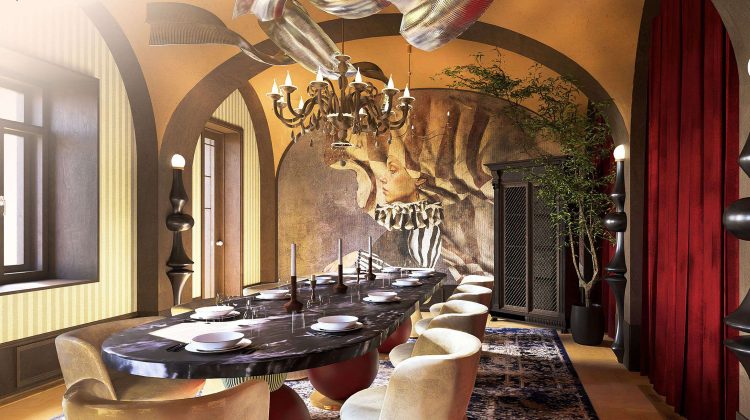
The present paper aims to develop a boutique hotel located in the center of Arad, in close proximity to the „Ioan Slavici” National Theatre — an important cultural institution that frequently hosts guests from the artistic community. Establishing a shared relationship between this cultural landmark and a hospitality facility has the potential to generate value not only for the city and its local community, but also for artists and for individuals interested in immersive socio-cultural experiences capable of transporting them into an unconventional yet historically grounded ambient framework.
This initiative represents a return to a defining moment in the evolution of artistic communities — a recalibration of collective creative practices that have gradually diminished under the accelerated development of technology, which has increasingly distanced the artist both from the artistic process and from meaningful interaction with other members of the community, whether local or international. In the past, artists would gather to exchange ideas, debate personal and professional beliefs, and pursue goals that transcended individual self-affirmation, placing greater emphasis on the act of artistic creation itself. Within this social context, artistic production evolved toward an exploratory dimension, encouraging engagement with complex conceptual frameworks rather than focusing solely on the refinement of representational techniques.
The project seeks to establish the foundations of a hospitality unit whose objectives extend beyond accommodation and basic services. By generating a cultural impulse within a highly significant urban area, the intervention has the potential to trigger a broader revitalization process throughout the central perimeter of the city, gradually enhancing its value through sustained cultural activity. This process may contribute to the development of a collective spirit aware of its own cultural significance — one that supports what individuals consciously or unconsciously seek: meaningful experiences, emotional engagement, and authentic encounters.
Thus, the proposal addresses not only the revitalization of an urban context but also the creation of a space with a distinct identity capable of stimulating dialogue, inspiration, and a genuine sense of belonging. Ultimately, the project aspires to restore the city as an authentic setting where culture, aesthetics, and social exchange naturally intertwine in a continuous process of transformation and mutual enrichment.
The research component aims to formulate directive guidelines adapted to contemporary social and spatial realities, which will subsequently inform the interior design proposal in order to respond to the real needs of the users directly or indirectly involved in this community of interest. The intention is to develop a comprehensive project understood both as an operational mechanism and as an intervention firmly anchored within the existing urban scale.
Consequently, the relational structure between the interconnected spaces will be carefully defined, as these spaces will serve as the contextual framework for the unfolding of the proposed narrative strategy. This approach will result in a synthesis of visual communication elements throughout the process of generating spatial volumes that resonate with the atmospheric and environmental character associated with Impressionism.